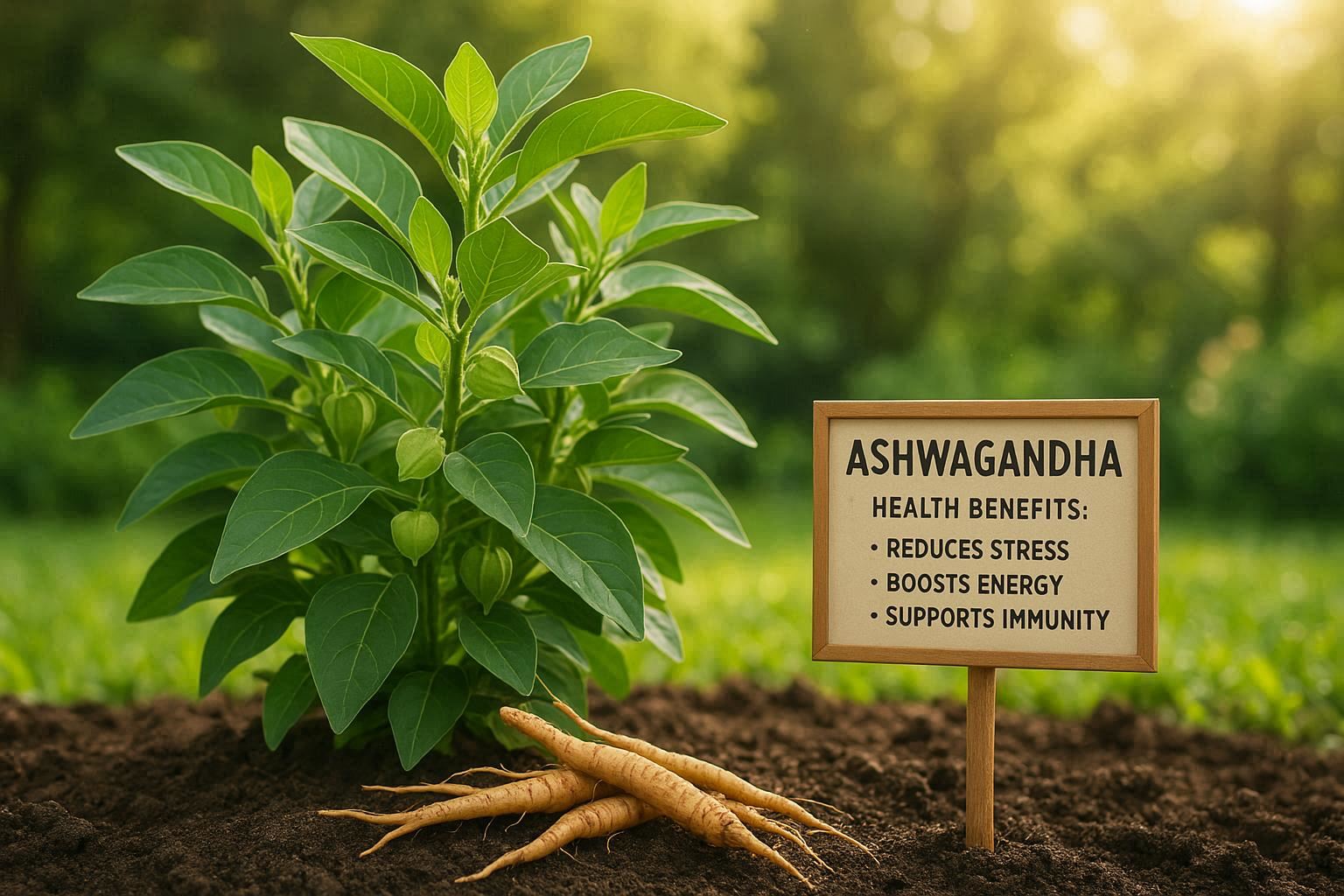
Ashwagandha (Withania somnifera) is one of the best-studied herbs in Ayurvedic medicine and has become a globally popular botanical supplement. Often called an “adaptogen,” it’s used for stress relief, sleep, cognition, athletic performance, hormonal balance and general resilience. This article reviews what ashwagandha is, how it may work, the main reported benefits (with evidence), common doses and forms, safety considerations and how to choose a quality product. Sources are listed at the end.
What is Ashwagandha?
Ashwagandha is a small shrub native to India, the Middle East and parts of Africa. The root (and sometimes leaves) are used medicinally; the Latin name is Withania somnifera. Traditional uses in Ayurveda include tonifying the nervous system, improving stamina and increasing vitality. Modern research focuses on standardized root extracts and isolated constituents (for example, withanolides), and on randomized clinical trials that test specific outcomes such as anxiety, sleep, muscle strength and markers of stress.
How does it work? (mechanisms in brief)
Although no single mechanism explains all effects, several plausible biological actions have been identified:
- Modulation of the stress response: Ashwagandha appears to influence the hypothalamic–pituitary–adrenal (HPA) axis and may lower circulating cortisol (the body’s main stress hormone).
- GABAergic and serotonergic effects: Some extracts seem to interact with neurotransmitter systems involved in anxiety and sleep.
- Anti-inflammatory and antioxidant activity: Withanolides and other constituents show anti-inflammatory and antioxidant properties in lab studies, which may protect tissues and influence recovery.
- Endocrine effects: There is evidence that ashwagandha can modestly affect sex hormones (e.g., increase testosterone in certain male populations) and may influence thyroid markers in some studies.
- Neuromodulation and neuroprotection: Preclinical and some clinical data suggest potential benefits for memory and cognitive function, possibly via anti-inflammatory and antioxidant pathways and improved neuronal signalling.
These mechanisms are supported by a mix of laboratory, animal and human trial evidence but are not yet fully mapped out for every claimed benefit.
Evidence-backed benefits
Below are the main benefits supported by clinical research, with the most important claims cited.
1. Reduces stress and anxiety
Multiple randomized controlled trials (RCTs) and meta-analyses show that ashwagandha supplements can reduce perceived stress and anxiety scores compared with placebo. Many trials also report reductions in serum cortisol levels, supporting a physiological effect on the stress response.
2. Improves sleep quality
Several RCTs and meta-analyses indicate that ashwagandha can improve overall sleep quality, shorten time to fall asleep and increase total sleep time for adults with sleep disturbances. Trials typically use standardized extracts over weeks and measure sleep with validated questionnaires or objective measures.
3. May boost physical performance, strength and recovery
Trials in healthy adults who combined resistance training with ashwagandha supplementation have reported greater increases in muscle mass and strength, and improvements in recovery markers, compared with placebo. A well-cited RCT found significant gains in muscle strength and size in men taking ashwagandha alongside a training program.
4. Can improve certain aspects of cognition and memory
Emerging clinical evidence suggests ashwagandha may help with aspects of cognitive function — attention, reaction time, memory recall and executive function — particularly in populations with mild cognitive complaints or age-related decline. Several recent reviews conclude there’s promising evidence, although larger and longer trials are still needed.
5. Effects on hormones and sexual health
Some RCTs report increases in testosterone and improvements in sperm quality in certain male populations (e.g., infertile men or men with low sperm parameters). Effects on libido and sexual function have also been reported anecdotally and in small trials. Women’s hormonal effects are less well established, and more research is required.
6. Possible benefits for mood, fatigue and general well-being
In trials enrolling participants with fatigue or mild-to-moderate mood complaints, ashwagandha supplementation has been associated with improvements in energy, vitality and overall quality of life measures. These outcomes often overlap with reductions in stress and better sleep.
7. Anti-inflammatory and antioxidant effects (preclinical + clinical signals)
Laboratory and animal studies show anti-inflammatory and antioxidant actions. Clinical relevance is supported indirectly by improved biomarkers in some human trials, but the evidence is more robust for symptomatic outcomes (stress, sleep, strength) than for disease prevention at this stage.
Typical doses and product forms
- Extracts: Most clinical trials use standardized root extracts, commonly dosed between 300 mg and 600 mg per day, often split into two doses. A common clinical dose seen across RCTs is 300 mg twice daily (600 mg total).
- Powdered root: Traditional Ayurvedic use often employs powdered whole root (larger gram doses), but modern trials generally prefer standardized extracts that guarantee withanolide content.
- Tinctures & liposomal forms: Newer formulations (liposomal, combined herbs) exist; trial evidence varies by preparation. Some studies of specialized formulations report benefits but effects are formulation-dependent.
Note: Different brands and extracts vary in concentration and what is standardized (e.g., “withanolide” percentage), so dose equivalence must be checked on labels.
Safety, side effects and important warnings
Ashwagandha is generally well tolerated in short-term clinical trials (weeks to a few months), but there are important safety considerations:
- Common mild side effects: gastrointestinal upset, nausea, diarrhea, headache and occasional drowsiness.
- Liver injury reports: Rare cases of liver injury have been reported in association with ashwagandha supplements. While uncommon, these reports highlight the need for caution in people with pre-existing liver disease and the importance of product quality.
- Pregnancy & breastfeeding: Ashwagandha should be avoided during pregnancy because of possible abortifacient effects observed in traditional sources and animal data; breastfeeding safety is unknown.
- Autoimmune or immunosuppressant therapy: Because ashwagandha can stimulate aspects of immune function, people on immunosuppressant drugs or with autoimmune disease should discuss use with their clinician.
- Sedation and interactions: Ashwagandha can cause drowsiness and may add to the sedative effects of benzodiazepines, sleep aids, or alcohol. It may also interact with thyroid medication, blood sugar-lowering drugs and certain psychiatric medications—so check with a healthcare provider.
Long-term safety data are limited; many experts recommend limiting supplementation to the durations studied in trials (commonly 6–12 weeks) unless under medical supervision.
Who might benefit most?
- People with chronic stress, high perceived anxiety or elevated cortisol who want non-pharmaceutical support (and have no contraindications).
- Individuals with mild sleep difficulties seeking improved sleep quality.
- Recreational or amateur athletes and people starting resistance training who want support for strength, recovery and muscle mass, noting that benefits are usually modest and best combined with training and nutrition.
- People with mild cognitive complaints or those looking to support memory and focus, though larger, longer trials are still needed.
How to choose a quality product
Supplements are not tightly regulated; pick brands that:
- Use standardized extracts (state % withanolides or equivalent).
- Publish third-party testing (e.g., USP, NSF, ConsumerLab) for purity and to confirm absence of contaminants (heavy metals, pesticides).
- Provide clear dosing instructions and list all other ingredients.
- Have transparent manufacturing practices and good reviews from independent sources.
- Avoid proprietary blends that obscure individual ingredient amounts.
If you have health conditions or take prescription meds, consult a clinician or pharmacist before starting.
Practical tips for use
- Start with a lower dose (e.g., 300 mg daily) to assess tolerance, then increase as needed toward commonly used trial doses (300–600 mg/day).
- Take with food if you experience GI upset.
- Avoid combining with alcohol or other sedatives until you know how you react.
- Reassess after 6–12 weeks; if you plan longer-term use, discuss monitoring with your clinician, especially if you have liver disease or are taking multiple medications.
Limitations of the evidence
- Heterogeneity of studies: Trials use different extracts, doses, outcome measures and participant groups. Not every positive result generalizes to every population.
- Quality of studies: While there are many RCTs, some are small or industry-sponsored; higher-quality, larger and longer-duration trials are still needed for several indications.
- Long-term safety: Most human trials are short to medium term; safety beyond a few months remains less clear.
Bottom line
Ashwagandha is a promising, well-studied herbal supplement with the strongest clinical support for reducing stress and anxiety, improving sleep quality and modestly supporting physical performance and certain aspects of cognition. It appears generally safe in the short term for most adults, but there are important safety caveats (pregnancy, potential liver risk, drug interactions). If you’re considering ashwagandha, choose a reputable standardized extract, start with a trial period at a moderate dose and check with your healthcare provider if you have chronic conditions or take medications.
Sources
(Selected clinical reviews, trials and reputable health agency summaries consulted for this article.)
- Akhgari-Jand et al., systematic review & dose-response meta-analysis on stress & anxiety. PubMed. PubMed
- NIH Office of Dietary Supplements — Ashwagandha (Health Professional Fact Sheet). May 2, 2025. Office of Dietary Supplements
- Cheah KL et al., PLOS ONE 2021 — Ashwagandha extract and sleep. PLOS
- Arumugam V. 2024 meta-analysis: stress, anxiety and cortisol effects. ScienceDirect. ScienceDirect
- Wankhede S. et al., 2015 randomized controlled trial — resistance training + ashwagandha (muscle mass & strength). PubMed. PubMed
- NCCIH (National Center for Complementary and Integrative Health) — Ashwagandha: Usefulness and Safety. NCCIH
- Merck Manual — Ashwagandha (dietary supplement summary; safety notes). Merck Manuals
- Recent reviews and trials on cognition and wellbeing (2023–2025): Mikulska P. 2023; Sprengel M. 2025; Wiciński M. 2025. PubMed / PMC summaries. PubMed Central+2PubMed Central+2
- Verywell Health and other evidence summaries (consumer-facing reviews highlighting benefits and safety signals). Verywell Health+1