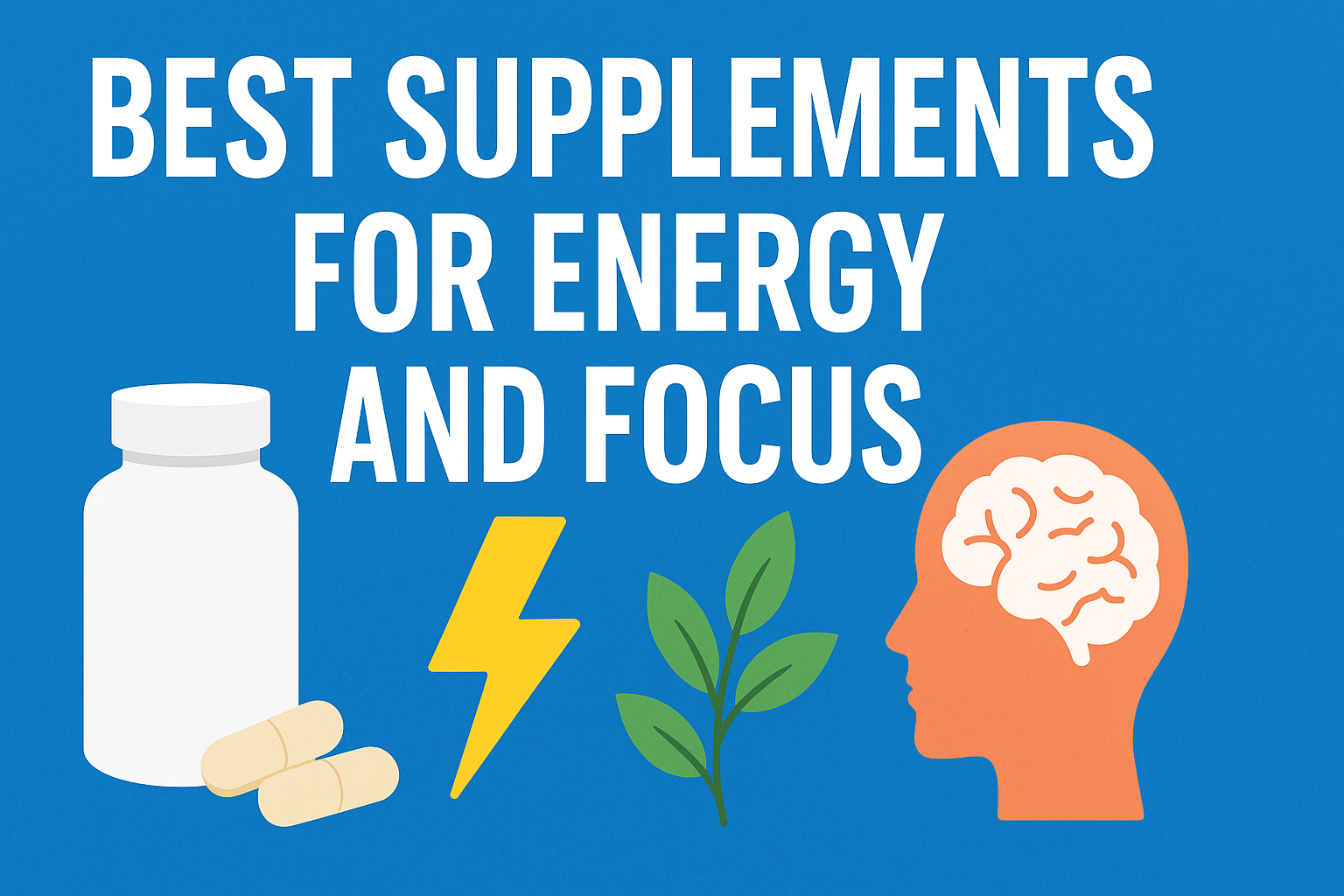
Best Supplements for Energy and Focus — what works, what’s safe, and how to use them
In a world that prizes productivity, it’s no surprise many people reach for supplements to sharpen focus and boost daytime energy. Sleep, nutrition, movement, and stress management are the foundation — but when those basics are optimized and you still want an extra edge, certain supplements have solid research behind them. This article walks through the most evidence-backed options for mental energy and concentration, how they likely work, typical dosing ranges, who benefits most, and common safety notes so you can make an informed choice.
How to think about “energy” and “focus”
“Energy” and “focus” are related but different. Energy often refers to the physical and mental capacity to stay awake and motivated; focus describes the brain’s ability to sustain attention, filter distractions, and process information. Some supplements boost cellular energy (ATP production), others modulate neurotransmitters, and others reduce stress or inflammation that indirectly improves cognition. Expect modest effects for most supplements — none are guaranteed substitutes for sleep or medical care.
The heavy-hitters (best evidence for acute and short-term benefit)
1. Caffeine + L-theanine
Why it helps: Caffeine is a well-known stimulant that increases alertness and reaction time. L-theanine (an amino acid in tea) promotes a calmer mental state and — when combined with caffeine — can improve attention and accuracy while reducing the jittery side effects some people feel with caffeine alone.
Typical use/dose: 50–200 mg caffeine paired with 100–200 mg L-theanine is common in studies and consumer products. Many people use a 1:2 L-theanine:caffeine ratio (e.g., 100 mg theanine + 50 mg caffeine) or a 2:1 caffeine: theanine ratio depending on the goal.
Who benefits: Anyone needing short-term alertness, students during study sessions, or professionals before focused work.
Safety: Generally safe in healthy adults at moderate doses; watch total daily caffeine from all sources. Avoid near bedtime.
Evidence summary: Multiple trials and reviews show the combo improves attention, speed, and accuracy more than either alone.
2. Creatine monohydrate
Why it helps: Creatine supports rapid cellular energy recycling (ATP) — not just in muscles but in the brain. By improving the brain’s energy buffer, creatine can help cognition during sleep deprivation, mental fatigue, or in populations that may have lower creatine levels (e.g., some vegetarians).
Typical use/dose: Standard dosing for cognitive studies is similar to athletic use: a daily dose of ~3–5 g. Some trials used a short loading phase (e.g., 0.3 g/kg for several days) but daily maintenance of 3–5 g is common.
Who benefits: People under acute mental stress, those with sleep loss, older adults, and some vegetarians/vegans.
Safety: Well-studied and safe in healthy adults at recommended doses; may cause minor GI upset in some. Stay hydrated.
Evidence summary: Systematic reviews and recent trials support modest improvements in memory, processing speed, and resilience to sleep deprivation.
Adaptogens and botanicals (stress-buffering, anti-fatigue)
3. Rhodiola rosea
Why it helps: Rhodiola is an adaptogenic herb traditionally used to counter fatigue and improve mental performance under stress. It likely acts on stress-response systems and monoamine neurotransmitters.
Typical use/dose: Many trials used 200–600 mg/day of standardized extracts. Dosing and extract quality vary, so choose products standardized to active compounds (e.g., rosavins, salidroside).
Who benefits: People with stress-related fatigue or reduced mental endurance.
Safety: Generally well tolerated; occasional jitteriness or insomnia if taken late. Discuss with a clinician if you take antidepressants.
Evidence summary: Multiple randomized trials and reviews report reductions in fatigue and modest improvements in attention and mental performance.
4. Ashwagandha (Withania somnifera)
Why it helps: Ashwagandha is commonly used for stress reduction and may improve subjective energy and concentration by lowering cortisol and improving sleep quality for some people.
Typical use/dose: Studies often use 300–600 mg/day of standardized root extract.
Who benefits: People whose cognitive difficulties are driven by stress, anxiety, or poor sleep.
Safety: Generally safe short-term; can interact with sedatives or thyroid medication. Pregnant/nursing people should avoid unless advised.
Evidence summary: Clinical trials show improvements in stress measures and some cognitive tests, especially when stress is a major factor.
Nutrients that support brain function (often for those with deficiency)
5. Omega-3 fatty acids (EPA/DHA)
Why it helps: Long-chain omega-3s are structural components of brain cell membranes and play roles in inflammation, neurotransmission, and blood flow — all relevant to cognitive function and mental clarity.
Typical use/dose: Many trials use 1 g to 2 g/day of combined EPA+DHA; higher EPA ratios are sometimes studied for mood and cognition.
Who benefits: People with low dietary fish intake, older adults, or those with mood-related cognitive changes.
Safety: Generally safe; can thin blood at high doses — discuss with your clinician if on anticoagulants.
Evidence summary: Reviews show modest benefits for some cognitive outcomes, with stronger signals in certain groups and for EPA-rich supplements.
6. B vitamins (B12, B6, folate)
Why it helps: B vitamins are essential for energy metabolism and neurotransmitter synthesis. However, supplementing only benefits cognition when deficiency or suboptimal status is present.
Typical use/dose: Address deficiency per lab testing — B12 injections or high-dose oral B12 (e.g., 500–1,000 mcg/day) for deficiency; multivitamin/B-complex dosing varies.
Who benefits: People with diagnosed B12 deficiency (older adults, some vegetarians, certain GI conditions).
Safety: Water-soluble vitamins are generally low risk in standard doses; very high doses of some forms have potential issues.
Evidence summary: Trials in non-deficient populations generally show little cognitive benefit; treating deficiency can prevent or reverse cognitive impairment.
Amino acids and precursors
7. Tyrosine
Why it helps: Tyrosine is a precursor to dopamine and norepinephrine and can support cognitive performance under acute stress or sleep deprivation by replenishing neurotransmitter pools.
Typical use/dose: Studies often use 100–150 mg/kg (e.g., 8–12 g for many adults) as an acute dose; lower daily doses exist but acute administration around stressful tasks is common in research.
Who benefits: People facing short, intense cognitive demands (exams, emergency shifts) or acute stressors.
Safety: Generally safe in short-term experimental use; long-term high doses should be discussed with a clinician.
Evidence summary: Evidence supports improved cognitive performance in short-term stress or high-demand tasks, less so in normal, unstressed settings.
Miscellaneous and emerging options
- Acetyl-L-carnitine (ALCAR): Studied for mental fatigue and concentration in aging and chronic fatigue contexts with mixed but promising results.
- Coenzyme Q10: May support cellular energy; evidence for cognitive benefits is limited but biologically plausible.
- Iron and vitamin D: Only helpful when deficiency is present; correcting deficiency can restore energy and cognitive function.
Safety, interactions, and practical guidance
- Test before you guess. If tiredness or poor focus is persistent, check sleep, stress, thyroid function, iron, B12, and mood — many medical issues mimic “brain fog.”
- Supplements are adjuncts. None replace sleep, exercise, balanced meals, and mental-rest strategies.
- Watch interactions. Herbs and supplements can interact with prescription meds (e.g., Rhodiola or St. John’s wort with antidepressants; omega-3s with blood thinners). Always check with a clinician or pharmacist, especially if you take medications.
- Start low, assess, and prioritize quality. Use third-party tested brands (USP, NSF, or independent lab testing) and begin at a low dose to assess tolerance.
- Be cautious with stimulants. High-dose caffeine or stimulant-containing pre-workout blends can impair sleep and raise anxiety; avoid late doses.
- Pregnancy and chronic conditions. Pregnant/nursing people and anyone with chronic disease should consult their provider before starting supplements.
(For general safety overviews, resources such as medical centers’ “drugs and supplements” pages discuss common interactions and precautions.)
How to choose what to try first
- If you’re sleep-deprived or need short-term alertness: try caffeine + L-theanine for a cleaner stimulant effect.
- If you endure chronic mental fatigue or do shift work: creatine has evidence for resilience to sleep-loss-related cognitive decline.
- If stress or burnout is the main cause: consider adaptogens like Rhodiola or ashwagandha (combined with stress-management strategies).
- If your diet is low in fish or you’re older: consider omega-3 supplements after discussing with your clinician.
- If lab tests show deficiency (B12, iron, vitamin D): correct the deficiency — this often produces the largest improvements.
Final notes
Supplements can produce meaningful, practical improvements in attention and mental energy for many people — but effects are often modest and individualized. Pair smart supplementation with consistent sleep, exercise, hydration, and nutrient-dense food. When in doubt, talk with a health professional who can help rule out underlying causes and advise on safe, evidence-based supplement choices.
Sources
- Sohail AA et al., “The Cognitive-Enhancing Outcomes of Caffeine and L-theanine” (review). PMC
- Owen GN et al., “The combined effects of L-theanine and caffeine on cognition” (2008). PubMed
- Xu C. et al., “The effects of creatine supplementation on cognitive function” (review, 2024). PubMed
- Gordji-Nejad A. et al., single-dose creatine cognitive trial (2024). Nature
- Stojcheva EI et al., “Effectiveness of Rhodiola rosea preparations” (review, 2022). PMC
- Ma G. et al., Rhodiola and cognitive function (2018 review). PMC
- Welty FK, “Omega-3 fatty acids and cognitive function” (Curr Opin Lipidol, 2023). PubMed
- Dighriri IM et al., “Effects of Omega-3 Polyunsaturated Fatty Acids on Brain” (review). PMC
- NIH Office of Dietary Supplements, Vitamin B12 Health Professional Fact Sheet (2025). Office of Dietary Supplements
- Health Quality Ontario, “Vitamin B12 and Cognitive Function” (evidence review). PMC
- Jongkees BJ et al., “Effect of tyrosine supplementation on performance” (review, 2015). PubMed+1
- Xing D. et al., “Effects of Acute Ashwagandha Ingestion on Cognitive …” (2022). PMC
- NIH ODS, Ashwagandha Health Professional Fact Sheet (2025). Office of Dietary Supplements
- Mayo Clinic, Drugs and Supplements information and interactions overview. Mayo Clinic+1