The Vital Role of Iron in the Body
Iron is an essential mineral that plays a crucial role in many of the body’s core functions. It is a key component of the protein hemoglobin, which resides in red blood cells and carries oxygen from the lungs to the tissues. Without sufficient iron, hemoglobin levels drop, reducing the body’s capacity to transport oxygen and leading to fatigue, weakness, and other symptoms.
Iron is also part of the protein myoglobin, which stores oxygen in muscle tissue, supporting muscle metabolism and strength. Beyond that, iron is involved in enzyme systems, immune function, hormone synthesis, neurological development and function, and cellular metabolism.
Because the human body cannot manufacture iron on its own, it must be obtained through diet or, in certain circumstances, supplementation.
Why Some People Need to Pay Extra Attention to Iron
Iron deficiency is the most common nutritional deficiency worldwide. Some individuals are at higher risk of inadequate iron intake or increased iron requirements:
- Women of reproductive age, especially with heavy menstrual bleeding, lose iron regularly and therefore have higher requirements.
- Pregnant women, because of expansion of blood volume and growth of the fetus, require significantly more iron to support both mother and baby.
- Children and adolescents, especially during growth spurts, need sufficient iron for growth and neurological development.
- People who eat primarily plant-based diets (vegetarians/vegans), because the iron they consume is often the non-heme type with lower absorption.
- Individuals with chronic blood loss, gastrointestinal disorders or conditions affecting absorption, and athletes with high demands.
Therefore, understanding iron intake needs and how to meet them is very important.
How Much Iron Do You Need?
Recommended intake values vary by age, sex, life stage and dietary pattern. According to several authoritative sources:
- For adult men (19 – 50 years), around 8 mg/day is suggested.
- For adult women (19 – 50 years) who are menstruating, the amount rises to ~ 18 mg/day in some guidelines.
- During pregnancy the requirement may be ~ 27 mg/day or thereabouts.
- Post-menopausal women (or women over ~50 years) typically revert to ~ 8 mg/day if not menstruating.
- For children and adolescents, the needs vary significantly depending on growth stage, with e.g., teenage girls needing more than boys due to menstruation.
It’s worth noting that the body only absorbs a fraction of the iron consumed — especially if it’s the plant-based non-heme form — so the intake recommendation takes into account absorption inefficiencies.
Also, there is an upper intake level: for instance, the U.S. guideline lists 45 mg/day as the tolerable upper intake level (UL) for adults, beyond which risk of toxicity increases.
The Role of Iron Supplements
Supplements may be necessary or beneficial in certain cases:
- If someone is diagnosed with iron deficiency or iron-deficiency anemia, a health professional may prescribe iron supplements to restore iron stores and hemoglobin levels.
- Those with increased requirements (such as pregnant women), reduced intake (vegetarians/vegans), or absorptive issues may need supplementation or a careful review of their diet.
- However, iron supplementation isn’t without potential drawbacks. Too much iron can cause gastrointestinal side-effects (constipation, nausea, stomach pain) and, in extreme cases, iron overload which can damage organs.
- The form of iron matters; there are different compounds (ferrous sulfate, ferrous fumarate, ferrous gluconate, ferrous bisglycinate) and the amount of “elemental iron” (the actual iron available for absorption) is important when interpreting labels.
- Absorption of supplemental iron is influenced by food, medications, and nutrition status. For instance, taking iron with vitamin C may boost absorption, while taking it with calcium, high-fiber foods, tea/coffee may reduce absorption.
Therefore, supplements should not be taken indiscriminately — they should follow assessment of iron status (blood tests) and guidance from a healthcare provider.
Dietary Sources of Iron: Heme vs. Non-Heme
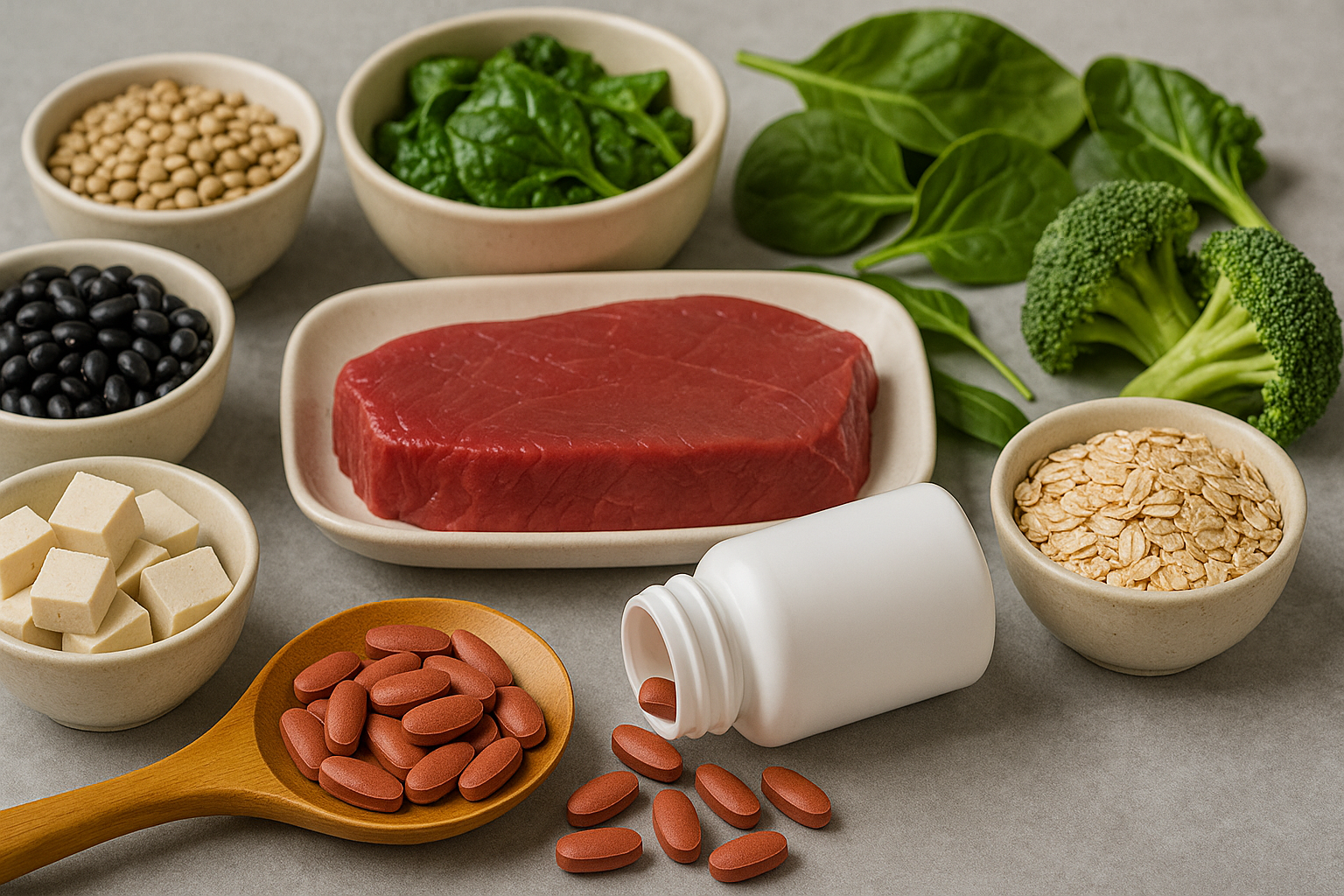
Iron from dietary sources comes in two forms: heme iron (from animal flesh) and non-heme iron (from plants and fortified foods).
- Heme iron is found in meat, poultry, fish and seafood. It is more readily absorbed (estimated around 15-30% absorption) compared to non-heme iron.
- Non-heme iron is found in plant-based foods (legumes, tofu, nuts, seeds, whole grains, leafy greens) and in iron-fortified foods. Absorption rates are lower (often 2-10%) and are more influenced by other dietary factors.
Here are some good food sources of iron (with approximate amounts):
- Shellfish: e.g., 3 oz of oysters ~ 6.9 mg iron.
- Mussels, 3 oz ~ 5.7 mg iron.
- Beef, 3 oz ~ 2.5 mg iron (varies by cut).
- Legumes: e.g., lentils, beans; tofu also notable.
- Leafy green vegetables: e.g., spinach, kale, though absorption may be reduced by compounds like oxalates.
- Iron-fortified cereals and whole grain breads.
Maximizing Iron Absorption
Because iron absorption is subject to enhancement or inhibition, here are some practical tips:
- Include a source of vitamin C (e.g., citrus fruits, peppers, tomatoes, broccoli) with iron-rich meals to boost non-heme iron absorption.
- Combine plant iron sources with a small amount of meat/poultry/fish if possible — the so-called “meat factor” may help improve non-heme iron absorption.
- Avoid drinking tea or coffee with iron-rich meals (these contain tannins and polyphenols which reduce iron absorption).
- Avoid taking calcium-rich foods or supplements at the same time as iron, if absorption is a concern, as calcium may interfere with iron uptake.
- Cooking in a cast-iron skillet can modestly increase the iron content of certain foods.
When to Consider Supplements — and When to Be Cautious
While diet is the first line of defense in meeting iron needs, supplementation may be appropriate in certain situations (as mentioned above). However:
- Always have iron status assessed (serum ferritin, hemoglobin, transferrin saturation) before starting a supplement, because taking iron when not needed can lead to iron overload and toxicity.
- Follow doses prescribed by a healthcare provider. Over-the-counter self-dosing may lead to side effects such as gastrointestinal discomfort, constipation, nausea.
- Be aware of interactions with medications and other nutrients. For example, some antacids, antibiotics (quinolones), and bisphosphonates may interfere with iron absorption; likewise, iron may interfere with other mineral absorption.
- Ensure that the supplement’s label shows how much elemental iron (not just the total salt) is included. For instance, ferrous sulfate 325 mg may contain ~65 mg elemental iron (not the entire 325 mg).
- If side-effects occur, alternatives may be considered (e.g., slower-release formulations, smaller divided doses). Some guidelines suggest alternate-day dosing may improve absorption and reduce side-effects. While this is more advanced, discussing with a dietician or doctor helps.
- Avoid excessive iron intake unless medically supervised. Chronic high iron may be stored in organs (liver, heart, pancreas) and lead to damage.
Summary & Practical Take-Home Messages
- Iron is essential for transporting oxygen, supporting muscle and nerve function, immune health, growth and development.
- Many people can meet their iron needs through a well-balanced diet rich in lean meats, fish, legumes, leafy greens, fortified grains and cereals, along with strategies to enhance absorption.
- Particular groups (pregnant women, menstruating women, children/adolescents, vegetarians/vegans, those with certain medical conditions) may require higher iron intake and more careful planning.
- Before jumping to supplements, focus on dietary sources and absorption-enhancing strategies, and have iron status checked.
- Supplements are useful but should be used with caution under professional guidance — paying attention to dose, formulation, timing, interactions and potential side-effects.
- Regular monitoring and dietary review are important especially if iron deficiency (or excess) is a concern.
Final Thoughts
In today’s environment where processed diets and convenience foods abound, iron status can be overlooked — especially if meals don’t include sufficient sources of bioavailable iron or if inhibiting factors (tea/coffee with meals, high calcium, plant-only diets without absorption strategy) are present. Because iron influences energy levels, cognitive performance, immune defence and overall vitality, maintaining optimal iron intake and status is not just a nutritional footnote — it’s central to health.
If you suspect low iron (fatigue, pale skin, shortness of breath, restless legs) or belong to a higher-risk group, it’s wise to check with a healthcare provider. Together you can evaluate whether dietary improvements suffice or whether supplementation is needed, and tailor the plan accordingly.
References
- Office of Dietary Supplements, National Institutes of Health: Iron – Fact Sheet for Health Professionals.
- NHS (UK): Iron – how much you need, sources and when supplements may be needed.
- Better Health Victoria: Iron and iron deficiency – roles, sources, recommended intake.
- Harvard T.H. Chan School of Public Health – The Nutrition Source: Iron.
- Red Cross Blood Service: Iron-rich foods: heme vs non-heme, absorption tips.
- MedlinePlus Medical Encyclopedia: Iron in your diet – functions, sources, absorption.