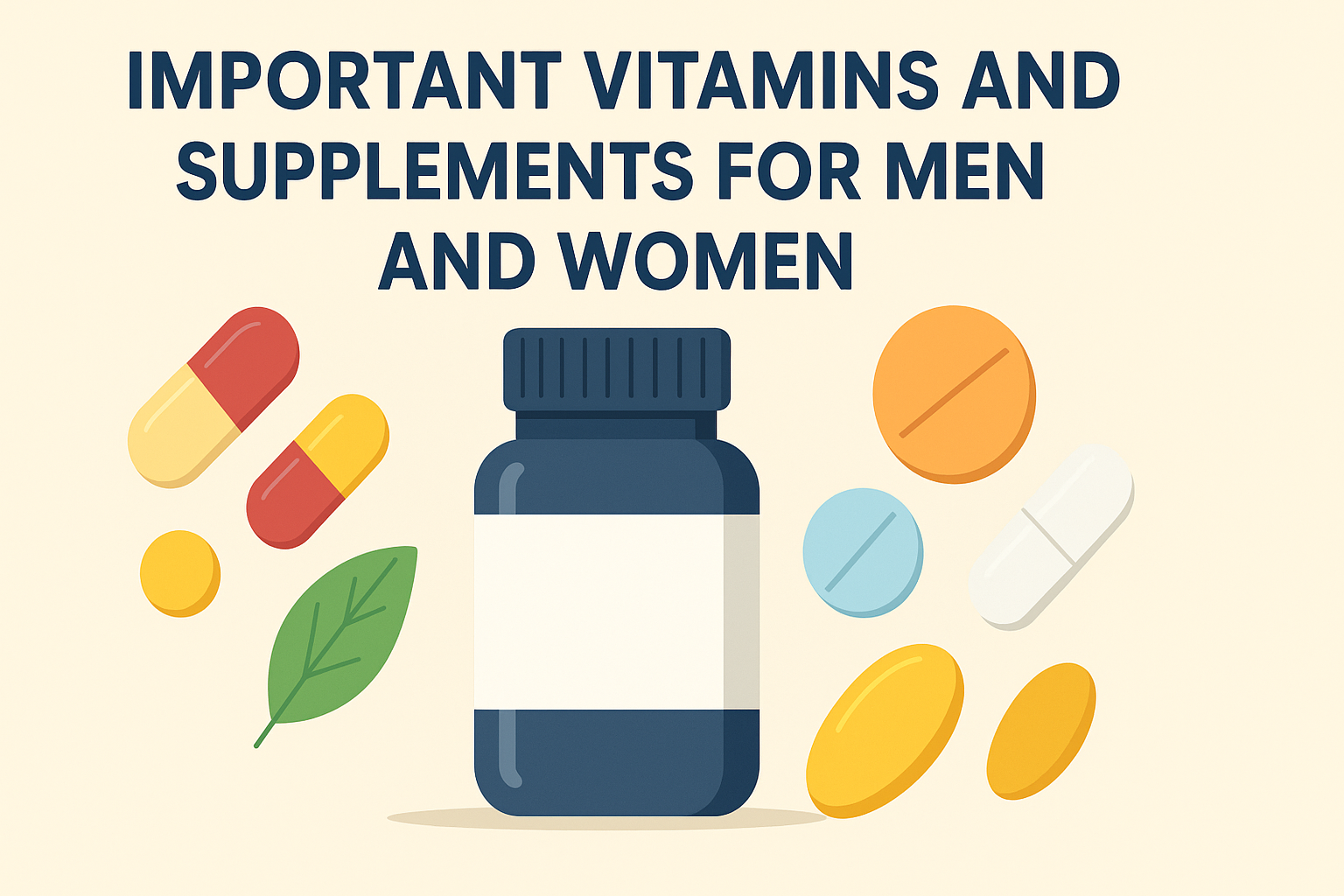
Good nutrition — mostly from a varied, whole-foods diet — is the foundation of long-term health. Still, some people benefit from targeted vitamin or mineral supplements because of life stage, medical conditions, dietary choices, or increased physiological needs. Below I explain the nutrients most commonly recommended, who is most likely to need them, how they help prevent disease, and safety/interaction notes you should consider before starting any supplement.
Quick framing: food first, supplements second
Most healthy adults can get the nutrients they need from a balanced diet (vegetables, fruit, whole grains, lean proteins, dairy or fortified alternatives, nuts, seeds, and oily fish). Supplements are useful when diet alone can’t meet needs (for example, due to pregnancy, strict vegetarian/vegan diets, malabsorption, certain medications, or advanced age). Before starting supplements, check with a healthcare provider — some nutrients can be harmful in excess or interact with medicines.
1) Folic acid (folate) — essential for women of childbearing age (and useful for men’s fertility in some situations)
Why it matters: Folic acid (synthetic folate) prevents neural tube defects (serious birth defects of the brain and spine) when taken before and during early pregnancy. Because neural tube defects occur very early (often before a woman knows she’s pregnant), public health authorities recommend that all women capable of becoming pregnant take 400 micrograms (mcg) of folic acid daily. Men may also get fertility-related benefits in some studies when folate is paired with zinc, though evidence is mixed.
Who should take it:
- All women planning pregnancy or capable of becoming pregnant: 400 mcg daily (higher doses in certain high-risk situations; follow clinician advice).
- Prenatal vitamins (which include folic acid plus iron, iodine, and other nutrients) are recommended during pregnancy.
Safety note: Very high folic acid doses can mask vitamin B12 deficiency in older adults, so avoid unwarranted megadoses without medical advice.
2) Iron — especially for menstruating women, pregnant people, and those with deficiency risk
Why it matters: Iron is essential for making hemoglobin (oxygen-carrying red blood cells). Iron deficiency causes fatigue, cognitive effects, and reduced work capacity. Premenopausal women lose iron via menstruation and have higher iron needs; pregnant people need more iron for fetal development. Vegetarians/vegans and people with heavy menstrual bleeding, certain medical conditions, or gastrointestinal malabsorption are at greater risk.
Who should take it:
- Women with diagnosed iron-deficiency anemia or those found to have low iron stores.
- Pregnant people may need iron supplementation; prenatal vitamins commonly include iron.
Safety note: Do not take iron supplements unless testing or a clinician indicates deficiency — excess iron can cause gastrointestinal upset and, in high amounts, organ damage. Iron supplements are best taken under medical supervision.
3) Vitamin D (± calcium) — bone health, muscle function, and some immune roles
Why it matters: Vitamin D helps the body absorb calcium and maintain bone health; it also supports muscle function and may play roles in immune regulation. Many people have low vitamin D levels because sun exposure is limited (winter months, indoor lifestyles, high-latitude living, darker skin tones) or dietary sources are few. Public health panels differ on screening asymptomatic adults, but vitamin D supplementation is commonly recommended when deficiency or insufficiency is documented or when risk factors are present.
Who should consider it:
- Older adults, people with low sun exposure, those with malabsorption, people with darker skin, and those with osteoporosis or at high risk of fractures.
- Many clinicians recommend supplementing when blood levels are low; routine screening of asymptomatic adults is a debated topic.
Dose and calcium:
- Typical supplementation varies by deficiency status and guidelines; combined vitamin D and calcium are sometimes used for bone protection, but recommendations vary by age and individual risk. Recent guideline reviews continue to refine which adults benefit from routine supplementation. Always follow personalized medical advice.
Safety note: Very high vitamin D intake can cause hypercalcemia. Don’t megadose without monitoring.
4) Vitamin B12 — important for older adults and those on plant-based diets
Why it matters: Vitamin B12 is required for normal nerve function, red blood cell production, and DNA synthesis. Absorption declines with age (reduced stomach acid) and is absent in plant foods unless fortified; strict vegetarians and vegans are therefore at higher risk. B12 deficiency can cause anemia and irreversible neurological damage if untreated.
Who should take it:
- Adults over ~50 are often advised to consume B12-fortified foods or take supplements because stomach acid production can fall with age.
- People on strict vegetarian or vegan diets should take B12 supplements or eat B12-fortified foods.
- People with pernicious anemia or certain gastrointestinal surgeries need medical B12 treatment (often injections).
Form & dosing: B12 is available in oral cyanocobalamin or methyl cobalamin forms, and high-dose oral supplements are effective for many people. Medical situations may require prescription dosing.
5) Omega-3 fatty acids (EPA and DHA) — heart health and inflammation modulation
Why it matters: Long-chain omega-3s (EPA and DHA) from fatty fish are linked to cardiovascular benefits. Major heart-health organizations recommend eating oily fish regularly; supplemental omega-3s are sometimes recommended for specific high-risk patients (for example, certain people with coronary disease) but are not universally advised for everyone. Evidence from trials and systematic reviews shows modest benefits for cardiovascular outcomes in selected groups; the benefit across the general population is less clear.
Who should consider it:
- People who don’t eat fatty fish twice weekly might consider an EPA/DHA supplement or increasing dietary fish.
- Patients with established coronary heart disease may be advised by their clinicians to take specific therapeutic doses; follow clinician guidance.
Safety note: Supplements can vary in purity; high doses may increase bleeding risk or interact with anticoagulants. Use products certified by independent testing when possible.
6) Calcium — bone health (often paired with vitamin D)
Why it matters: Calcium is a structural component of bone. Adequate calcium intake across life helps reduce the risk of osteoporosis. Dietary calcium is preferred (dairy, fortified alternatives, leafy greens, tofu), but supplements are used when dietary intake is insufficient, particularly for older adults and postmenopausal women.
Who should consider it:
- Postmenopausal women, older adults, and people with low dietary calcium.
- Aim to meet needs via food first; supplements can fill gaps if needed.
Safety note: Excess calcium supplementation has been linked in some studies with a small increase in cardiovascular risk; discuss total calcium intake (diet + supplements) with a clinician.
7) Magnesium — wide physiological roles and common insufficiency
Why it matters: Magnesium participates in over 300 enzymatic reactions (muscle and nerve function, blood glucose control, and bone health). Some people consume less-than-recommended magnesium, especially with diets low in whole grains, nuts, seeds, and greens. When deficiency is suspected clinically (muscle cramps, arrhythmias, low magnesium on labs), supplementation may be beneficial.
Who should consider it:
- People with poor dietary intake, certain gastrointestinal diseases, or on diuretics may need supplements.
- Athletes or those with leg cramps sometimes try magnesium, though evidence varies.
Safety note: High-dose magnesium from supplements can cause diarrhea and, in extreme cases, cardiac/respiratory problems — avoid high megadoses without medical oversight.
8) Zinc, selenium, vitamin C — immune support and specific deficiencies
Why it matters: Zinc and selenium are trace minerals needed for immune function, antioxidant defenses, and thyroid health (selenium). Vitamin C supports immune cells and wound healing. For most people with varied diets, extra supplementation is unnecessary; targeted short-term supplementation is sometimes used for deficiency or specific conditions.
Who should consider it:
- People with restricted diets or diagnosed deficiencies.
- Short-term zinc or vitamin C at recommended doses is sometimes used for colds; evidence for major disease prevention is limited. nhs.uk
Safety note: Chronic high-dose zinc can cause copper deficiency; selenium has a narrow safety margin. Don’t self-prescribe high-dose trace minerals.
9) Multivitamins — when they may be useful (and when they’re not)
Why it matters: A daily multivitamin can serve as an “insurance policy” to fill occasional dietary gaps, particularly for people with limited diets, older adults, or those at risk of specific deficiencies. Large trials show mixed results for disease prevention; multivitamins are not a substitute for healthy eating. Some trials reported small benefits for some outcomes in specific groups, but routine megadoses are not supported. Use evidence-based formulations (not megadoses of single nutrients).
Who should consider it:
- People with known dietary gaps, older adults, strict vegetarians/vegans (choose one with B12), or those with medical conditions limiting food intake.
- Not routinely necessary for well-nourished adults eating varied diets.
Safety note: Some multivitamins contain amounts of nutrients that, when combined with fortified foods or other supplements, could exceed safe upper limits. Check labels and discuss with your provider.
10) Probiotics — gut health, selective uses
Why it matters: Probiotics (live microorganisms) can help in specific gastrointestinal conditions — for example, certain probiotics can reduce duration of infectious diarrhea, help prevent antibiotic-associated diarrhea, and are studied in irritable bowel syndrome. Evidence for general “immune boosting” or chronic disease prevention is inconsistent. Choose strains with evidence for the condition you seek to treat.
Who should consider it:
- People with specific GI indications, or after certain antibiotic courses (check product evidence and strain).
Safety note: Immunocompromised people should be cautious; talk with your clinician.
Practical guidance: how to choose and use supplements safely
- Get tested if appropriate. Low or deficient levels (vitamin D, iron, B12) are diagnosed by blood tests — use testing to guide supplementation.
- Prefer food sources first. Many nutrients are best absorbed and used when consumed as part of foods. Supplements fill gaps.
- Avoid megadoses unless supervised. Fat-soluble vitamins (A, D, E, K) and some minerals can be toxic at high doses.
- Check interactions. For example, vitamin K interferes with warfarin; mineral supplements can affect absorption of some medications. Review interactions with your clinician or pharmacist.
- Choose reputable brands with third-party testing. Look for seals from independent testers (e.g., USP, NSF) and avoid products that make unrealistic disease-curing claims.
Bottom line (short version)
- Women of childbearing age: Folic acid 400 mcg daily (plus a healthy diet); prenatal vitamins during pregnancy.
- Men and older adults on restricted diets: Vitamin B12 if vegan or over ~50.
- People at risk of deficiency or low sun exposure: Vitamin D (test and supplement if low).
- Menstruating and pregnant people: Iron as indicated by testing or prenatal care.
- Heart disease risk or low fish intake: consider omega-3 (EPA/DHA) from diet or targeted supplements under clinician guidance.
- Most adults: prioritize a balanced diet; consider a multivitamin only if dietary gaps exist.
Sources
- NIH — Vitamin D: Health Professional Fact Sheet. Office of Dietary Supplements
- ACOG — Nutrition During Pregnancy (prenatal vitamins, folic acid). ACOG
- NIH — Iron: Health Professional Fact Sheet; Iron — Consumer Fact Sheet (NIH ODS). Office of Dietary Supplements+1
- NIH — Omega-3 Fatty Acids: Health Professional Fact Sheet. Office of Dietary Supplements
- NIH — Vitamin B12: Health Professional & Consumer Fact Sheets. Office of Dietary Supplements+1
- USPSTF — Vitamin D Deficiency Screening recommendation (insufficient evidence for routine screening in asymptomatic adults). USPSTF+1
- NIH ODS — Vitamin D: Consumer Fact Sheet (PDF). Office of Dietary Supplements
- CDC — Folic Acid: Clinical overview and recommendation for women capable of pregnancy. CDC
- NHS — Vitamins and minerals (public guidance on common nutrients and safety). nhs.uk+1
- Cochrane Library — Omega-3 fatty acids for cardiovascular disease (systematic review). Cochrane Library+1
- American Heart Association — Fish and Omega-3 Fatty Acids guidance. www.heart.org
- Selected review: Effect of omega-3 fatty acids on cardiovascular outcomes (PMC — 2021 review). PMC
- General consumer advice on multivitamins and whether you need one (overview article). Health