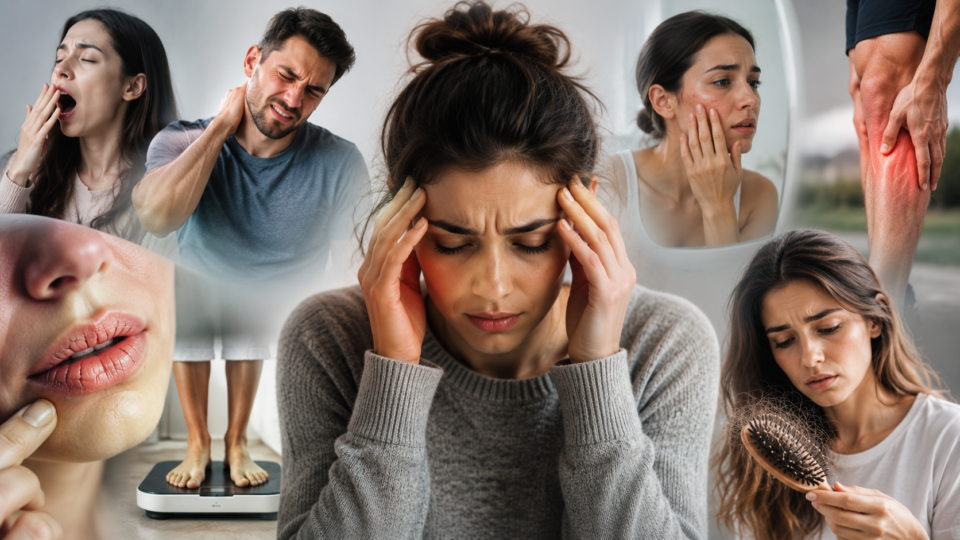
Your body is constantly communicating with you. Long before some health problems become obvious, the body may produce subtle changes that are easy to dismiss: waking up tired despite sleeping, developing frequent headaches, noticing that your lips remain cracked, experiencing unexplained muscle cramps, or seeing changes in your skin, hair, or nails. Sometimes these symptoms are completely harmless and result from stress, dehydration, weather, aging, or lifestyle habits. At other times, however, they may be clues that something needs attention.
The challenge is knowing the difference between an ordinary symptom and a persistent change that deserves investigation. A single headache after a stressful day does not necessarily indicate a health problem. Similarly, dry lips during cold weather are usually nothing serious. But when a symptom is persistent, repeatedly returns, becomes progressively worse, or appears together with other changes, it deserves more attention.
The body rarely sends a message in just one way. Symptoms often appear in patterns. Fatigue combined with pale skin may point toward a different issue than fatigue alone. Weight loss accompanied by increased thirst and frequent urination raises different questions than weight loss after intentionally changing your diet. Understanding these patterns can help you become more aware of your health without falling into the trap of self-diagnosis.
Here are seven seemingly ordinary signs that may be worth paying closer attention to.
1. Constant Tiredness: When Fatigue Is More Than Being Sleepy
Everyone feels tired occasionally. A demanding week at work, several nights of poor sleep, emotional stress, travel, or intense physical activity can leave almost anyone exhausted. The concern begins when tiredness becomes persistent and difficult to explain, particularly when adequate sleep does not seem to restore your energy.
Chronic fatigue can have many possible causes. Lifestyle factors are among the most common. Poor-quality sleep, an irregular sleep schedule, lack of physical activity, excessive alcohol consumption, an unbalanced diet, and prolonged stress can all contribute to low energy. Modern life can also encourage a cycle in which people remain mentally stimulated late into the night, sleep poorly, and then rely on caffeine to get through the following day.
However, persistent fatigue can sometimes accompany medical conditions. Iron-deficiency anemia, diabetes, thyroid disorders, sleep apnea, infections, depression, and some medications are among the possibilities. The important point is that fatigue by itself does not identify a particular disease. Instead, it can be a signal that something deserves a closer look.
Pay attention to what accompanies your tiredness. Feeling exhausted while also experiencing shortness of breath, palpitations, or unusually pale skin may warrant medical evaluation. Fatigue accompanied by increased thirst, frequent urination, or unexplained weight loss should also be investigated. Loud snoring, repeated nighttime awakening, or gasping or choking during sleep can suggest a sleep-related problem such as sleep apnea.
If fatigue has continued for several weeks without an obvious explanation or is interfering with work, exercise, concentration, or everyday activities, speaking with a healthcare professional is sensible. Depending on your symptoms and medical history, evaluation may include blood tests or other investigations to look for possible causes.
The lesson is simple: occasional tiredness is normal; unexplained, persistent exhaustion deserves an explanation.
2. Frequent Headaches: More Than Just Stress or Dehydration
Headaches are among the most common health complaints, and most are not caused by a dangerous condition. Stress, muscle tension, dehydration, lack of sleep, eye strain, skipped meals, caffeine changes, and viral illnesses can all contribute to headaches. Migraine and tension-type headaches are also common.
But the pattern matters.
If your headaches are becoming more frequent, more severe, or different from the headaches you normally experience, it is worth discussing them with a healthcare professional. Keeping a headache diary can be surprisingly useful. Record when the headache occurs, how long it lasts, where the pain is located, what it feels like, what you ate and drank, how much you slept, and whether anything makes it better or worse.
Dehydration is an especially common contributor. Even mild dehydration can be associated with headache, fatigue, and dizziness. Spending hours outdoors in hot weather, exercising heavily, sweating excessively, vomiting, or simply forgetting to drink enough fluids can increase the risk.
However, certain headache patterns should never be casually dismissed. A sudden, extremely severe headache—particularly one described as the worst headache of your life—requires urgent medical attention. Headache accompanied by weakness or numbness, difficulty speaking, confusion, fainting, seizures, severe fever, stiff neck, significant vision changes, or difficulty walking can also represent a medical emergency.
A headache after a significant head injury should likewise be assessed promptly.
Most headaches are not signs of a serious disease. But a new pattern, rapidly worsening pain, or headache accompanied by neurological symptoms is a very different situation. The goal is not to become frightened by every headache; it is to recognize when the pattern has changed.
3. Cracked Lips: A Small Problem With Many Possible Causes
Cracked lips may seem too minor to deserve attention, but persistent lip dryness can sometimes provide useful clues about your environment, habits, medications, or general health.
Cold and dry weather are common causes. Sun exposure, wind, frequent lip licking, dehydration, and irritation from certain cosmetic products can also cause lips to become dry, peeling, sore, or cracked. Because the lips contain fewer protective oil glands than many other areas of the skin, they are particularly vulnerable to environmental conditions.
One of the most common mistakes is repeatedly licking dry lips. Although licking may temporarily make them feel moist, saliva evaporates quickly and can make the problem worse. Some lip products may also contain ingredients that irritate sensitive skin.
Persistent cracking around the corners of the mouth can have different causes from ordinary dry lips. Angular cheilitis, for example, can involve inflammation and sometimes infection. Nutritional deficiencies may also be considered in appropriate circumstances, particularly when lip problems occur alongside other symptoms.
The key is persistence. If your lips remain severely cracked despite improving hydration, protecting them from the weather, and using a bland moisturizing ointment, it may be worth discussing the problem with a healthcare professional or dermatologist.
Another important warning sign is a persistent rough, scaly, or discolored area on the lip, especially on the lower lip after significant sun exposure. Certain long-term sun-related changes can be precancerous and should be evaluated rather than repeatedly treated as ordinary chapping.
In other words, most cracked lips are simply cracked lips—but persistent or unusual changes should not automatically be ignored.
4. Muscle Cramps: When Your Muscles Keep Sending Signals
A sudden muscle cramp can be intensely painful. The muscle tightens involuntarily, sometimes forming a hard knot that lasts from several seconds to several minutes. Leg and foot cramps are especially common, including cramps that wake people during the night.
Common triggers include muscle fatigue, strenuous exercise, prolonged standing, inadequate stretching, dehydration, and exercising in hot weather. Electrolyte disturbances involving minerals such as sodium, potassium, calcium, or magnesium can also contribute to muscle spasms.
Certain medications may play a role as well. For example, some medicines used for high blood pressure or cholesterol have been associated with leg cramps in some people. This is one reason it is important to review medications with a healthcare professional rather than assuming every cramp is caused by a vitamin or mineral deficiency.
Frequent cramps do not automatically mean you need a magnesium supplement. Supplements are not universally appropriate, and taking excessive amounts of certain nutrients can create problems of their own. If cramps are persistent or severe, identifying the underlying cause is more useful than simply treating the symptom.
Pay particular attention if muscle cramps are accompanied by weakness, numbness, swelling, significant pain, changes in walking ability, or other neurological symptoms. Recurrent cramps that disturb your sleep or interfere with daily life also deserve medical evaluation.
For occasional cramps, gentle stretching, massage, appropriate hydration, and avoiding sudden overexertion may help. But recurring cramps are worth treating as information rather than merely an inconvenience.
5. Changes in Your Nails, Skin, or Hair
Your skin, hair, and nails are visible parts of your body, which means changes in them can sometimes be among the earliest noticeable signs that something has changed internally.
Hair thinning or increased shedding can have many explanations. Genetics is a major factor, but hair loss can also occur after significant illness, fever, surgery, major stress, hormonal changes, or nutritional inadequacy. Problems involving the thyroid can also affect hair. Inadequate intake of protein, iron, zinc, or other nutrients may contribute in certain cases.
This does not mean every loose strand of hair represents a nutritional deficiency. Hair naturally goes through growth and shedding cycles. The more important question is whether there has been a noticeable change in your normal pattern.
Nails can provide additional clues. Changes in nail color, texture, thickness, growth, or shape may be harmless, but some patterns deserve professional assessment. Spoon-shaped nails, for example, can occur with iron deficiency. A new or changing dark streak beneath a nail should be evaluated by a dermatologist because, although uncommon, it can be associated with melanoma.
Skin changes can also be informative. Persistent changes in pigmentation, unusual rashes, excessive dryness, unexplained itching, slow wound healing, or significant changes in the appearance of the skin may have many possible causes ranging from environmental irritation to systemic conditions.
The important principle is not to diagnose yourself by looking at your nails or hair. Online lists often make ordinary physical variations sound like definite signs of disease. Instead, consider persistent changes as clues that may be worth discussing with a healthcare professional, particularly when several symptoms occur together.
6. Unexplained Weight Changes: When the Scale Tells a Story
Weight naturally fluctuates. Changes in water retention, diet, physical activity, stress, hormones, and daily eating patterns can all influence the number on the scale.
But significant weight change without an intentional change in diet or activity deserves attention.
Unintentional weight loss can occur for many reasons, including thyroid disorders, diabetes, digestive diseases that interfere with nutrient absorption, depression and other mental health conditions, medication effects, chronic illnesses, and—in some cases—cancer.
Unexplained weight gain can also have multiple causes. Reduced physical activity, increased calorie intake, sleep problems, certain medications, hormonal changes, fluid retention, and metabolic conditions can all play a role.
The pattern matters more than a single measurement. Losing a few pounds after being sick or eating less for several days is different from continuing to lose weight without trying. Similarly, gradual weight gain following a sustained change in eating habits is different from rapid weight gain accompanied by swelling or shortness of breath.
As a general medical rule, unexplained loss of more than about 5% of body weight over six to twelve months is considered a reason to discuss the change with a healthcare professional. For someone weighing 80 kilograms, that would be about 4 kilograms.
The presence of additional symptoms makes evaluation even more important. Persistent digestive problems, changes in appetite, excessive thirst, frequent urination, fever, night sweats, persistent pain, unusual fatigue, or changes in bowel habits should not be ignored when they occur alongside unexplained weight loss.
Weight is not simply a cosmetic measurement. Unexpected changes can sometimes provide valuable information about what is happening inside the body.
7. Why Seemingly Minor Symptoms Shouldn’t Always Be Ignored
The human body is remarkably adaptable. It can compensate for many problems for surprisingly long periods, which means early symptoms may be subtle. A person may gradually become more tired, sleep slightly worse, develop occasional headaches, or notice changes in their hair without realizing that the pattern has been developing for months.
This is why paying attention to changes from your personal baseline is so valuable.
The goal is not to become obsessed with every physical sensation. Health anxiety can make normal bodily variations feel threatening. Instead, think about patterns, persistence, progression, and combinations of symptoms.
A symptom that appears once and disappears may require little attention. A symptom that repeatedly returns, becomes stronger, lasts longer than expected, or appears alongside another unusual symptom is more meaningful.
For example, tiredness alone may be caused by poor sleep. Tiredness combined with pale skin and shortness of breath raises a different set of questions. Headaches alone may be related to tension or dehydration, while a sudden severe headache with neurological symptoms requires urgent evaluation. Cracked lips after several cold days are usually harmless, while persistent changes that do not improve may require investigation.
Your body does not provide a perfect diagnostic system. Symptoms overlap between many conditions, and the same symptom can have dozens of possible explanations. That is why professional assessment is important when symptoms persist.
How to Listen to Your Body Without Panicking
One of the best things you can do is become familiar with your normal health patterns. Notice your typical energy levels, sleep quality, appetite, weight, skin, hair, digestion, exercise tolerance, and menstrual or hormonal patterns when relevant.
When something changes, ask yourself a few practical questions: When did it begin? Is it getting better or worse? Is it happening repeatedly? Did I recently change my diet, medication, exercise routine, sleep schedule, or stress level? Are there other symptoms occurring at the same time?
Writing these observations down can make a medical appointment much more productive. Instead of saying, “I haven’t felt well lately,” you may be able to explain that your fatigue started six weeks ago, your headaches now occur four times a week, your weight has dropped without trying, or your hair has been shedding significantly since a particular event.
Also resist the temptation to immediately treat every symptom with supplements. Nutritional deficiencies should ideally be confirmed or reasonably suspected before taking high-dose supplements, because more is not always better and some nutrients can cause harm when taken excessively.
Finally, remember that health information online is useful for education but cannot replace a medical evaluation. Your symptoms, medical history, medications, age, family history, and examination findings all influence what a symptom means.
When You Should Seek Medical Attention
Some symptoms require urgent or emergency care rather than a routine appointment. Seek immediate medical attention for symptoms such as sudden severe headache, new weakness or numbness, difficulty speaking, confusion, fainting, seizures, severe breathing difficulty, chest pain, or other sudden serious changes.
For less urgent symptoms, arrange a medical evaluation if they persist, repeatedly return, interfere with daily activities, progressively worsen, or occur together with unexplained weight loss, persistent fever, significant weakness, unusual bleeding, or other concerning changes.
The most important message is not to fear your symptoms—it is to pay attention to them.
Your body is constantly adapting, repairing, compensating, and communicating. Most symptoms will have ordinary explanations. But sometimes a small change is the first visible clue that something needs attention. Recognizing that difference can help you seek appropriate care earlier, address lifestyle problems sooner, and avoid allowing a potentially important symptom to become part of the background noise of everyday life.
Final Takeaway
Constant tiredness, frequent headaches, cracked lips, muscle cramps, changes in your hair, skin or nails, and unexplained weight changes are common experiences. None of them automatically means that you have a serious illness.
What matters is the context.
When a symptom is persistent, unexplained, getting worse, or accompanied by other unusual changes, it deserves attention. Listening to your body does not mean diagnosing yourself. It means noticing changes, recording patterns, making sensible lifestyle adjustments, and knowing when it is time to speak with a healthcare professional.
Sometimes the body’s warning signs are dramatic. More often, they are subtle. Learning to recognize those subtle changes may be one of the simplest—and most valuable—steps you can take toward protecting your long-term health.
Sources
- NHS. Tiredness and fatigue.
- Mayo Clinic. Headache: Causes and When to See a Doctor.
- Cleveland Clinic. Chapped Lips (Cheilitis): Causes, Treatment & Prevention.
- Cleveland Clinic. Muscle Spasms (Muscle Cramps): Causes, Treatment & Prevention.
- NHS. Leg Cramps.
- American Academy of Dermatology. What Your Skin Can Tell You About Your Overall Health.
- American Academy of Dermatology. 12 Nail Changes a Dermatologist Should Examine.
- American Academy of Dermatology. Hair Loss: Who Gets and Causes.
- Mayo Clinic. Unexplained Weight Loss: Causes and When to See a Doctor.
- Mayo Clinic. 7 Signs and Symptoms Not to Ignore.