What Is Testosterone & Why It Matters
Testosterone is a steroid hormone produced primarily in the testes in men, and in smaller amounts by ovaries in women and adrenal glands in both sexes. It plays many crucial roles, including:
- Supporting muscle mass, strength, and bone density
- Influencing libido and sexual function
- Regulating fat distribution and influencing metabolism
- Affecting mood, energy, and cognition
As men age (usually starting in their 30s), testosterone tends to decline gradually. Other factors like obesity, chronic illness, poor sleep, high stress, and nutrient deficiencies can exacerbate that decline.
To keep testosterone at healthy levels, one of the tools in your toolbox is nutrition: giving your body what it needs in terms of raw materials (precursors), cofactors (vitamins and minerals), and protection (antioxidants, healthy fats) so testosterone production can run smoothly.
How Food and Nutrients Support Testosterone Production
To understand which foods help, here are the key biological ingredients and processes involved in making testosterone:
- Cholesterol — Testosterone is made from cholesterol (though dietary cholesterol’s effect is complex). Cholesterol in the body is converted via a cascade of enzymes into testosterone.
- Vitamins and Minerals as Cofactors — Certain micronutrients are necessary for enzyme function, hormone signaling, and protecting cells from damage. Important ones include zinc, magnesium, vitamin D, selenium, boron, etc.
- Healthy Fats — Both saturated and unsaturated fats are needed. Very low-fat diets are often associated with lower testosterone levels. Good fats support cell membranes, hormone production, and reduce harmful inflammation.
- Antioxidants & Anti‐Inflammatory Agents — Oxidative stress can damage the Leydig cells (cells in testes that produce testosterone) and impair other hormonal pathways. Antioxidants can play a protective role.
- Balance of Hormones — Estrogen, cortisol, sex hormone binding globulin (SHBG), luteinizing hormone (LH) all interact with testosterone. Foods that help regulate these (through nutrient support, reducing stress, improving sleep) can indirectly help.
- Other Lifestyle Interactions — Sleep, exercise (especially resistance training), body composition (having too much fat can increase estrogen and reduce testosterone), and stress make a big difference.
Foods & Nutrients That May Boost Testosterone
Here’s a list of foods, nutrients, and dietary patterns that scientific studies suggest may support healthy testosterone levels. I group them by categories to make it easier to plan meals.
A. Foods That Are Rich Sources of Key Nutrients
- Shellfish and Oysters
- Very good sources of zinc, which is essential for testosterone production. Zinc deficiency is linked to low testosterone.
- Other shellfish: mussels, clams, crab, lobster.
- Fatty Fish (Salmon, Mackerel, Tuna, Sardines, etc.)
- Provide omega‑3 fatty acids, which are anti‑inflammatory and help protect testicular tissue.
- Also, sources of vitamin D and zinc.
- Dark Leafy Greens and Cruciferous Vegetables
- Spinach, kale, Swiss chard, collards: high in magnesium, which is linked to higher testosterone.
- Cruciferous veggies (broccoli, cauliflower, Brussels sprouts, cabbage) have compounds like indole‑3‑carbinol that may help balance estrogen levels, which supports testosterone indirectly.
- Eggs (Especially Egg Yolks)
- Contain cholesterol (a precursor to testosterone), healthy fats, vitamin D, and selenium. Eating whole eggs is more beneficial than just whites, because much of the hormone‑supportive stuff is in the yolk.
- Avocado
- Rich in monounsaturated fats, vitamin E, magnesium, and boron — nutrients that support testosterone.
- Nuts and Seeds
- Pumpkin seeds in particular are good zinc and magnesium sources.
- Almonds, cashews, walnuts, and seeds (like flaxseed) provide healthy fats and micronutrients.
- Cocoa / Dark Chocolate
- Cocoa and high‑cacao dark chocolate provide flavonoid antioxidants, which may protect cells involved in testosterone production, plus some magnesium.
- Berries, Cherries, Pomegranates
- Fruits that provide antioxidants (especially flavonoids) and can help reduce oxidative stress. Pomegranate in particular has been linked in some studies to improved testosterone.
- Onions and Garlic
- Some evidence (mainly animal or small studies) suggests onions may help with testosterone, possibly through enhancing luteinizing hormone or reducing oxidative stress.
- Garlic similarly may have beneficial effects related to antioxidant and hormonal pathways.
- Legumes (Beans, Lentils, Chickpeas, etc.)
- Good plant‑based sources of protein, zinc, magnesium.
- May help with testicular function and protect against low testosterone.
- Dairy and Fortified Foods
- Some dairy can provide vitamin D (if fortified) and protein. Some studies report links between dairy consumption and testosterone.
B. Foods and Dietary Patterns to Be Cautious With
While boosting testosterone is often about what to include, what you avoid or limit can also matter:
- Very low‑fat diets tend to be associated with lower testosterone levels. Fats are needed for hormone synthesis.
- Excess refined sugars and ultra‑processed foods may lead to metabolic problems, inflammation, higher insulin, more oxidative stress — all of which can impair hormonal health.
- Excess alcohol may negatively affect testosterone.
- Imbalanced omega‑6 to omega‑3 ratio (i.e., very high omega‑6 without enough omega‑3) can increase inflammation.
- Some plant compounds (in extremely large amounts) might interfere with hormone metabolism, but for typical diets this is less of a concern.
Key Nutrients & Their Roles
Here are several nutrients that are repeatedly shown to matter, along with what foods supply them and approximate amounts, where known.
| Nutrient | Role in Testosterone Health | Food Sources | Notes / Suggested Intakes* |
|---|---|---|---|
| Zinc | Cofactor for testosterone synthesis; low zinc = lower T; affects LH release, sperm production | Oysters, shellfish, beef, pumpkin seeds, nuts, legumes | Many studies show 30 mg/day supplementation helps in deficient individuals. |
| Magnesium | Linked to higher free & total testosterone; supports enzyme functions; helps reduce oxidative stress | Dark leafy greens, nuts/seeds, legumes, whole grains | Even modest increases from diet or supplements seem helpful. |
| Vitamin D | Functions like a hormone; low vitamin D linked to lower testosterone; sunlight and food sources both important | Fatty fish, egg yolks, fortified milk or cereals | Some studies show supplementation (if deficient) improves T. |
| Healthy Fats (Saturated, Monounsaturated, Omega‑3s) | Required for cholesterol substrate, protecting cells, favorable hormone production | Fatty fish; avocado; olive oil; nuts; eggs; grass‑fed meats | Very low fat diets are problematic. Balance is key. |
| Selenium | Antioxidant; may influence testosterone production; supports immune and reproductive tissues | Brazil nuts, seafood, eggs | Needs are small; avoid overconsumption. |
| Boron | Emerging evidence that boron might improve free testosterone and reduce binding of testosterone to SHBG | Avocado, nuts, legumes; also in supplemental form in some studies | More research needed. |
*Suggested intakes vary depending on age, sex, health status. Always be careful about overlapping nutrients (e.g., from fortified foods, supplements) to avoid excess.
What Does the Research Say: Evidence & Caveats
- Some randomized controlled trials (RCTs) (especially in those with low baseline levels of nutrients) show improvements in testosterone with supplementation of vitamin D, zinc, or magnesium.
- Observational studies often find associations between higher intake of foods rich in certain nutrients (healthy fats, vitamin D, zinc) and higher testosterone. But correlation ≠ causation.
- The effect sizes are usually modest. Food helps best when there is a deficiency or when combined with good lifestyle (sleep, exercise, healthy body weight).
- Age matters: older men often have more difficulty maintaining high testosterone; the responsiveness to dietary interventions may decline.
Practical Dietary Strategies: What a Testosterone‑Supporting Diet Looks Like
Here’s how to put the above into a usable plan. You don’t need to eat everything every day, but variety and consistency matter.
- Emphasize whole foods — Include a variety of animal and plant sources: fatty fish, lean meat or poultry, eggs, shellfish, legumes, nuts, seeds, leafy greens, cruciferous vegetables, fruits like berries or pomegranates.
- Include healthy fats daily — Olive oil, avocados, fatty fish, nuts. Avoid extremes (too little fat) but also avoid excessive intake of unhealthy fats (trans fats, very high saturated fat from poor sources).
- Ensure adequate protein — Testosterone supports muscle mass, and protein is needed for that. Also protein sources often bring along other helpful nutrients (zinc, selenium).
- Get enough vitamin D — If sunlight exposure is limited, include oily fish, fortified foods, or discuss supplementation with a physician.
- Monitor mineral intake — Zinc, magnesium, selenium, boron: make sure your diet includes good sources.
- Antioxidant‑rich foods — Fruits, vegetables, dark chocolate, certain herbs/spices. These help protect cellular machinery involved in hormone production.
- Balance carbohydrates — Carbs moderate enough to maintain insulin sensitivity without chronically high spikes. Very low carbs over long periods may adversely affect T in some individuals.
- Lifestyle supports — Sleep 7–9 hours; resistance training; manage stress; keep body fat in healthy range; avoid excessive alcohol or smoking.
Sample Meal Plan for One Day
Here’s a sample of what a testosterone‑supporting menu might look like:
- Breakfast: Omelet with whole eggs, spinach, mushrooms, and some chopped onions; side of smoked salmon; a piece of fruit (berries)
- Snack: Handful of mixed nuts (almonds, pumpkin seeds); dark chocolate square
- Lunch: Grilled fatty fish (e.g., mackerel or salmon) with quinoa and a large mixed salad (kale, Brussels sprouts, avocado) with olive oil dressing
- Snack: Greek yogurt (if you tolerate dairy) or chickpea hummus with vegetable sticks
- Dinner: Beef or lean meat (if you eat meat) or legumes if plant‑based; roasted vegetables; perhaps garlic and onions cooked in healthy oils; a side of sweet potato
- Evening: Cup of tart cherry juice or berries to support sleep; maybe dark chocolate or cocoa nibs
Limitations & When Diet Alone Isn’t Enough
- If someone has a medical condition affecting hormone production (e.g., testicular injury, pituitary dysfunction), diet will have limited effect without medical intervention.
- If there are severe nutrient deficiencies, supplements under supervision may be necessary.
- Genetic factors, age, certain medications can limit how much diet can move the needle.
- Overdoing certain nutrients can also be problematic (e.g., too much zinc or selenium can cause toxicity).
Summary
- Foods can help support testosterone production by supplying cholesterol precursors, healthy fats, vitamins, minerals, and antioxidants.
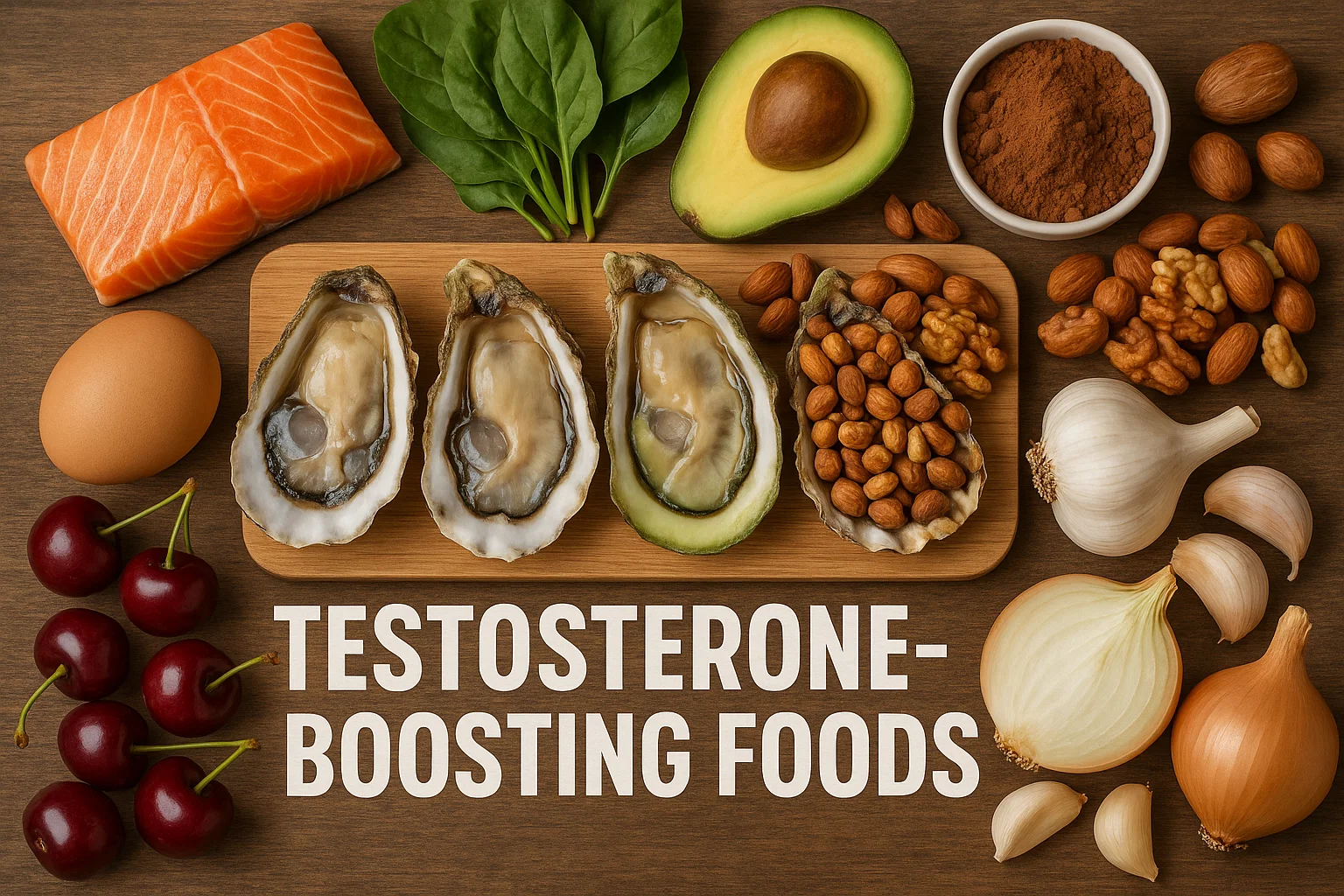
- Key foods: fatty fish, shellfish, eggs, dark leafy greens, nuts and seeds, avocados, cruciferous vegetables, and antioxidant‑rich fruits like berries and pomegranate.
- Avoid very low fat diets, excessive processed foods, and ensure lifestyle supports (sleep, exercise, body weight).
- Effects are modest and usually most noticeable when fixing a deficiency or pairing diet with healthy habits.
Sources
- Healthline — “Natural Foods for Boosting Testosterone” Healthline
- Verywell Health — “13 Foods to Boost Testosterone Naturally” Verywell Health
- Medical News Today — “What natural foods can help boost testosterone in older adults?” Medical News Today
- Forbes Health — “5 Foods To Help Boost Testosterone” Forbes
- EatingWell — “The 9 Best & Worst Foods For Healthy Testosterone Levels” EatingWell
- Men’s Health, Men’s Journal, etc. Men’s Health+1
- Recent systematic review: Low‑fat diets vs high‑fat diets and effects on sex hormones in men. arXiv