What if changing your diet did not mean counting every calorie, following a strict meal plan, or giving up everything you enjoy? What if one of the most meaningful steps you could take was simply eating fewer ultra-processed foods?
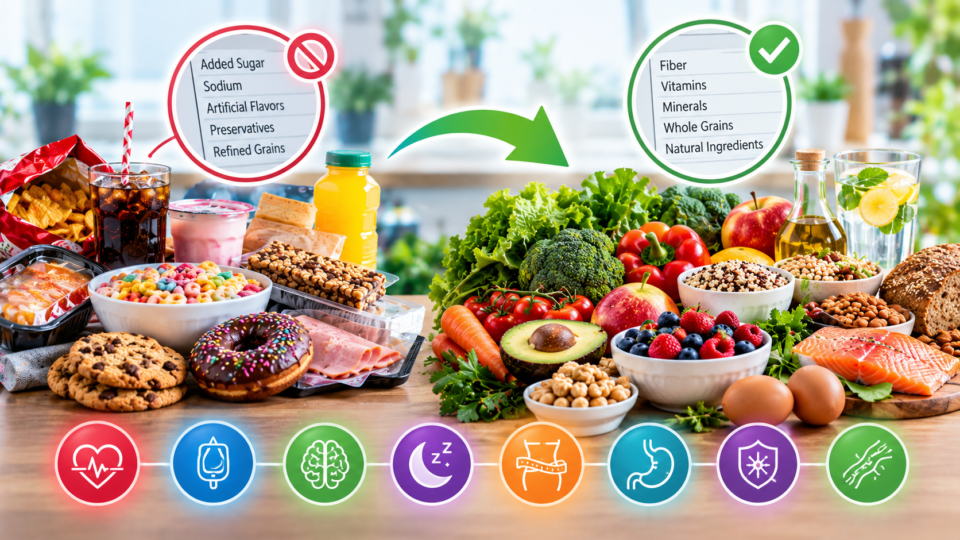
Ultra-processed foods are everywhere: packaged snacks, sugary breakfast cereals, instant noodles, soft drinks, ready-made meals, processed meats, and many convenient foods marketed as high-protein, low-fat, or fitness-friendly. They are affordable, widely available, and designed to be convenient. Some can also be easy to eat quickly and in large quantities.
But what happens when you gradually replace these foods with meals made from vegetables, fruits, beans, whole grains, nuts, eggs, fish, and other less-processed ingredients?
Your appetite, digestion, energy levels, and eating habits may begin to change. Over time, reducing ultra-processed foods may also support weight management, blood sugar regulation, and cardiovascular health. However, the effects are not identical for everyone, and researchers are still investigating how much of the observed health risk comes from processing itself versus the nutrients, calories, and overall dietary patterns associated with these foods.
Here is what may happen to your body when you reduce ultra-processed foods—from the first few days to the long-term benefits.
First, What Exactly Are Ultra-Processed Foods?
Not every food that comes in a package is ultra-processed. Frozen vegetables, canned beans, plain yogurt, and whole-grain bread can all be convenient parts of a nutritious diet.
The term ultra-processed food is commonly used in the NOVA food classification system. It generally refers to industrial formulations made from food-derived substances and ingredients, often containing additives such as flavorings, colors, emulsifiers, sweeteners, or preservatives. Examples include many soft drinks, packaged snack foods, instant noodles, confectionery, and ready-to-eat meals.
The category is broad, and not every product within it has the same nutritional profile. A packaged whole-grain product and a sugary soft drink should not automatically be treated as nutritionally equivalent simply because both are processed.
For this reason, the goal of reducing ultra-processed foods should not be to fear every packaged product. It is to make more room for nourishing foods and reduce frequent reliance on products that are high in added sugars, sodium, or energy while offering relatively little fiber or nutritional variety.
The First Few Days: Your Cravings and Appetite May Feel Different
If you regularly eat sweetened drinks, packaged desserts, chips, or highly palatable snack foods, changing your routine may feel uncomfortable at first.
You might notice that you still want your usual afternoon snack, reach for something sweet after dinner, or feel that your meals are missing familiar flavors. These experiences can reflect established habits, food availability, preferences, and the way your usual eating routine is structured. They do not necessarily mean your body is undergoing a medically defined withdrawal process.
Ultra-processed foods vary widely, and evidence does not establish that everyone experiences a predictable withdrawal syndrome when they stop eating them. Still, changing a familiar routine can take time.
One useful strategy is to avoid relying on willpower alone. If you usually snack on packaged cookies, prepare fruit with plain yogurt, nuts, or another satisfying alternative. If sweet drinks are part of your daily routine, gradually replace some servings with water or unsweetened beverages.
The goal is to make the new choice convenient—not to turn eating into a daily battle.
Your Appetite May Become Easier to Manage
One of the most interesting findings in ultra-processed food research concerns how much people may eat when their diet is built around these products.
In a controlled inpatient study, adults were offered either an ultra-processed or minimally processed diet for two weeks each. Participants consumed more calories and gained weight during the ultra-processed diet, even though the diets were designed to have comparable presented calories and several matched nutritional characteristics.
This does not prove that every ultra-processed food causes overeating, or that everyone will automatically lose weight by avoiding them. However, it suggests that the structure and characteristics of a diet can influence how much people eat.
When you replace some packaged snacks and ready-made meals with foods containing more fiber, water, and intact ingredients, you may find meals more satisfying. Whole fruit, vegetables, beans, oats, and other high-fiber foods often require more chewing and can add volume to meals.
Over time, building meals around satisfying ingredients may make it easier to recognize hunger and fullness cues and reduce unplanned snacking.
Your Digestion May Change as You Eat More Fiber
Many ultra-processed foods contain little fiber, although this is not true of every product. When you replace some of them with vegetables, fruits, legumes, and whole grains, your fiber intake may increase.
Fiber supports bowel regularity and provides nourishment for gut microbes. Certain types of fiber are fermented by intestinal bacteria, producing short-chain fatty acids and other compounds involved in gut health.
You may notice more regular bowel movements as your diet changes. However, increasing fiber too quickly can cause temporary gas, bloating, or abdominal discomfort, particularly if your previous diet was low in fiber.
A gradual transition is often more comfortable. Add beans, lentils, vegetables, oats, or whole grains in manageable portions, and drink adequate fluids.
It is also important to remember that digestive symptoms have many possible causes. Persistent pain, blood in the stool, unexplained weight loss, or ongoing changes in bowel habits deserve medical evaluation rather than being attributed automatically to diet adjustment.
Your Energy Levels May Become More Consistent
Some people report feeling more energetic after replacing frequent sugary drinks and refined snack foods with balanced meals. This may be related to changes in meal composition, overall calorie intake, hydration, and eating patterns.
A meal containing protein, fiber-rich carbohydrates, and healthy fats may provide a more satisfying experience than a snack made mostly from refined starch and added sugar. For example, oats with plain yogurt and fruit may keep you satisfied longer than a sweet pastry eaten alone.
However, it is inaccurate to claim that ultra-processed foods always cause an energy crash or that removing them guarantees constant energy. Energy levels are also influenced by sleep, stress, physical activity, medications, and medical conditions such as anemia or thyroid disorders.
The practical aim is to build meals that meet your needs and help you feel comfortably satisfied—not to chase a perfect energy level every hour of the day.
Could Your Sleep Improve?
Diet and sleep are connected, but the relationship is complex.
Research has found associations between higher ultra-processed food consumption and certain adverse sleep outcomes. However, much of this evidence is observational, meaning it cannot establish that ultra-processed foods directly cause poor sleep.
Reducing late-night reliance on highly sweetened snacks or large, heavy meals may help some people establish a more comfortable evening routine. Replacing caffeinated soft drinks or energy drinks with non-caffeinated options later in the day may also help if caffeine is affecting your sleep.
But changing food choices alone is not a guaranteed solution for insomnia. Sleep timing, light exposure, stress, medications, sleep apnea, and other health factors can all matter.
If you are changing your diet to support sleep, consider the whole routine: regular sleep and wake times, a comfortable sleeping environment, and attention to caffeine and alcohol as well as food.
What Happens to Your Weight?
Weight change is one of the most frequently discussed potential effects of reducing ultra-processed foods.
In the controlled study mentioned earlier, participants ate more calories and gained weight during the ultra-processed diet, while they ate less and lost weight during the minimally processed diet. The study provides experimental evidence that the type of diet offered can affect energy intake and short-term weight change.
In everyday life, the outcome depends on what replaces the foods you reduce. Replacing sugary drinks with water and packaged desserts with fruit may lower overall calorie intake. Replacing them with large portions of calorie-dense foods, however, may not.
Weight loss is therefore possible, but not automatic. Your total dietary pattern, portion sizes, activity level, sleep, medications, and individual biology all influence the result.
Rather than focusing only on the scale, pay attention to other useful changes: feeling satisfied after meals, having a more regular eating routine, improving food variety, and finding a way of eating you can maintain.
Your Blood Sugar May Benefit
Many ultra-processed foods contain refined starches or added sugars, and some drinks provide substantial sugar with little fiber. Frequently consuming large amounts of these products can make it harder to maintain a balanced dietary pattern.
Replacing some of them with whole grains, legumes, vegetables, and whole fruit can increase fiber intake and improve the overall quality of your carbohydrate choices.
Fiber-rich foods can slow digestion and influence how quickly glucose enters the bloodstream. Beans, lentils, oats, and intact whole grains are useful examples.
Large reviews have also found associations between higher ultra-processed food consumption and increased risk of type 2 diabetes. These findings are important, but they do not mean that an individual food directly causes diabetes or that avoiding all ultra-processed foods guarantees prevention.
For people who already have diabetes, food changes should fit their medication plan and glucose-monitoring needs. If you take insulin or medicines that can cause hypoglycemia, major dietary changes may affect glucose levels and should be discussed with your healthcare professional.
Could Inflammation Decrease?
Inflammation is a normal part of the immune system’s response to injury and infection. The concern is chronic, inappropriate inflammation, which is associated with several long-term health conditions.
Researchers are investigating possible links between ultra-processed food consumption, inflammation, gut function, and metabolic health. Potential explanations include dietary patterns high in excess calories, added sugars, sodium, and certain fats, as well as lower intake of fiber-rich plant foods.
However, the science is still developing. It would be too strong to promise that stopping ultra-processed foods will “flush out inflammation” or quickly lower inflammatory markers in every person.
A more evidence-based approach is to build a dietary pattern rich in vegetables, fruits, legumes, whole grains, nuts, and appropriate sources of protein, while limiting frequent consumption of foods high in added sugars and sodium.
This supports overall nutritional quality without relying on exaggerated detox claims.
Your Heart and Blood Vessels May Benefit Over Time
Cardiovascular health is one of the major areas of concern in research on ultra-processed foods.
A 2024 umbrella review in The BMJ, which evaluated evidence from multiple systematic reviews and meta-analyses, found that higher ultra-processed food exposure was associated with several adverse health outcomes, including cardiovascular-related outcomes and type 2 diabetes. The review also emphasized that the quality of evidence varied across outcomes, and many underlying studies were observational.
Reducing frequent intake of foods high in sodium, added sugars, and excess calories may support a heart-healthy eating pattern. Replacing some packaged meals and snacks with vegetables, legumes, whole grains, nuts, and minimally processed protein sources can also improve overall dietary variety.
But no single food category determines cardiovascular health on its own. Blood pressure, cholesterol, smoking, physical activity, genetics, sleep, and access to healthcare all contribute.
The most useful approach is to combine food changes with other heart-supporting habits, such as regular movement, not smoking, and following prescribed treatment for conditions such as hypertension or high cholesterol.
After One Month: Your Eating Habits May Feel More Natural
After several weeks, the most meaningful change may be that your new routine requires less thought.
You may become more comfortable preparing simple meals, checking ingredient lists, choosing unsweetened options, or keeping satisfying snacks available. You may also discover that some foods you once considered essential are simply habits linked to particular times, places, or activities.
This is not a guarantee that cravings disappear or that every meal becomes easy. Food preferences are personal, and convenience, budget, culture, time, and access to ingredients all affect what is realistic.
A sustainable plan should make room for flexibility. You do not need to eliminate every packaged food, refuse meals with friends, or feel guilty after eating a favorite snack.
Consistency over time matters more than dietary perfection.
How to Reduce Ultra-Processed Foods Without Overhauling Your Life
Start with the foods you consume most frequently rather than trying to change everything at once. If sweetened drinks are a daily habit, replace one serving with water or an unsweetened drink. If breakfast is usually a sugary cereal, try oats or a lower-sugar whole-grain option with fruit or plain yogurt.
Keep convenient alternatives available. Canned beans, frozen vegetables, plain yogurt, eggs, fruit, nuts, and whole-grain staples can make it easier to assemble meals when time is limited.
Read labels with a practical focus. Look at added sugars, sodium, fiber, serving size, and the ingredient list. Remember that the presence of an additive does not automatically make a food dangerous, and the word “natural” does not automatically make it nutritious.
Most importantly, think in terms of replacement. Removing a food without having a satisfying alternative can leave you hungry and frustrated. Building a better routine is easier when the new meals are enjoyable, affordable, and convenient.
The Bottom Line
When you stop—or more realistically, significantly reduce—ultra-processed foods, your body may experience several changes. Your cravings and routines may shift, your fiber intake may increase, digestion may become more regular, and balanced meals may help you feel more satisfied. Depending on what you replace, you may also find it easier to manage calorie intake, weight, and blood sugar.
Over the long term, a dietary pattern built around minimally processed, nutrient-rich foods may support cardiovascular and metabolic health. Research links higher ultra-processed food consumption with several adverse outcomes, although not every association proves direct cause and effect.
You do not need an all-or-nothing diet to make progress. Start with one meal, one snack, or one drink. Make the healthier option practical and satisfying, then build from there.
The real goal is not to eat perfectly. It is to make nourishing, sustainable choices the foundation of your everyday life.
Sources
1. Hall KD, et al. (2019). “Ultra-Processed Diets Cause Excess Calorie Intake and Weight Gain: An Inpatient Randomized Controlled Trial of Ad Libitum Food Intake.” Cell Metabolism. The controlled feeding study found participants consumed more calories and gained weight during the ultra-processed diet compared with the unprocessed diet. PMC
2. Lane MM, et al. (2024). “Ultra-processed food exposure and adverse health outcomes: umbrella review of epidemiological meta-analyses.” The BMJ. A large umbrella review assessing associations between ultra-processed food exposure and health outcomes, with evidence quality varying by outcome. The BMJ
3. Harvard T.H. Chan School of Public Health — Processed Foods and Health. Overview of food processing categories and the NOVA classification system. The Nutrition Source
4. PubMed — Ultra-processed food exposure and adverse health outcomes. Abstract and bibliographic details for the 2024 umbrella review. PubMed
5. World Health Organization — Healthy Diet. General guidance on dietary quality, fruits and vegetables, whole grains, free sugars, and salt. WHO: Healthy Diet
6. Harvard T.H. Chan School of Public Health — The Nutrition Source: Fiber. Background on dietary fiber, digestion, and health. Harvard: Fiber
7. Centers for Disease Control and Prevention — Diabetes and Healthy Eating. Practical information about nutrition and blood glucose management. CDC: Diabetes and Healthy Eating