
Healthy skin is more than a beauty goal—it is a reflection of overall wellness. As the body’s largest organ, the skin plays essential roles: protecting against external threats, regulating temperature, preventing water loss, and supporting immune defense. But modern lifestyles, environmental stressors, poor dietary habits, and aging can all affect how the skin looks and functions.
This comprehensive guide explores the foundations of skin health, the factors that influence it, and the science-backed steps you can take to achieve clear, glowing, resilient skin at any age.
What Defines Truly Healthy Skin?
Healthy skin is not defined solely by appearance. Dermatologists typically describe healthy skin as:
- Smooth in texture with minimal roughness
- Even in tone without patchy discoloration
- Well-hydrated, feeling soft and supple
- Free from excessive oiliness or dryness
- Resilient, able to quickly heal from injuries or inflammation
- Firm and elastic, reflecting strong collagen and elastin networks
Achieving this requires a holistic approach—supporting the skin from within, protecting it from the outside, and establishing daily habits that promote long-term skin integrity.
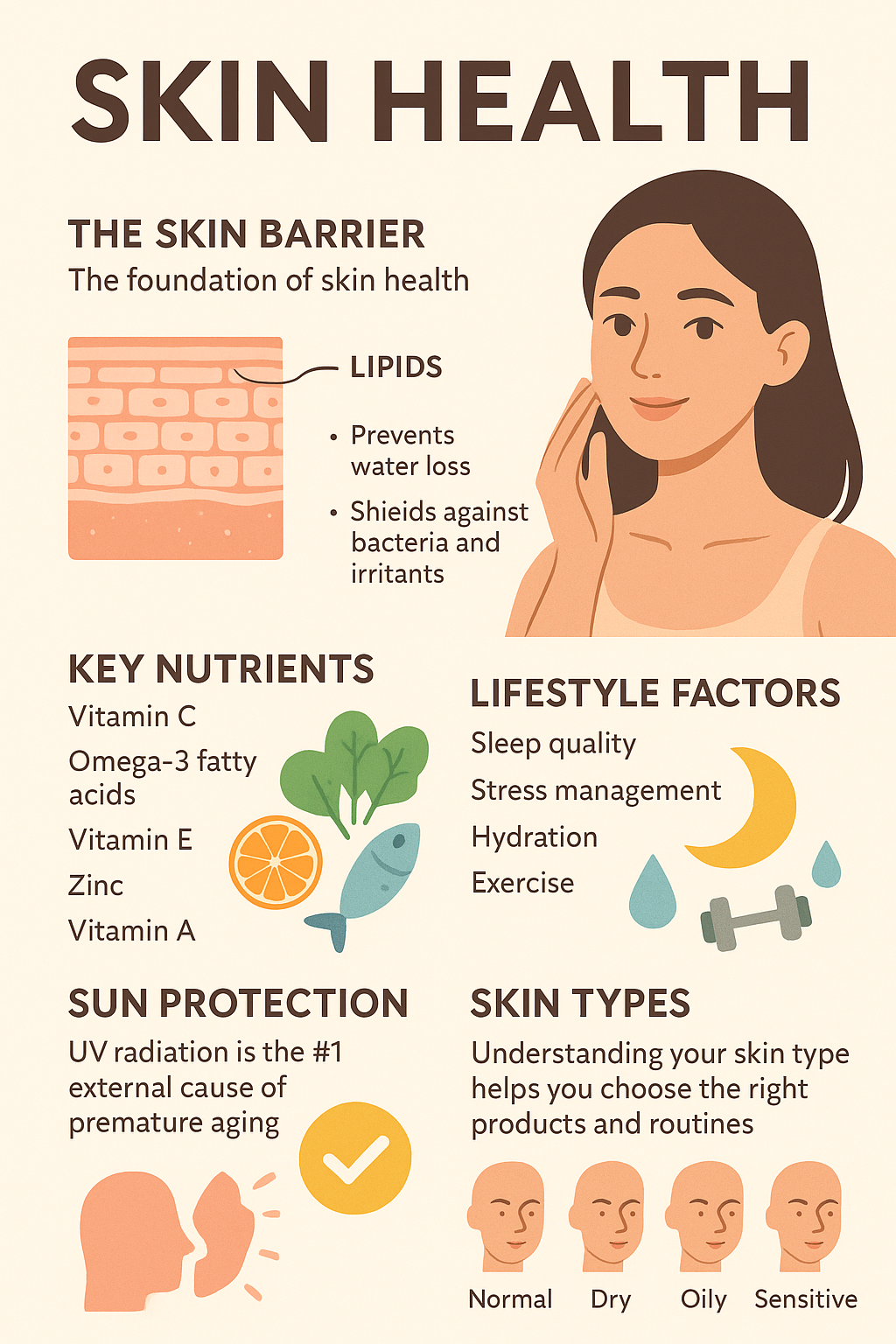
The Skin Barrier: The Foundation of Skin Health
At the heart of skin health lies the skin barrier, also known as the stratum corneum. This protective layer consists of skin cells (corneocytes) and lipids (ceramides, cholesterol, and fatty acids). Together, they function like a brick-and-mortar system that:
- Prevents water loss
- Shields against bacteria and irritants
- Reduces sensitivity and inflammation
When the barrier is compromised, symptoms like dryness, redness, flaking, acne, eczema, and increased sensitivity commonly appear.
How to Strengthen the Skin Barrier:
- Use gentle, low-pH cleansers
Harsh cleansers strip natural oils and disrupt skin pH, weakening the barrier. - Incorporate ceramides
Ceramides restore the lipid structure, improving hydration and resilience. - Avoid over-exfoliating
Excessive scrubs or acids can trigger barrier damage and inflammation. - Use moisturizers containing humectants, emollients, and occlusives
Ingredients like hyaluronic acid, glycerin, shea butter, and squalane help lock in hydration and repair the barrier.
Key Nutrients for Healthy Skin
Nutrition plays a critical role in building and maintaining skin health. What you eat impacts collagen production, cell turnover, hydration levels, and antioxidant protection.
1. Vitamin C: Collagen Booster and Antioxidant
Vitamin C supports collagen synthesis, brightens the skin, and protects against environmental damage.
Sources: Citrus fruits, kiwi, broccoli, berries, peppers.
2. Omega-3 Fatty Acids: Anti-Inflammatory Powerhouses
Omega-3s reduce inflammation, help regulate oil production, and strengthen the skin barrier.
Sources: Fatty fish, walnuts, chia seeds, flaxseeds.
3. Vitamin E: Moisture Protector
Vitamin E works with vitamin C to protect skin against free radicals and UV damage.
Sources: Almonds, sunflower seeds, avocados.
4. Zinc: Skin Repair and Oil Balance
Zinc aids wound healing, reduces inflammation, and supports skin immunity.
Sources: Beans, seeds, shellfish, eggs.
5. Vitamin A (Retinoids): Cell Turnover Support
Vitamin A helps regulate cell growth and reduce acne, wrinkles, and texture issues.
Sources: Carrots, sweet potatoes, leafy greens, eggs.
6. Water: Hydration Hero
Proper hydration keeps the skin plump, improves elasticity, and supports detoxification.
A nutrient-rich diet paired with adequate water intake is one of the most powerful foundations of lifelong skin health.
Lifestyle Factors That Impact Skin Health
1. Sleep Quality
During sleep, the body repairs cells, regenerates collagen, and balances hydration. Poor sleep increases cortisol, leading to:
- Acne flare-ups
- Dullness
- Dark circles
- Premature aging
Aim for 7–9 hours of restorative sleep each night.
2. Stress Management
Chronic stress triggers inflammation, which worsens acne, eczema, psoriasis, and premature aging.
Effective stress reducers include:
- Deep breathing
- Meditation
- Yoga
- Regular physical activity
3. Hydration
Dehydration leads to dryness, fine lines, and reduced elasticity. Most adults benefit from 2–3 liters of water daily, depending on activity levels and climate.
4. Exercise
Regular movement improves circulation, delivering oxygen and nutrients to the skin while promoting detoxification through sweat.
The Role of Sun Protection in Skin Health
UV radiation is the #1 external cause of premature aging, responsible for up to 80% of visible aging signs, including:
- Wrinkles
- Sunspots
- Hyperpigmentation
- Loss of elasticity
Daily sunscreen use is non-negotiable, even on cloudy days.
How to Choose an Effective Sunscreen:
- SPF 30 or higher for daily use
- Broad-spectrum protection (UVA + UVB)
- Water-resistant if outdoors
- Mineral options (zinc oxide, titanium dioxide) for sensitive skin
Reapply every 2 hours when exposed to direct sunlight.
Skin Types and How to Care for Them
Understanding your skin type helps you choose the right products and routines.
1. Normal Skin
Balanced oil production, minimal sensitivity.
Care Tips:
- Maintain hydration
- Use gentle exfoliation 1–2 times weekly
- Daily sunscreen
2. Dry Skin
Flaky, tight, dull, prone to irritation.
Care Tips:
- Use creamy cleansers
- Add rich moisturizers with ceramides
- Avoid alcohol-based products
3. Oily Skin
Shiny, enlarged pores, acne-prone.
Care Tips:
- Use gel cleansers
- Incorporate salicylic acid
- Choose oil-free moisturizers
4. Combination Skin
Oily in the T-zone and dry in the cheeks.
Care Tips:
- Use lightweight hydration
- Spot-treat oily areas
- Avoid overly heavy creams
5. Sensitive Skin
Reactive, red, easily irritated.
Care Tips:
- Avoid fragrance and harsh exfoliants
- Use barrier-repair moisturizers
- Patch-test all new products
Effective Skincare Routine for Optimal Skin Health
A consistent skincare routine can dramatically improve the appearance and function of the skin.
Morning Routine
- Gentle Cleanser – removes oil buildup
- Antioxidant Serum (Vitamin C) – protects from environmental damage
- Lightweight Moisturizer – hydrates
- Sunscreen – essential for all skin types
Evening Routine
- Cleanser – removes dirt, makeup, and pollution
- Treatment (retinol, salicylic acid, niacinamide) – depending on skin needs
- Hydrating or barrier-repair moisturizer – locks in moisture
Optional Enhancements
- Exfoliation (1–2x per week) to remove dead skin cells
- Face masks for hydration, detoxification, or brightening
- Facial oils for extra nourishment
Consistency—not complexity—is what makes a routine effective.
Common Skin Problems and Their Solutions
1. Acne
Caused by clogged pores, bacteria, hormones, and inflammation.
Solutions:
- Use salicylic acid
- Apply benzoyl peroxide
- Incorporate retinoids
- Avoid picking
2. Hyperpigmentation
Triggered by sun exposure, hormones, acne scars.
Solutions:
- Use vitamin C and niacinamide
- Apply sunscreen daily
- Consider retinoids or gentle exfoliation
3. Premature Aging
Fine lines, wrinkles, and sagging skin.
Solutions:
- Daily sunscreen
- Retinoids
- Antioxidants
- Collagen-supporting nutrition
4. Dryness and Dehydration
Often linked to a weakened skin barrier.
Solutions:
- Use ceramides and hyaluronic acid
- Avoid hot water
- Drink enough fluids
Environmental Factors Affecting Skin Health
1. Pollution
Particles in polluted air can cause oxidative stress, leading to dark spots, wrinkles, and acne.
Defense: Antioxidants + thorough cleansing.
2. Climate
Cold, dry climates worsen dehydration; hot climates encourage oiliness and breakouts.
Defense: Seasonal skincare adjustments.
3. Blue Light
Screens emit blue light that can cause hyperpigmentation and collagen breakdown.
Defense: Antioxidant serums + SPF even indoors.
Holistic Approaches to Skin Health
Healthy skin is also influenced by overall wellness:
- Balanced diet
- Regular physical activity
- Mental well-being
- Adequate sleep
- Stress reduction
These internal factors often matter more than external products.
Final Thoughts
Achieving glowing, youthful skin is not about quick fixes—it’s a holistic process combining smart skincare, balanced nutrition, lifestyle habits, and environmental protection. When you nourish your skin from the inside and protect it from the outside, you build a lifelong foundation for radiant, resilient skin.
Whether your goal is to reduce acne, slow aging, balance oil production, or enhance overall skin quality, adopting a science-backed, consistent approach will help you transform your skin health for years to come.
Sources
- American Academy of Dermatology
- Journal of Dermatological Science
- National Institutes of Health – Office of Dietary Supplements
- British Journal of Dermatology
- Journal of Clinical and Aesthetic Dermatology
- Harvard Health Publishing
- American Journal of Clinical Nutrition
- Skin Cancer Foundation