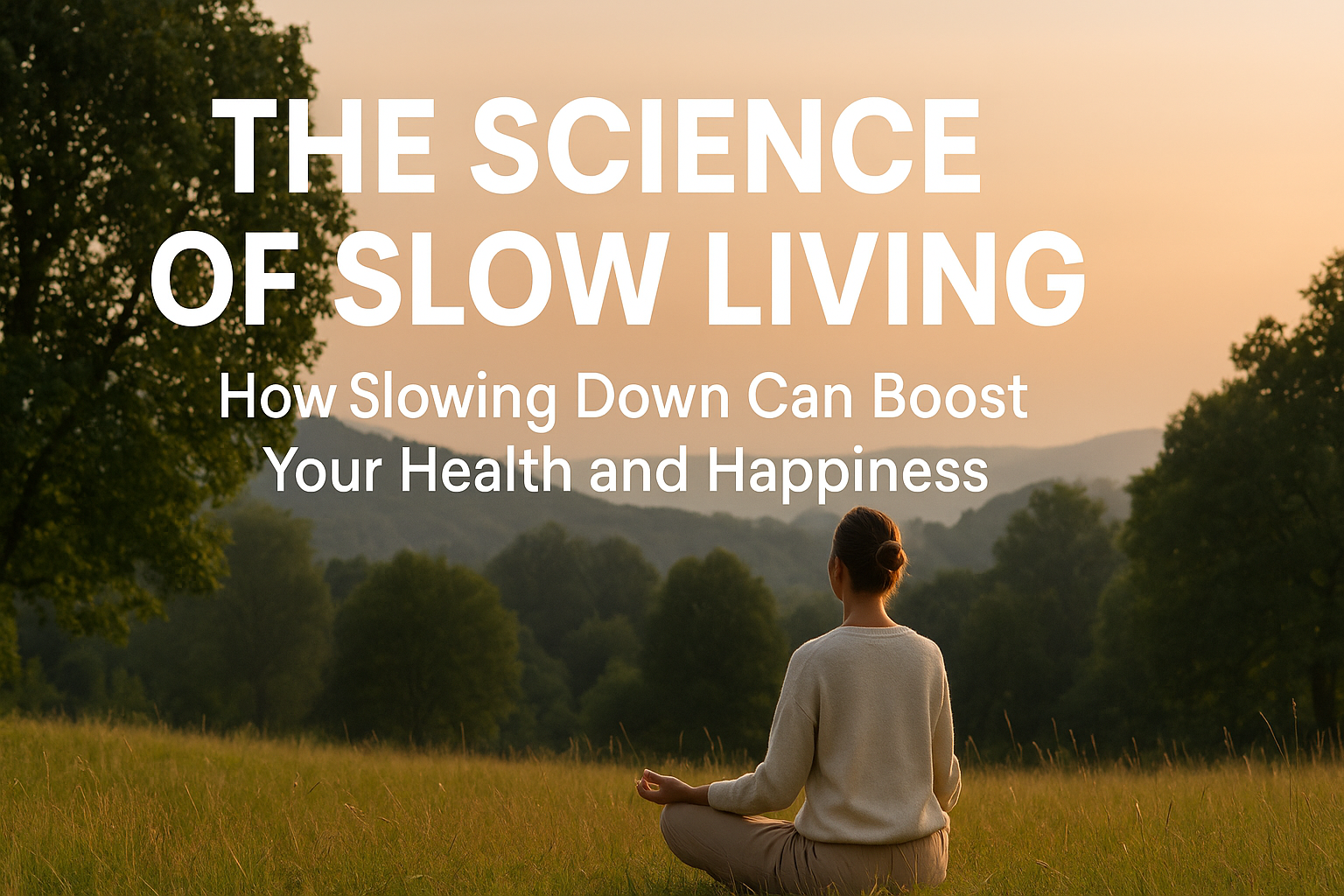
In a world where speed and productivity often define success, many people are rediscovering the value of slowing down. The “slow living” movement has gained traction as an antidote to burnout, digital overload, and the constant pressure to do more. Rooted in mindfulness, minimalism, and intentional living, this philosophy encourages people to live with greater purpose, clarity, and peace. But slow living isn’t just a lifestyle trend — it’s supported by science. Research increasingly shows that slowing down can have profound effects on physical health, mental clarity, and overall happiness.
In this article, we’ll explore the principles behind slow living, the psychological and physiological benefits of a slower pace, and practical steps you can take to bring this transformative approach into your daily life.
What Is Slow Living?
Slow living is a conscious approach to life that emphasizes quality over quantity, mindfulness over multitasking, and presence over performance. It’s not about doing everything slowly or rejecting ambition — it’s about aligning your pace of life with what truly matters to you.
At its core, slow living means:
- Being mindful of how you spend your time and energy.
- Simplifying your environment and commitments.
- Connecting deeply with people, nature, and meaningful activities.
- Appreciating the present moment, instead of constantly rushing toward the next task.
The concept of slow living emerged as part of the broader “slow movement,” which began with the Slow Food movement in Italy in the 1980s. The idea soon expanded into other areas — from slow travel and slow fashion to slow parenting and slow business — all promoting balance and sustainability over speed and consumption.
The Science Behind Slow Living
1. Mindfulness and the Brain
Mindfulness — a key element of slow living — has been extensively studied for its positive effects on mental health. Neuroscientific research shows that mindfulness practices can reshape the brain. Regular meditation or deep presence increases gray matter density in regions associated with learning, memory, and emotional regulation, such as the hippocampus and prefrontal cortex.
Moreover, mindfulness reduces activity in the amygdala, the brain’s “stress center,” helping lower anxiety and reactivity. By slowing down and engaging fully in the present moment, people experience reduced levels of the stress hormone cortisol, improved concentration, and greater emotional resilience.
2. The Physiology of Stress Reduction
Modern life often keeps our nervous systems in “fight or flight” mode. Deadlines, notifications, and constant multitasking activate the sympathetic nervous system — the body’s stress response — even when there’s no real danger. Chronic activation of this system is linked to inflammation, high blood pressure, heart disease, and weakened immunity.
Slow living helps activate the parasympathetic nervous system, also known as the “rest and digest” system. This physiological state slows the heart rate, lowers blood pressure, and promotes digestion and cellular repair. Activities like deep breathing, mindful eating, nature walks, and unhurried routines support this shift, helping the body restore balance and health.
3. Minimalism and Mental Clarity
Clutter — whether physical or digital — can create cognitive overload. Studies have shown that a cluttered environment leads to increased stress and decreased focus. The brain is naturally drawn to order and clarity; when overwhelmed by too much visual or informational input, it struggles to concentrate.
Minimalism, a central tenet of slow living, simplifies the sensory landscape. By reducing possessions and distractions, you create space for clarity and creativity. In essence, clearing your environment helps clear your mind.
4. The Happiness Connection
Research in positive psychology consistently shows that happiness is less about constant achievement and more about engagement, connection, and purpose — all key principles of slow living.
A slower lifestyle promotes activities that trigger the brain’s “feel-good” chemicals:
- Dopamine for motivation and pleasure (through creative hobbies and personal growth).
- Serotonin for contentment (through gratitude and nature exposure).
- Oxytocin for bonding (through quality relationships and mindful interactions).
- Endorphins for joy (through movement and laughter).
By prioritizing meaningful experiences over material pursuits, slow living helps cultivate long-term satisfaction and emotional well-being.
The Mental Benefits of Slowing Down
1. Improved Focus and Productivity
Contrary to what many believe, slowing down doesn’t mean accomplishing less. When we rush, our attention scatters and the quality of our work suffers. Slow living promotes deep work — the ability to focus without distraction on cognitively demanding tasks.
When you work mindfully, your brain can enter a state of flow, where concentration and creativity peak. As a result, you actually get more done in less time and feel more fulfilled doing it.
2. Reduced Anxiety and Burnout
The modern “hustle culture” glorifies being busy, but constant busyness leads to emotional exhaustion. Slow living offers an antidote by encouraging rest, boundaries, and balance.
Taking breaks, getting enough sleep, and doing one thing at a time are not signs of laziness — they’re essential for mental health. By slowing down, you allow your mind to process experiences, reset stress levels, and recover from overstimulation.
3. Enhanced Relationships
When life slows down, connections deepen. Instead of multitasking during conversations, slow living encourages active listening and full presence. This attentiveness strengthens empathy and understanding, making relationships more meaningful.
Quality time with loved ones — shared meals, walks, or simple conversations — becomes a cornerstone of emotional well-being. Studies show that strong social ties are among the best predictors of long-term happiness and longevity.
The Physical Health Benefits of Slow Living
- Better Sleep: A slower lifestyle reduces mental overstimulation and encourages evening routines that support natural sleep cycles.
- Improved Digestion: Mindful eating enhances nutrient absorption and prevents overeating.
- Heart Health: Lower stress levels correlate with reduced blood pressure and improved cardiovascular function.
- Stronger Immunity: Chronic stress suppresses immune function, but relaxation and mindfulness can boost your body’s natural defenses.
By aligning your body’s rhythm with a calmer pace, you promote internal balance and resilience against illness.
How to Practice Slow Living in Everyday Life
Adopting slow living doesn’t require dramatic lifestyle changes — it starts with small, consistent shifts in how you approach your day. Here are practical ways to integrate slow living into your life:
1. Simplify Your Schedule
Evaluate your commitments and eliminate activities that don’t add real value. Learn to say “no” without guilt. Make space for what truly matters — rest, relationships, and creativity.
2. Be Mindful with Technology
Digital devices are major contributors to modern stress. Set boundaries by scheduling screen-free time, turning off non-essential notifications, and practicing digital detox days.
3. Create Morning and Evening Rituals
Begin your day with calm — perhaps through stretching, journaling, or meditation — instead of immediately checking your phone. End your day with reflection or gratitude to unwind and improve sleep quality.
4. Practice Mindful Eating
Eat slowly, savor each bite, and avoid distractions like TV or scrolling. This simple habit can transform your relationship with food and improve digestion.
5. Spend Time in Nature
Nature naturally slows us down. Walking outdoors reduces cortisol levels, improves mood, and restores mental energy. Even a few minutes of sunlight and fresh air daily can make a difference.
6. Declutter Your Space
Regularly remove items you no longer use. Keep only what serves a purpose or brings joy. A tidy environment promotes mental calm and focus.
7. Focus on One Task at a Time
Multitasking divides attention and increases stress. Try the “single-tasking” approach — fully engage in one activity before moving to the next. You’ll feel more productive and less scattered.
Slow Living as a Lifestyle Philosophy
Ultimately, slow living isn’t about withdrawing from the world; it’s about engaging with it more fully. It’s a conscious rejection of the notion that faster is always better. Instead, it asks: What truly matters?
By living with intention, you not only improve your own health and happiness but also contribute to a more sustainable, compassionate society. Slow living fosters gratitude, resilience, and authenticity — qualities that modern life often overlooks but desperately needs.
In a culture obsessed with acceleration, choosing to slow down is a radical act of self-care. It’s an invitation to reclaim your time, energy, and peace — and to rediscover the joy of simply being alive.
Sources
- American Psychological Association – “Mindfulness Meditation: A Research-Proven Way to Reduce Stress”
- Harvard Health Publishing – “Relaxation Techniques: Breath Control Helps Quell Errant Stress Response”
- Stanford University – “The Effects of Minimalism on Well-being and Focus”
- University of California, Berkeley – Greater Good Science Center, “The Science of Happiness”
- World Health Organization – “Stress and Health: The Global Epidemic of Burnout”
- National Institutes of Health – “Physiological and Psychological Benefits of Mindfulness-Based Practices”


1 comment
Thanks for sharing. I read many of your blog posts, cool, your blog is very good.