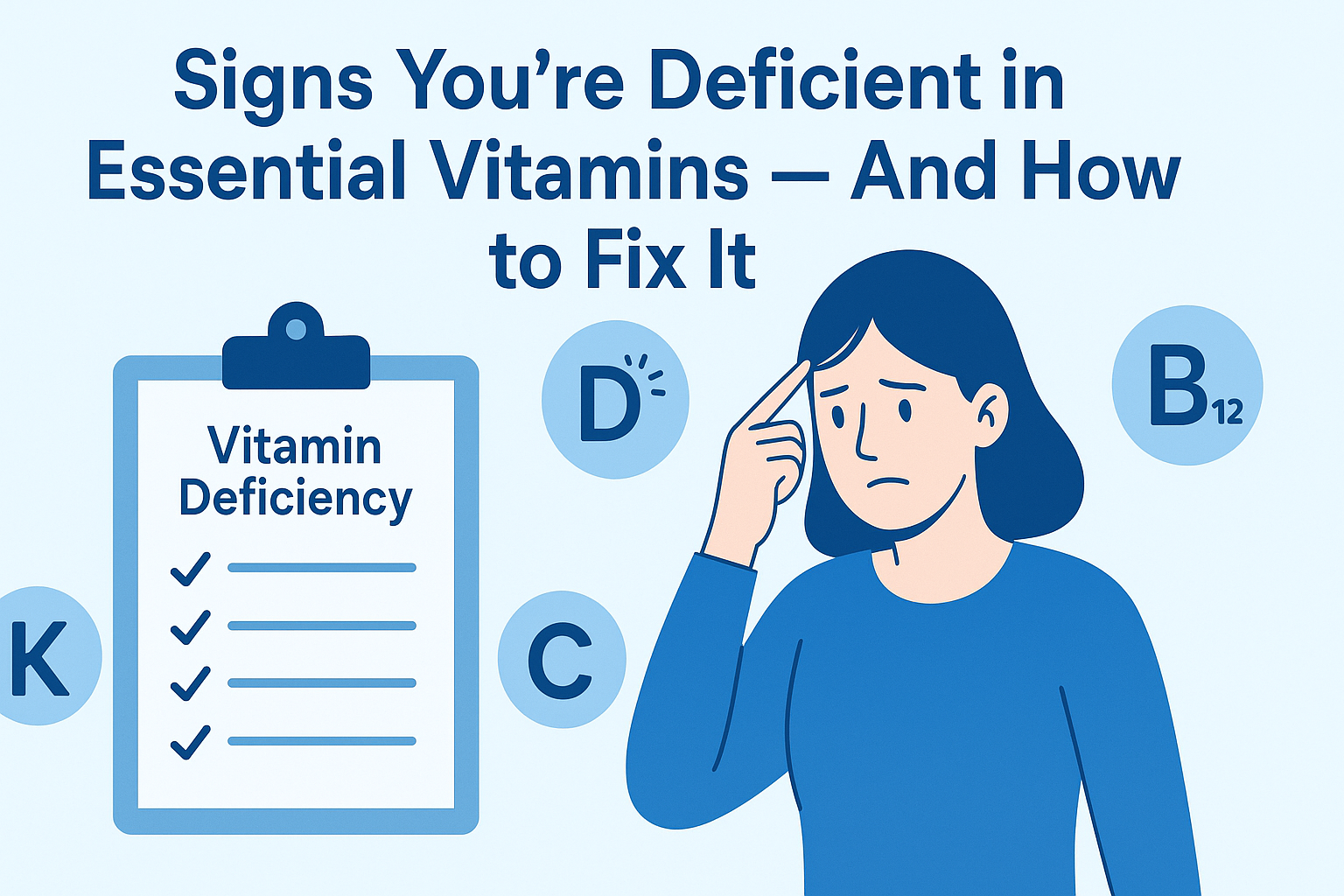
Vitamin deficiencies can be silent, creeping into your life gradually, and mimicking common symptoms like fatigue, hair loss, or mood swings. But these signs shouldn’t be ignored. Essential vitamins play key roles in everything from energy production to nerve function to immune defense. This article will walk you through the common signals your body sends when it’s missing key vitamins, highlight which vitamins might be lacking, and present strategies you can use to remedy the situation.
Why vitamin deficiencies matter
Vitamins are micronutrients your body needs in relatively small amounts—but they have outsized importance. They help catalyze chemical reactions, maintain tissues, support immune health, and preserve organ function. When you don’t get enough of one or more vitamins, your body begins to show strain. As one overview explains: “Signs and symptoms of a vitamin deficiency vary by the vitamin and severity of the deficiency. Symptoms may occur in the neurological, cardiovascular, and gastrointestinal systems.”
Certain populations are at higher risk: people following very restricted diets (for example, vegan diets without proper planning), individuals with malabsorption issues (such as gastrointestinal diseases), those with limited sun exposure, older adults, and people living in regions where certain nutrients are scarce.
If you want to feel your best, being alert to deficiency signals—and taking steps to correct them—can pay off. Below are the most common warning signs and what they may suggest.
Key warning signs of vitamin deficiency
Here are some prominent symptoms your body may use to tell you you’re missing something important:
- Chronic fatigue and low energy
If you are feeling tired all the time despite resting and eating reasonably well, it could signal a vitamin deficiency. For example, lack of several B-vitamins (such as B12, B1, B3) or vitamin D can impede energy metabolism and muscle function. - Brittle hair, nails, hair loss
When nails break easily or hair thins, it may be due to inadequate intake of nutrients such as biotin (B7), vitamin D, iron, and certain B-vitamins. - Dry skin, rashes, skin changes
Vitamin deficiencies may show up via skin signs: rashes, scaly skin patches, dry skin, pigmentation changes. For example, vitamin A deficiency may lead to dry, itchy skin, and a lack of B vitamins can lead to dermatitis–type changes. - Mouth/Oral issues
Cracked corners of the mouth (angular cheilitis), ulcers in the mouth, swollen tongue or gums—these can indicate deficiencies in B-vitamins (e.g., B2, B3, B12, folate) or vitamin C. - Vision or eye issues
Some vitamins are critical for eye health. For instance, vitamin A deficiency is classically associated with night blindness. - Numbness, tingling, nerve symptoms
Pins and needles, burning sensations in the feet or hands, balance issues — these may point to deficiencies in B12, B6, B1. The nervous system is often sensitive to micronutrient shortfalls. - Bone pain, muscle weakness, frequent infection
Vitamin D deficiency is known for muscle weakness, bone pain, and in more extreme cases, bone-softening diseases (osteomalacia in adults, rickets in children). Also, a weak immune system may reflect poor vitamin status. - Slow-healing wounds, easy bruising
If small cuts or bruises linger longer than they should, or you bruise easily, it may suggest inadequate vitamin C, vitamin K or others involved in tissue repair or collagen formation. - Mood changes, brain fog, memory issues
Because some vitamins influence brain chemistry and nerve function, deficiencies can manifest as irritability, depression, concentration problems. B vitamins (e.g., B12, B3), folate, vitamin D may play roles. - Unusual indicators
Some more subtle clues: frequent colds or infections (immune weakness), brittle bones or multiple fractures (chronic deficiency affecting bone health), pale skin (iron or B12 deficiency leading to anemia).
Which vitamins commonly get deficient—and what they do
Here’s a breakdown of a few of the most common vitamin shortfalls, what they lead to, and what signs to watch for:
- Vitamin D: Important for calcium absorption, bone health, muscle functioning, immune system. Deficiency may present as fatigue, bone pain, muscle cramps/weakness, mood changes.
- Vitamin B12: Vital for red blood cell formation, nerve function, DNA synthesis. Deficiency may lead to fatigue, nerve symptoms (tingling, numbness), balance problems, cognitive changes.
- Vitamin A: Important for vision, immune health, skin health. Deficiency (less common in developed countries) may lead to night blindness, dry skin, immune issues.
- Vitamin C: Key for collagen synthesis, wound healing, immunity. Low levels may lead to poor healing, frequent infections, easy bruising.
- B-vitamins (general, including B1, B2, B3, B6, folate/B9): These work broadly in energy metabolism, nerve health, skin/hair health, and blood cell production. Deficiencies can yield fatigue, nerve symptoms, skin/hair signs, anemia.
What causes vitamin deficiencies?
Understanding why deficiencies happen helps you take preventive action. Major causes include:
- Poor diet: Diets that are highly processed, low in variety, or exclude whole food sources can lead to inadequate vitamin intake.
- Limited sun exposure: Especially relevant for vitamin D. If you live in a place with less sun or have higher skin pigmentation (which reduces vitamin D synthesis), you might be at risk.
- Malabsorption disorders: Conditions like celiac disease, Crohn’s disease, surgeries that reduce absorption, or medications that impair absorption make you vulnerable.
- Life stage or special diets: Pregnant or lactating women, older adults, vegans/vegetarians (esp. for vitamins like B12) are at higher risk.
- Chronic illness or medication use: Some conditions (kidney disease, liver disease) and some medications can interfere with vitamin metabolism.
| Vitamin | Main Functions | Deficiency Signs | Best Food Sources / Fixes |
|---|---|---|---|
| Vitamin A | Vision, skin health, immune support | Night blindness, dry skin, weak immunity | Carrots, sweet potatoes, spinach, kale, eggs, liver, fortified dairy |
| Vitamin B1 (Thiamine) | Energy metabolism, nerve function | Fatigue, irritability, muscle weakness, poor reflexes | Whole grains, pork, legumes, nuts, seeds |
| Vitamin B2 (Riboflavin) | Energy production, cell repair | Cracked lips, sore throat, mouth sores | Eggs, dairy, almonds, mushrooms, leafy greens |
| Vitamin B3 (Niacin) | Nervous system, digestion, skin | Skin rashes, fatigue, poor concentration | Poultry, fish, peanuts, fortified grains |
| Vitamin B5 (Pantothenic Acid) | Hormone and red blood cell production | Fatigue, headache, irritability | Chicken, beef, potatoes, oats, tomatoes |
| Vitamin B6 (Pyridoxine) | Brain development, metabolism | Anemia, depression, confusion, cracked lips | Bananas, chickpeas, tuna, potatoes |
| Vitamin B7 (Biotin) | Hair, skin, nail health | Brittle hair/nails, rash, fatigue | Eggs, nuts, seeds, salmon, avocados |
| Vitamin B9 (Folate) | DNA synthesis, cell division | Fatigue, gray hair, mouth sores | Leafy greens, citrus, lentils, fortified grains |
| Vitamin B12 | Nerve health, red blood cell production | Numbness, weakness, brain fog, anemia | Fish, eggs, dairy, meat, fortified plant foods |
| Vitamin C | Immunity, collagen, antioxidant | Weak immunity, bleeding gums, bruising | Citrus fruits, bell peppers, broccoli, strawberries |
| Vitamin D | Bone health, immune regulation | Muscle weakness, fatigue, bone pain | Sunlight, salmon, fortified milk, mushrooms |
| Vitamin E | Antioxidant, skin protection | Nerve/muscle issues, vision problems | Nuts, seeds, vegetable oils, spinach |
| Vitamin K | Blood clotting, bone strength | Easy bruising, bleeding gums | Leafy greens, broccoli, brussels sprouts |
How to fix vitamin deficiencies — and prevent them
Here are practical steps you can take to correct deficiencies and maintain good vitamin status over time. Always consult with your healthcare provider before starting supplements, especially if you suspect a deficiency.
1. Get assessed
If you suspect a vitamin deficiency (based on symptoms above), it’s wise to get a blood test or assessment. A medical professional can test levels (for example, 25-hydroxyvitamin D for vitamin D) and determine whether supplementation or further investigation is needed.
2. Improve your diet
Diet is the foundation. A dietary pattern rich in whole foods and varied sources of vitamins is your best defense.
- Eat plenty of colorful fruits and vegetables (for vitamins A, C, folate, etc.).
- Include high-quality protein sources (meat, poultry, fish, eggs, legumes) for B-vitamins, vitamin A (if you eat animal foods) and others.
- Incorporate fortified foods when needed (e.g., cereals with folate or B12).
- For vitamin D, include fatty fish, fortified dairy or plant milks, egg yolks, and aim for safe sun exposure.
- For B12, if you’re vegetarian or vegan, make sure you include fortified foods or supplements.
3. Use supplements when necessary
If diet alone can’t correct a deficiency, supplements may be required. For example:
- Vitamin D supplement (especially if you have minimal sun exposure) is a common recommendation.
- Vitamin B12 supplements or injections may be necessary in severe deficiency or in malabsorption.
- Vitamin A supplementation under medical supervision if deficiency is confirmed.
4. Address underlying issues
If malabsorption, chronic illness, or medication is preventing absorption, you’ll need to manage the underlying cause (with your doctor) and tailor nutrient strategies accordingly.
5. Monitor and maintain
Once levels improve, maintaining a balanced diet, following your provider’s advice on supplements (if any), and monitoring at intervals is key. Some deficiencies, if prolonged, can lead to lasting damage (for example, vitamin A deficiency leading to vision damage).
Practical action plan
Here’s a simple action plan you can follow:
- Tick off your symptom list: Are you experiencing chronic fatigue, brittle nails, nerve tingling, frequent infections, mood shifts?
- Check your risk factors: Are you vegan or vegetarian? Do you get little sun? Do you have a gastrointestinal condition?
- Make dietary upgrades today: Add one extra serving of leafy greens, one fatty fish, one fortified breakfast.
- Connect with your doctor: Request a basic nutrient panel (vitamin D, B12, maybe folate and others).
- Plan supplementation if needed — but only after testing and doctor guidance.
- Reassess in 3–6 months: How are symptoms? Repeat testing if needed.
- Make it sustainable: A healthy dietary pattern (fruits, vegetables, whole grains, lean protein, healthy fats, sun exposure) is the best long-term strategy.
Final thoughts
Vitamin deficiencies often sneak up on us because the symptoms can feel “normal” (tiredness, hair shedding, mood dips) and we tend to attribute them to stress or aging. But when two or more of the warning signs outlined above appear together, it’s wise to think “Could I be missing something?” Being proactive—eating a varied nutrient-rich diet, addressing risk factors, getting tested when needed—can restore your vitality and help ward off more serious problems down the line.
If you suspect a deficiency: take it seriously, investigate it, and act. Your body gave you a signal—listen to it.
References
- “What are the signs of a vitamin deficiency?” Medical News Today.
- “8 Common Signs You’re Deficient in Vitamins and Minerals.” Healthline.
- “Vitamin D Deficiency: Causes, Symptoms & Treatment.” Cleveland Clinic.
- “6 Signs of Nutrient Deficiency – Rush University Medical Center.”
- “Symptoms and Signs of Nutritional Deficiency.” Merck Manuals.
- “4 Vitamin Deficiencies You Should Fix Now (and How to Fix Them).” LetsGetChecked.
- “The best foods for vitamins and minerals.” Harvard Health.
- “Public Health Aspects in the Prevention and Control of Vitamin …” PMC.