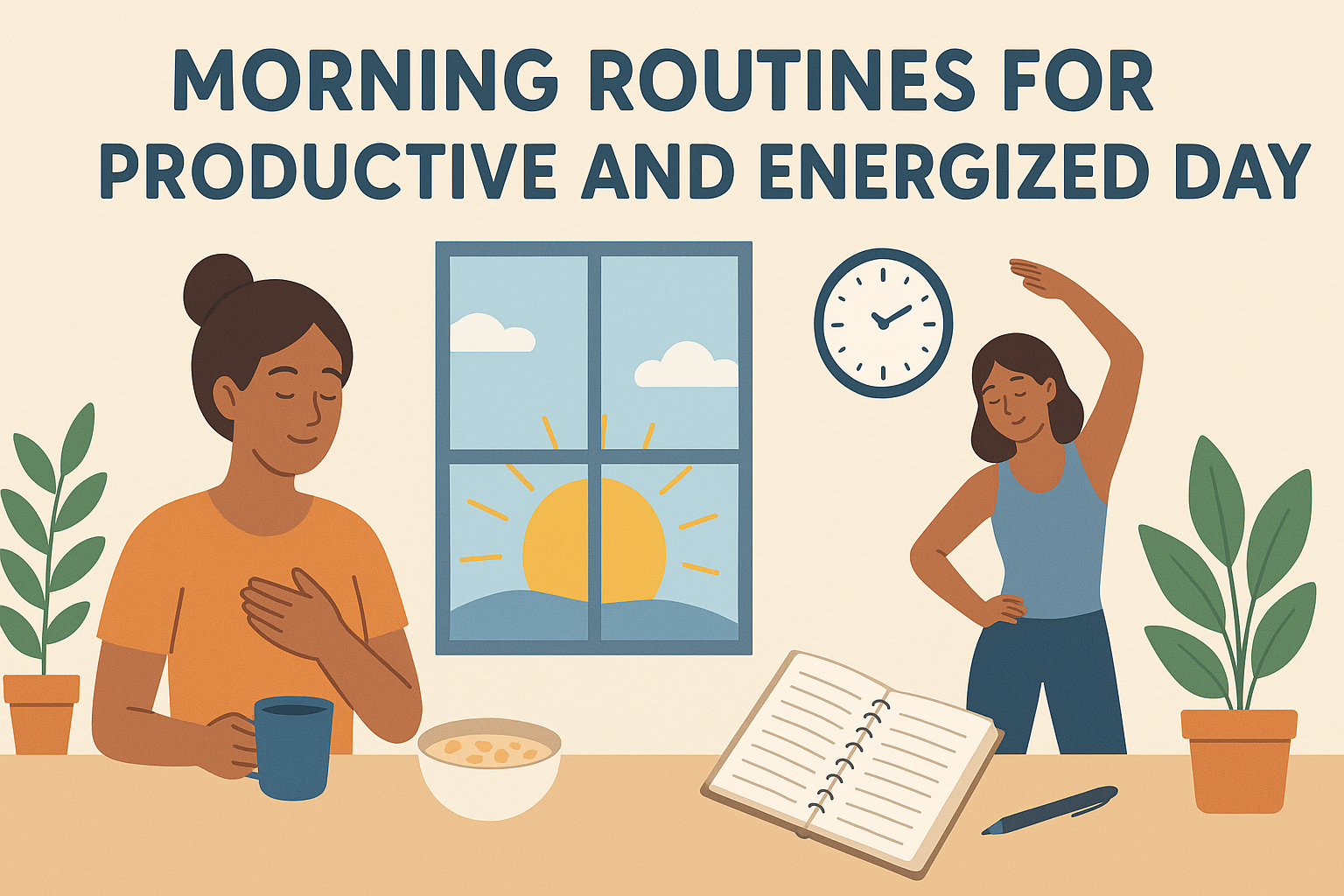
Your morning sets the tone for the rest of your day. A consistent, well-designed morning routine is more than just getting out of bed—it’s about positioning yourself to be calm, focused, energized, and productive. In this article, we’ll explore why morning routines matter, how to build one that works, practical elements to include, common pitfalls and how to avoid them, and how to tailor your routine for personal success.
Why a morning routine matters
Mental clarity and momentum
When you begin the day with intention, you give your brain a chance to switch from sleep‐mode to active mode. Research shows that a morning routine can generate momentum and positively influence your cognitive peak hours.
Additionally, by repeating basic morning tasks in the same order, you reduce what’s called decision fatigue—the mental energy drained by making many choices. A set routine frees up your mind for more meaningful, focused work.
Productivity and control
A structured morning gives you the feeling of being in control (rather than being controlled by the day). Studies indicate that people who follow a morning routine are more likely to stay on top of their tasks, feel less rushed, and accomplish more with better quality.
By contrast, a chaotic morning—rushing, scattered tasks, checking your phone first thing—can spill into your day, causing stress and lower productivity. A good routine helps anchor your day in order, which supports your momentum.
Energy & health
Your body has been resting during the night. The morning is a time to re-activate your system: hydrate, move, nourish. Doing so improves not just productivity but also health markers like stress levels, focus and overall well-being.
So, in essence: a morning routine isn’t optional if your aim is to maximize your day—it’s a foundation for how you respond to whatever comes after.
Building a morning routine that sticks
Define your “why”
Start by asking: What do I want from my morning? Maybe you want calm before work, more energy, creative time, time for self-care, or a stronger start to your day. Knowing your goal helps you design a routine that serves you, rather than copying someone else’s.
Start small, and be consistent
Many people make the mistake of over-engineering their morning routine right away expecting a full hour or two of perfect tasks. But consistency beats complexity. Choose a few meaningful tasks you can repeat every day. Over time you’ll build habit strength.
Make it realistic for you
You aren’t obligated to wake at 4 a.m. or do a two-hour workout (unless that actually works for you). The key is designing a routine that aligns with your sleep schedule, responsibilities, and energy levels. As one voice on Reddit put it:
“You just need to be intentional about the things you already do in the morning and look for little improvements to the things you already do.”
Prepare the night before
Your morning routine is easier if you do some prep the night before: lay out clothes, prepare breakfast/snack, decide on your first task. This reduces friction in the morning and makes your routine smoother.
Stay flexible
Finally, build in flexibility. Life will throw curveballs. Maybe you’ll wake up later or have urgent stuff to deal with. It’s better to do a shortened version of your routine than skip it altogether. Over time, flexibility supports longevity.
Key elements of a productive and energizing morning routine
Here are practical components you can mix and match. You don’t need all of them—but including a few can make a big difference.
1. Consistent wake-up time
Waking at the same time each day (including weekends — with some flexibility) helps regulate your body’s internal clock (circadian rhythm) and ensures your energy levels are more consistent.
2. Hydration and nourishing your body
After hours of sleep your body is slightly dehydrated. Drinking water first thing can rehydrate and kickstart metabolism. A decent breakfast (or healthy snack) helps fuel your brain and body for the tasks ahead.
3. Movement or light exercise
Whether it’s stretching, a 10-minute walk, yoga, or a more structured workout—movement in the morning raises your heart rate a little, improves circulation, and releases endorphins. This leads to better mood, focus, and energy.
4. Mindfulness / mental clarity
Incorporating a few minutes of meditation, deep breathing, journaling, or simply sitting quietly helps you transition into your day with clarity rather than being reactive. It sets the tone.
5. Planning & priority-setting
Once your body and mind are awake, take a moment to review the day ahead. Identify 1–3 key tasks, look through your schedule, and decide how you’ll use your time. This helps direct your energy rather than just responding to what comes.
6. Limiting distractions / technology control
Many people start the day with the phone, email, social media. This often leads to reactive mode, rather than intentional mode. Try delaying screen time until your core routine is completed. This helps preserve focus.
7. Gratitude, intention or reflection
Ending your routine with a short reflection—what you’re grateful for, or what you intend to focus on—can boost positivity, reduce stress, and align you mentally for the day. While this is optional, it’s powerful.
Sample morning routine (adjust to suit you)
Here’s a flexible template you can adapt.
- 6:30 AM: Wake up (same time each day)
- 6:30-6:35: Drink a glass of water, open curtains to get natural light
- 6:35-6:50: Light movement (stretching, yoga, short walk)
- 6:50-7:00: Mindfulness or journaling (set intention for day)
- 7:00-7:15: Healthy breakfast/snack, hydrate more
- 7:15-7:30: Review schedule / identify key tasks / plan your day
- 7:30: Transition into work or start your main activity
You might shorten this if you have less time or expand it if you prefer a longer start. The key is consistency, not perfection.
Addressing common pitfalls & how to overcome them
Hitting the snooze button
When we repeatedly hit snooze, we fragment our sleep cycle and wake up groggy. To avoid this: place your alarm across the room, force yourself to stand up to turn it off; commit to one wake-up time. Some research suggests this is key to establishing a morning rhythm.
Unrealistic routines
If you design a two-hour routine when you realistically have 20 minutes, you risk drop-off. Start with what you can do and build. One Reddit post captured this well:
“I had a morning routine of 3 hours for 2 years. It changed nothing.”
Rather than erecting a grand routine, start small and sustainable.
Starting with your phone
If the first thing you reach for is your phone, you may already be reactive instead of proactive. Try leaving your phone outside the bedroom or using a traditional alarm clock and delay email/social media until after your core morning routine.
Skipping weekends
Routines often fail because on weekends we sleep in 2-3 hours later, disrupting our rhythm. Aim to keep wake-up time within about an hour of your weekday schedule to maintain consistency.
Tailoring your routine to your life
For early risers vs later starters
If you’re naturally more productive in the early morning, great—you might wake at 5 or 6 and build a longer routine. If you’re not a “morning person”, still aim for consistency: maybe wake at 7 or 8, and design a routine for that timeframe. The key is regularity more than early hours.
For busy mornings / limited time
If you only have 10-15 minutes before you must leave for work or begin your day: pick the two highest-impact tasks (e.g., water + movement, or movement + planning). Even a short routine is better than none. Over time, when you gain more space, you can expand it.
For work-from-home vs commuting
If you commute, you may use part of that time as your morning “anchor” (e.g., walking to the station, listening to a podcast). If you work from home, consider some “transition” ritual (e.g., brew your coffee, step outside for 5 minutes) to mark the shift from home to work.
Weekday vs weekend adaptation
On weekends you might have more flexibility. You could extend your routine for creativity, reading, hobbies, or family time. But avoid completely dropping your core habits—keeping some structure helps you avoid feeling adrift and maintains your momentum for Monday.
Measuring success & making adjustments
- Track your adherence: Did you wake up at your time? Did you complete the routine tasks? Tracking for a week helps you notice patterns.
- Reflect on how you feel: Are you more focused, energized, less stressed, more in control?
- Adjust based on feedback: If you find you don’t like a certain task (e.g., 30 minutes of journaling feels forced), change it. Your routine must feel sustainable.
- Be patient: Habit formation takes time. You might not feel dramatic change overnight—but small consistent gains accumulate.
- Allow for resets: If you fall off the rhythm (sleep in, busy morning), don’t abandon the routine. Just restart the next day. Consistency over time matters more than perfection.
Why this matters for long-term productivity and energy
When your morning is grounded, you start the day from a place of strength. You reduce reaction-mode, you give yourself breathing room, and you align your energy, body and mind for value-adding tasks. Over weeks and months, this adds up — less stress, better focus, more momentum.
In contrast, ignoring your morning risks “starting behind” each day, chasing tasks, dealing with fatigue, making sub-optimal decisions and feeling less in control. Because as one blog put it: how you spend your morning influences the rest of your day.
By designing and maintaining a morning routine tailored to you—and sticking with it—you embed a foundation that supports productivity, energy and overall wellbeing.
Final thoughts
A productive and energized day doesn’t happen by accident—it begins with a strong morning. By crafting a routine that aligns with your goals, starting small, being consistent, and incorporating key elements such as hydration, movement, mindfulness and planning, you create the conditions for a better day.
Remember: it’s less about being perfect, and more about being intentional. Mornings are your opportunity to set the tone. When you invest that time and structure, you invest in everything that follows.
Sources
- “10 Science-Backed Benefits of a Morning Routine”, myVA360.
- “The Power of a Morning Routine”, NAMI Blog.
- “Morning Routine Tips for a Successful Day!” Performance Health.
- “The Power of a Morning Routine” The Body Coach.
- “How Long Should Your Morning Routine Be?” Verywell Mind.
- “Ultimate Guide to Morning Routines for Peak Productivity”, Upskillist.
- “15 Morning Habits to Lessen Stress and Boost Productivity”, Forbes.