

The Sweet Truth: Understanding Dark Chocolate
Dark chocolate is made from the seeds of the cacao tree (Theobroma cacao). Unlike milk chocolate or white chocolate, dark chocolate typically contains a higher proportion of cocoa solids and less sugar and milk. Cocoa solids are rich in compounds called polyphenols, especially flavanols, which are believed to be responsible for many of dark chocolate’s health benefits.
The strength of dark chocolate (e.g. 50%, 70%, 85% cocoa) refers to the percentage of the product that comes from cocoa solids. Generally, the higher the percentage, the more flavanols and less sugar. But very high percentages are more bitter and may include more fats — it depends on processing.
Nutritional Profile
Dark chocolate is more than just “something sweet” — it carries a range of nutrients, though also with calories and fats, so moderation is important. Some key nutritional features include:
- Fiber: A decent amount, which helps with digestion.
- Minerals: Iron, magnesium, copper, manganese, phosphorus, zinc, and selenium are found in good quantities in dark chocolate with high cocoa content.
- Healthy fats: Most of the fats are from cocoa butter, which include oleic acid (a monounsaturated fat, similar to that in olive oil), stearic acid (which has a neutral effect on cholesterol), and some palmitic acid.
Health Benefits of Dark Chocolate
Below are many of the health benefits that recent studies support, along with what is known and where more research is still needed.
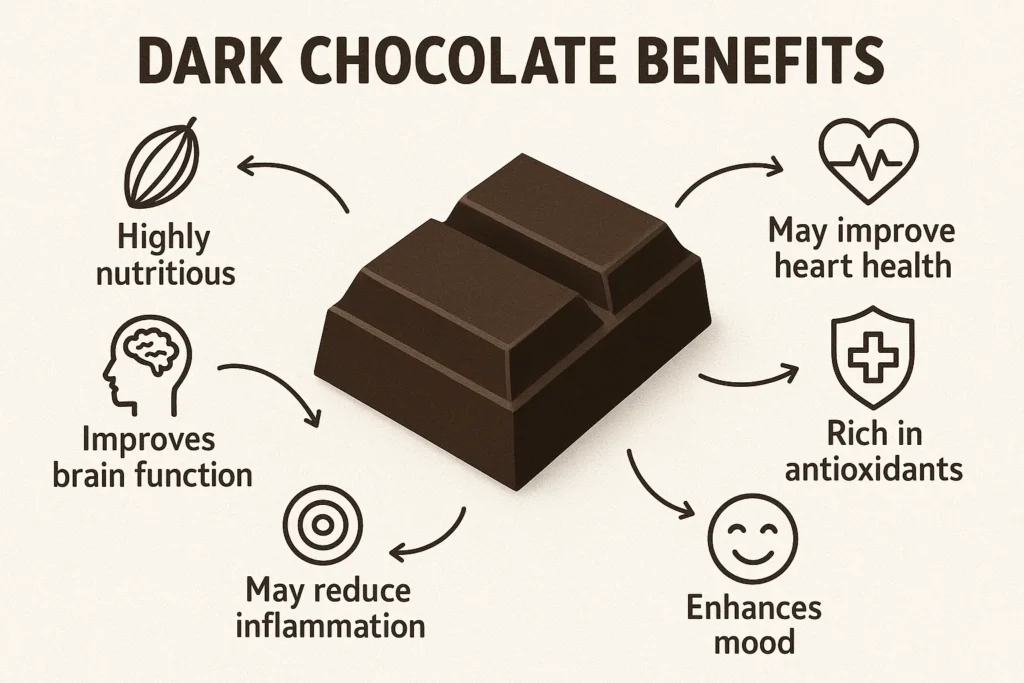
1. Potent Antioxidant and Anti‑Inflammatory Effects
- Cocoa flavanols and polyphenols are powerful antioxidants, meaning they help neutralize free radicals (reactive species) that can damage cells, proteins, DNA.
- Inflammation is a contributor to many chronic diseases. Dark chocolate has been shown in studies to reduce inflammatory markers such as interleukin‑6 (IL‑6), C‑reactive protein (CRP), tumor necrosis factor alpha (TNF‑α) in certain groups.
2. Heart and Cardiovascular Health
One of the best‑supported benefits:
- Blood pressure: Dark chocolate’s flavanols stimulate the lining of the arteries (the endothelium) to produce nitric oxide (NO), which helps arteries relax and dilate. This reduces resistance and can lower blood pressure. Several studies show that consuming dark chocolate can lead to lowered systolic and diastolic blood pressure, especially in older adults and those at higher cardiovascular risk.
- Improved cholesterol profile: Dark chocolate may help reduce LDL (“bad”) cholesterol, especially the oxidized form, which is more damaging, and increase HDL (“good”) cholesterol.
- Blood flow and vascular health: In addition to blood pressure effects, dark chocolate may improve the flexibility and function of blood vessels, reduce platelet aggregation (making blood “stickier”), which helps reduce clot risk.
3. Blood Sugar, Insulin Sensitivity, and Diabetes Risk
- Some studies suggest that dark chocolate can improve insulin sensitivity and reduce fasting blood glucose. Over time this may reduce the risk of developing type 2 diabetes.
- For example, one 6‑month study in a Hispanic population indicated that eating about 48 g of 70% dark chocolate daily could help reduce insulin resistance.
4. Brain Function and Cognitive Health
- Dark chocolate seems to improve blood flow to the brain, which can support cognitive functions such as attention, memory, verbal learning.
- There is also some evidence that regular intake of flavanols may help preserve brain health as people age or reduce progression in mild cognitive impairment.
5. Skin Health
- The bioactive compounds in dark chocolate (especially flavanols) may help protect the skin from UV damage, improve hydration, skin density, and blood flow to the skin. However, dark chocolate is not a replacement for sunscreen.
6. Mood, Stress, and Psychological Well‑Being
- Dark chocolate consumption is associated with production of endorphins and serotonin – neurotransmitters connected with mood elevation, relaxation, pleasure.
- Some studies find that eating dark chocolate may reduce stress hormones (cortisol) or markers of stress.
7. Gut Health and Microbiome
- Dark chocolate contains compounds (polyphenols and fiber) that may act as prebiotics, supporting beneficial gut bacteria. A more diverse and healthy gut microbiome is increasingly understood to have wide effects: digestion, immune system, even mood.
8. Possible Weight Management Support
- While chocolate is calorie‑dense, some evidence suggests that dark chocolate may help with satiety — the feeling of fullness — more than sweeter, more processed sweets, potentially helping to reduce overeating of less healthy snacks.
- Also, because it has a stronger flavour and less sugar, smaller amounts may satisfy cravings. But this doesn’t mean it’s a license to eat large quantities.
Caveats, Risks, and How to Maximize Benefits
While dark chocolate has many positive effects, there are also important caveats, and how you consume it makes a big difference.
1. Sugar, Calories, Fat
- Dark chocolate still contains sugar (unless completely unsweetened), fats, and is calorically dense. Overconsumption can contribute to weight gain.
- Some types of dark chocolate have added ingredients (e.g. caramel, nougat, milk traces) that reduce the health benefit. Always check the label.
2. Heavy Metal Exposure
- A number of dark chocolate bars have been found in tests to contain lead, cadmium or other metals above safe limits. This appears to be more common in some brands and origins.
- Choosing high‑quality, well‑tested bars and consuming moderate quantities helps reduce risk.
3. Moderation
- Many studies show benefits with regular but moderate consumption (e.g. small daily or several times per week) rather than large amounts. Overeating destroys much of the benefit by increasing caloric load, potentially impacting weight and metabolic health.
4. Individual Variation
- Not everyone will experience the same effects. For instance, people with certain metabolic conditions, children, pregnant women, or those sensitive to caffeine/theobromine may need to be cautious.
- Also, the processing of chocolate (roasting of beans, alkalization, sugar content) can affect how many flavanols remain. Highly processed chocolate tends to have less of the beneficial compounds.
Practical Recommendations: How to Get the Best from Dark Chocolate
If you want to include dark chocolate in your diet to reap its health benefits, here are some tips:
- Choose high cocoa content, ideally 70% or higher. This tends to mean more flavanols and less sugar.
- Check the ingredient list: avoid chocolates with lots of added sugar, unhealthy fats, excessive processing.
- Portion size matters: small amounts (e.g. a square or two) rather than large bars. For many studies, amounts like ~25‑50 grams a few times per week have been used.
- Balance with the rest of your diet: dark chocolate works best as part of an overall healthy diet with fruits, vegetables, whole grains, good fats.
- Mind timing: because of caffeine and theobromine, dark chocolate later in the day might affect sleep in some people.
- Quality and origin: if possible choose ethically sourced, organic or semi‑organic chocolate, and bars tested for heavy metal content.
What the Research Still Needs to Clarify
Here are some areas where evidence is promising but not yet conclusive:
- Long‑term randomized trials with large populations to determine how much dark chocolate (and cocoa flavanols) are needed, and what risks exist over time.
- Dose‑response relationships: exactly how many grams per day or week for specific benefits (heart, brain, diabetes risk etc.).
- Effects in different populations: children, older adults, people with preexisting conditions, etc.
- Processing effects: how much flavanol content is lost in manufacturing, which varieties/origins preserve more.
- Trade‑offs: balancing benefits versus risks from sugar, fat, heavy metals, or calorie‑load.
Summary
Dark chocolate, especially when high in cocoa content, contains beneficial compounds such as flavanols and polyphenols that provide antioxidant and anti‑inflammatory effects, benefit heart health (lowering blood pressure, improving cholesterol, improving blood vessel function), support brain function, improve insulin sensitivity, possibly reduce risk of type 2 diabetes, and have positive effects on mood and skin. However, these benefits depend heavily on choosing good quality chocolate, consuming it in moderation, and integrating it into a healthy overall diet.
Conclusion
If you enjoy chocolate, dark chocolate is probably the best choice for health. It’s not a cure‑all, but in reasonable amounts it can contribute to well‑being. Like many foods with powerful bioactive compounds, the dose, quality, and context matter. Choosing dark chocolate with high cocoa content, low added sugar, good sourcing, and consuming it moderately is likely to yield more upside than down.
References
- Healthline. “7 Proven Health Benefits of Dark Chocolate.” Healthline
- WebMD. “Dark Chocolate: Health Benefits, Nutrients per Serving, and More.” WebMD
- Medical News Today. “Dark Chocolate: Health Benefits, Nutrition, and How Much to Eat.” Medical News Today
- Cleveland Clinic. “Is Dark Chocolate Good for You? 6 Benefits.” Cleveland Clinic
- Verywell Health. “Dark Chocolate: 9 Benefits and Ideal Cocoa Content.” Verywell Health
- Health.com. “Dark Chocolate: Benefits, Nutrition, and Risks.” Health
- Apollo247. “Benefits Of Dark Chocolate For Health.” Apollo 24|7
- PubMed / scientific review: “The cardiovascular benefits of dark chocolate.” PubMed