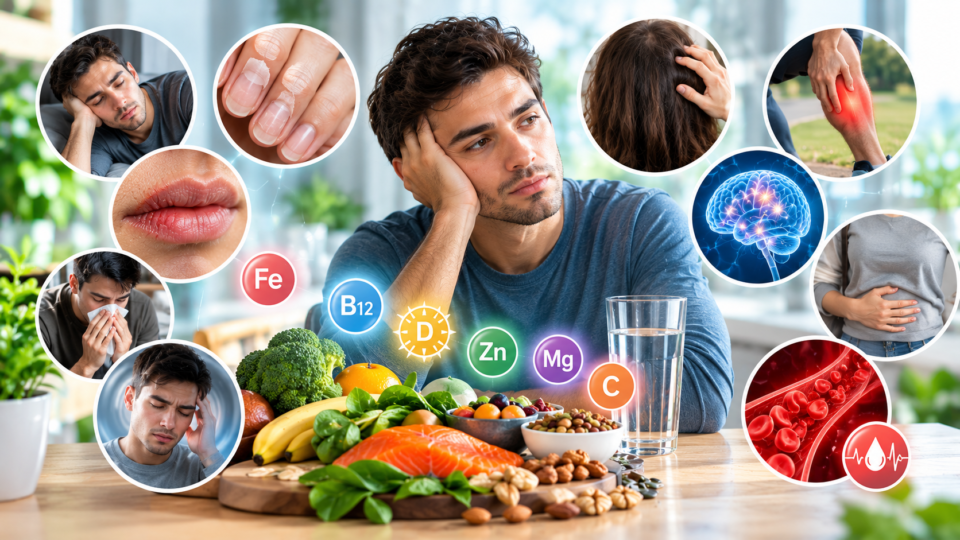
Your body needs dozens of vitamins and minerals to produce energy, build blood cells, maintain healthy skin and hair, support muscles and nerves, and keep the immune system working properly. When your diet does not provide enough of a particular nutrient—or when your body cannot absorb or use it properly—subtle changes may begin to appear.
Sometimes, these changes are easy to dismiss. You may blame constant tiredness on a busy schedule, brittle nails on aging, hair shedding on stress, or muscle cramps on exercise. But when several symptoms appear together or persist for weeks, nutrition may deserve a closer look.
A nutrient deficiency does not always announce itself with an obvious warning. In many cases, the earliest signs are nonspecific and can overlap with sleep deprivation, stress, hormonal problems, medications, chronic diseases, or other medical conditions.
Here are seven warning signs that may sometimes be associated with nutrient deficiencies—and the nutrients that could be involved.
1. Constant Fatigue and Low Energy
Everyone feels tired occasionally. Lack of sleep, stress, excessive workload, dehydration, and illness can all leave you exhausted. But persistent fatigue that does not improve with adequate rest deserves attention.
One of the most important nutritional causes to consider is iron deficiency. Iron is essential for producing hemoglobin, the protein in red blood cells that carries oxygen throughout the body. When iron stores become depleted and iron-deficiency anemia develops, the body’s ability to transport oxygen decreases.
The result can be tiredness, weakness, reduced exercise tolerance, dizziness, headaches, pale skin, shortness of breath, and difficulty concentrating.
Vitamin B12 and folate are other important possibilities. Both are needed for normal red blood cell production, and deficiencies can cause megaloblastic anemia. B12 deficiency may also affect the nervous system, producing tingling, numbness, balance problems, memory changes, or cognitive difficulties.
Other nutritional factors can contribute to fatigue as well. Severe magnesium deficiency, for example, can cause fatigue and weakness, although significant magnesium deficiency is relatively uncommon in otherwise healthy people.
The important point is that fatigue alone cannot identify a specific deficiency. Persistent tiredness should be investigated rather than automatically treated with supplements.
2. Brittle, Weak, or Unusually Shaped Nails
Your fingernails may provide clues about your overall health, although nail changes are rarely diagnostic by themselves.
Nails that become unusually brittle, thin, weak, or slow-growing can sometimes occur in association with nutritional inadequacy. Iron deficiency is particularly notable because it can produce a characteristic nail change called koilonychia, in which the nails become thin and spoon-shaped.
Zinc and protein deficiency may also affect normal nail growth, while severe nutritional deficiencies can produce a variety of changes in the nail plate.
However, brittle nails have many other possible explanations. Frequent exposure to water and cleaning chemicals, nail polish or removers, trauma, fungal infections, thyroid disorders, and certain skin conditions can all change the appearance of nails.
If nail changes occur together with fatigue, hair loss, pale skin, dizziness, unusual food cravings, or changes around the mouth, discussing the symptoms with a healthcare professional becomes more important.
3. Hair Thinning, Increased Hair Shedding, or Texture Changes
Hair growth requires adequate energy, protein, vitamins, minerals, and a healthy blood supply. Consequently, nutritional problems can sometimes affect hair follicles.
Iron deficiency is one of the nutritional issues frequently investigated in people experiencing unexplained hair shedding, particularly when other symptoms of iron deficiency are present. Zinc deficiency can also cause hair loss, while severe protein-energy malnutrition can dramatically alter hair growth and quality.
Several B vitamins are involved in cellular metabolism and tissue maintenance, and severe deficiencies may affect hair and skin. However, claims that ordinary hair loss automatically means you need biotin should be treated cautiously. Biotin deficiency is rare, and taking large amounts of biotin without evidence of deficiency is unlikely to solve most common causes of hair loss.
Hair shedding can also occur after illness, significant weight loss, major stress, hormonal changes, thyroid disorders, certain medications, and genetic hair-loss conditions.
Therefore, sudden or persistent hair loss should not simply be treated with a collection of supplements. Finding the underlying cause is far more useful.
4. Frequent Muscle Cramps, Twitching, or Muscle Weakness
A painful calf cramp can happen to almost anyone, particularly after strenuous exercise. But recurrent muscle cramps, twitching, weakness, or abnormal muscle contractions may sometimes be related to an imbalance involving electrolytes or nutrients.
Magnesium is one possibility. Severe magnesium deficiency can cause muscle contractions and cramps and, in more serious cases, abnormal heart rhythms or neurological symptoms.
Low levels of calcium can also produce muscle spasms and abnormal nerve or muscle activity. Potassium abnormalities may cause muscle weakness, cramps, or heart rhythm problems, although potassium disturbances are often related to medications, kidney problems, gastrointestinal losses, or other medical conditions rather than simply eating too few potassium-rich foods.
Vitamin D deficiency is another nutritional issue associated with impaired muscle function and bone health, particularly when deficiency is significant.
However, muscle cramps are not automatically a sign of a vitamin or mineral deficiency. Exercise, dehydration, prolonged standing, pregnancy, certain medications, nerve problems, and circulation issues can all play a role.
Repeated or severe cramps—especially when accompanied by weakness or abnormal heartbeats—should be medically assessed.
5. Cracks at the Corners of Your Mouth
Small painful cracks at the corners of the lips are easy to ignore, but they can sometimes provide a nutritional clue.
This condition, known as angular cheilitis, can be associated with deficiencies of iron, riboflavin (vitamin B2), vitamin B6, folate, or vitamin B12.
Iron deficiency is particularly relevant because it can occur alongside a sore tongue, pale skin, fatigue, hair loss, brittle or spoon-shaped nails, and cracks around the mouth.
Vitamin B12 and folate deficiency can also cause changes in the mouth, including a sore or red tongue and mouth ulcers.
But nutritional deficiency is only one possible explanation. Angular cheilitis can also be caused by saliva accumulation, irritation, ill-fitting dentures, fungal infection, bacterial infection, lip licking, or inflammatory skin conditions.
If cracks keep returning despite basic care, it is worth looking beyond lip balm and considering whether an underlying cause needs to be identified.
6. Getting Sick Frequently or Having Slow-Healing Wounds
Your immune system depends on adequate nutrition. Proteins, vitamins, and minerals are required for immune-cell development, signaling, tissue repair, and protection against infection.
Zinc is particularly important for normal immune function and wound healing. Zinc deficiency can impair immune responses and is associated with increased susceptibility to infections, especially in children and people with significant deficiency.
Vitamin C is also important for immune function and collagen production, while vitamins A, D, B6, B12, folate, iron, selenium, and other nutrients contribute to different aspects of immune health.
But frequent infections do not automatically mean that you are vitamin deficient.
Children naturally experience many respiratory infections as their immune systems encounter new pathogens. Adults may also become sick frequently because of workplace exposure, childcare, smoking, inadequate sleep, chronic stress, allergies, or underlying medical conditions.
Similarly, slow wound healing can have causes other than nutrition, including diabetes, poor circulation, infection, smoking, and certain medications.
A balanced diet supports immune health, but taking high-dose supplements is not a substitute for identifying the real reason someone is repeatedly becoming ill.
7. Dizziness, Lightheadedness, or Feeling Faint
Dizziness can be one of the most confusing symptoms because it has an enormous range of possible causes.
One nutritional possibility is iron-deficiency anemia. When anemia becomes significant, reduced oxygen delivery can contribute to weakness, lightheadedness, headaches, shortness of breath, and a rapid or noticeable heartbeat.
Vitamin B12 or folate deficiency can also cause anemia and associated dizziness. B12 deficiency has the additional concern of neurological symptoms such as numbness, tingling, balance problems, memory difficulties, and confusion.
However, dizziness can also result from dehydration, low blood pressure, low blood sugar, inner-ear disorders, medications, heart rhythm abnormalities, anxiety, blood loss, and many other conditions.
This is why persistent dizziness should not automatically be treated with iron or vitamin supplements. The underlying cause needs to be established.
Which Nutrient Deficiencies Are Most Commonly Linked to These Warning Signs?
When several of these symptoms occur together, certain nutrients become particularly relevant.
Iron is strongly associated with fatigue, weakness, dizziness, headaches, pale skin, hair loss, brittle or spoon-shaped nails, restless legs, and cracks at the corners of the mouth when deficiency becomes significant.
Vitamin B12 can cause fatigue, weakness, anemia, a sore tongue, mouth ulcers, numbness, tingling, balance problems, memory changes, and other neurological symptoms.
Folate deficiency can produce anemia, fatigue, weakness, headaches, a sore tongue, and mouth ulcers.
Zinc is involved in immune function, wound healing, protein synthesis, and normal growth. Significant deficiency can contribute to hair loss, frequent infections, impaired wound healing, and changes in taste or smell.
Magnesium is involved in muscle and nerve function. Significant deficiency can cause fatigue, weakness, muscle contractions, cramps, and abnormal heart rhythms.
Vitamin D is important for calcium absorption, bone health, and muscle function. Deficiency can contribute to bone and muscle problems, although symptoms may be vague.
Vitamin C is essential for collagen production and has important roles in immune function and iron absorption. Severe deficiency can cause poor wound healing, bleeding or swollen gums, easy bruising, and other characteristic changes.
These nutrients do not work independently. The body requires a network of vitamins, minerals, protein, fats, carbohydrates, and other compounds to maintain normal physiological function.
Why You Should Not Diagnose a Deficiency From Symptoms Alone
Perhaps the most important lesson is that symptoms are clues, not diagnoses.
Fatigue does not automatically mean iron deficiency. Hair loss does not automatically mean biotin deficiency. Muscle cramps do not automatically mean magnesium deficiency. Frequent infections do not automatically mean you need zinc.
Taking unnecessary supplements can sometimes cause harm. Some nutrients can accumulate in the body, interact with medications, interfere with laboratory tests, or cause toxicity when taken in excessive amounts.
For example, excessive zinc intake can interfere with copper absorption, while excessive iron can be harmful when taken unnecessarily.
A healthcare professional may use your symptoms, medical history, diet, medications, physical examination, and laboratory testing to determine whether a deficiency is actually present.
Depending on the symptoms, testing may include a complete blood count, ferritin and iron studies, vitamin B12, folate, vitamin D, electrolytes, or other tests. The appropriate tests depend on the individual rather than on a universal nutrient panel.
Who Is More Likely to Develop Nutrient Deficiencies?
Some people have a higher risk than others.
Risk can increase with restrictive diets, very low-calorie diets, poor appetite, eating disorders, gastrointestinal disorders that interfere with absorption, previous gastrointestinal surgery, heavy menstrual bleeding, pregnancy, older age, certain medications, chronic alcohol use, and some chronic medical conditions.
People following vegetarian or vegan diets need to pay particular attention to vitamin B12, iron, zinc, iodine, calcium, vitamin D, and protein intake, depending on the foods included in the diet.
People with heavy menstrual bleeding may also be at increased risk of iron deficiency because of ongoing blood loss.
Recognizing these risk factors can make subtle symptoms more meaningful and may help guide appropriate testing.
The Best Way to Prevent Nutrient Deficiency
The foundation of preventing nutritional deficiencies is not a cabinet full of supplements. It is a varied, nutrient-dense diet.
Include different vegetables and fruits, whole grains, legumes, nuts and seeds, dairy or suitable alternatives, eggs, fish, meat or other protein sources, and healthy fats according to your dietary preferences and medical needs.
Variety matters because no single food supplies every nutrient your body requires.
It is also important to address the reason behind a deficiency. If iron is low because of ongoing blood loss, simply replacing iron without investigating the source may miss an important medical problem. If vitamin B12 is low because of impaired absorption, changing the diet alone may not be sufficient.
The Bottom Line
Your body can sometimes give you subtle clues when something is missing.
Persistent fatigue may point toward iron, B12, folate, or other nutritional problems. Brittle or spoon-shaped nails can sometimes occur with iron deficiency. Hair changes may be associated with inadequate iron, zinc, protein, or other nutritional factors. Recurrent muscle cramps can sometimes involve magnesium, calcium, or electrolyte abnormalities. Cracks at the corners of the mouth may occur with iron or B-vitamin deficiencies. Frequent infections or poor wound healing can be associated with inadequate zinc and other nutrients. Dizziness may occur with iron-deficiency or B12-related anemia.
But none of these symptoms proves that a deficiency exists.
The most useful response is not to guess—and certainly not to start taking high doses of multiple supplements. Instead, pay attention to persistent or combined symptoms, consider your dietary and medical risk factors, and seek appropriate evaluation when necessary.
Your body may be trying to tell you something. The key is learning how to listen to the signal without assuming you already know the diagnosis.
Sources
- NIH Office of Dietary Supplements — [Iron Fact Sheet for Consumers] Iron Fact Sheet for Consumers
- NHLBI — [Iron-Deficiency Anemia] Iron-Deficiency Anemia
- NHS — [Iron Deficiency Anaemia] Iron Deficiency Anaemia
- NIH Office of Dietary Supplements — [Vitamin B12 Fact Sheet for Consumers] Vitamin B12 Fact Sheet for Consumers
- NHLBI — [Vitamin B12-Deficiency Anemia] Vitamin B12-Deficiency Anemia
- NHS — [Vitamin B12 or Folate Deficiency Anaemia] Vitamin B12 or Folate Deficiency Anaemia
- NIH Office of Dietary Supplements — [Zinc Fact Sheet for Consumers] Zinc Fact Sheet for Consumers
- NIH Office of Dietary Supplements — [Magnesium Fact Sheet for Health Professionals] Magnesium Fact Sheet for Health Professionals
- NCBI Bookshelf — [Nutritional Assessment] Nutritional Assessment
- NCBI Bookshelf — [Angular Cheilitis] Angular Cheilitis
- NCBI/PMC — [Cutaneous Signs of Nutritional Disorders] Cutaneous Signs of Nutritional Disorders