Healthy, glowing skin starts far deeper than the surface — it begins with what you eat. While skincare products can help protect and hydrate your skin externally, your diet plays a much more powerful role in determining your skin’s appearance, elasticity, and ability to repair itself. The foods you consume provide the essential vitamins, minerals, antioxidants, and fatty acids your skin needs to thrive.
In this article, we’ll explore the best foods for skin health, how they work to improve your complexion, and practical ways to include them in your daily meals.
1. The Connection Between Diet and Skin Health
Your skin is the largest organ in your body, and just like your heart or brain, it relies on nutrients to function properly. Every cell in your skin needs a steady supply of antioxidants, healthy fats, vitamins, and hydration to maintain a youthful, radiant glow.
Poor dietary habits — such as eating too many processed foods, sugars, or trans fats — can accelerate skin aging, increase inflammation, and lead to conditions like acne, dryness, or dullness. On the other hand, a nutrient-rich diet can help your body produce more collagen, improve elasticity, and protect against UV and environmental damage.
2. Top Nutrients for Healthy, Glowing Skin
Before diving into the best foods, it’s helpful to understand which nutrients play the biggest roles in skin health:
- Vitamin C: Essential for collagen production and helps prevent wrinkles and sagging.
- Vitamin E: A powerful antioxidant that protects skin from oxidative stress.
- Omega-3 Fatty Acids: Keep the skin hydrated and reduce inflammation.
- Zinc: Supports skin healing and helps prevent acne.
- Beta-Carotene and Vitamin A: Protect against UV damage and support cell turnover.
- Polyphenols and Antioxidants: Combat free radicals that accelerate aging.
- Protein: Provides the building blocks for collagen and elastin.
With these nutrients in mind, let’s look at the best foods that naturally boost your skin’s health.
3. Fatty Fish: Omega-3 for Radiant, Hydrated Skin
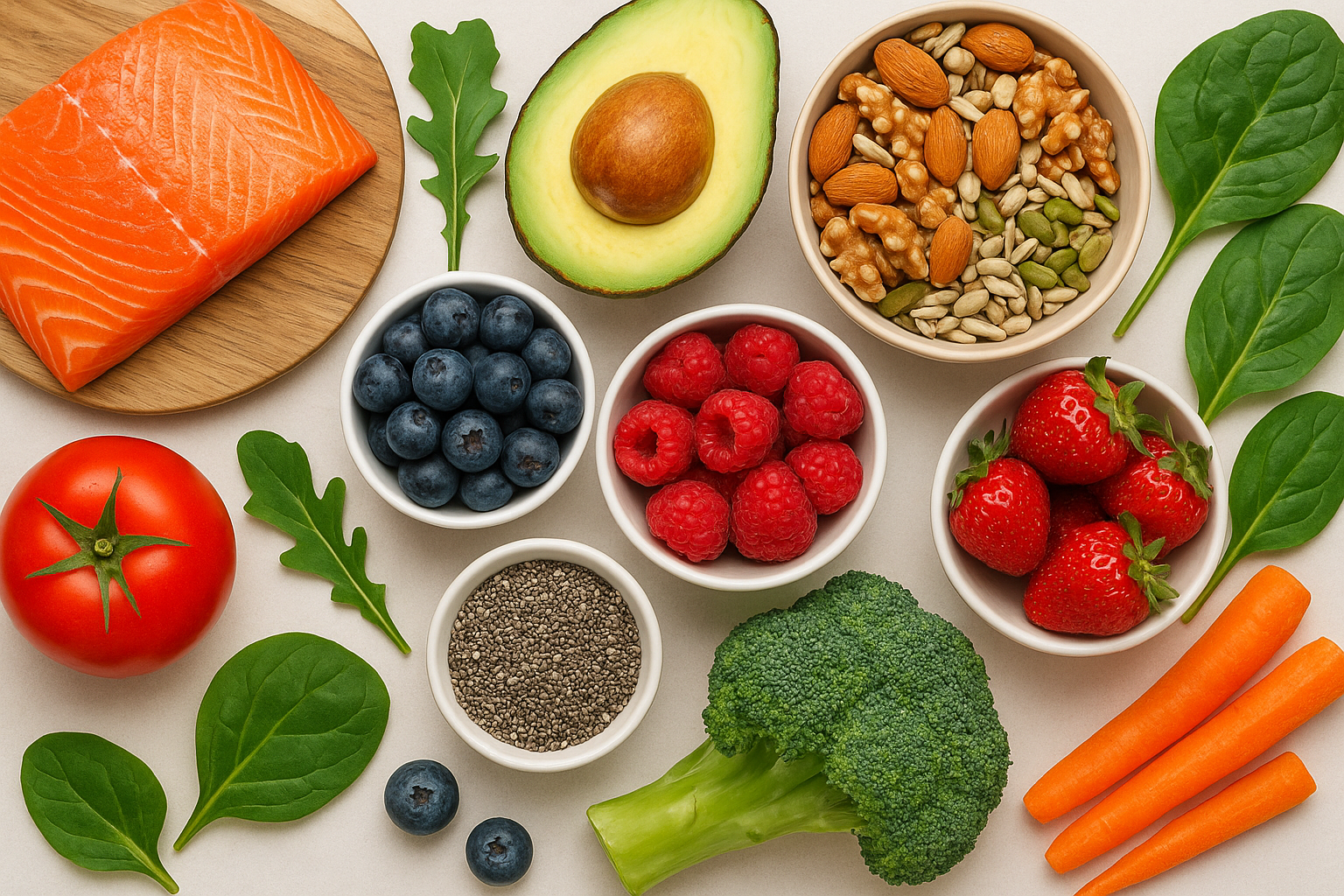
Fatty fish like salmon, mackerel, sardines, and trout are rich in omega-3 fatty acids, which are crucial for maintaining your skin’s moisture barrier and elasticity. Omega-3s also reduce inflammation that can cause redness and acne flare-ups.
Fish is also a great source of vitamin E, a potent antioxidant that protects your skin from free radicals. Moreover, it provides zinc — essential for skin cell renewal and oil production balance.
Tip: Include fatty fish in your meals at least twice a week. If you don’t eat fish, consider plant-based omega-3 sources like chia seeds, flaxseeds, or walnuts.
4. Avocados: Nature’s Moisturizer
Avocados are a superfood for your skin. They’re loaded with healthy monounsaturated fats that help keep your skin supple and flexible. They also provide vitamin C, vitamin E, and lutein, all of which contribute to skin repair and protection.
The antioxidants in avocados defend your skin from oxidative stress — one of the leading causes of premature aging.
Tip: Add half an avocado to your morning smoothie or use it as a spread on whole-grain toast for a skin-friendly breakfast.
5. Berries: Antioxidant Powerhouses
Blueberries, strawberries, raspberries, and blackberries are packed with antioxidants, including anthocyanins and vitamin C. These nutrients protect your skin from free radical damage caused by UV rays, pollution, and stress.
Berries also promote collagen synthesis, which keeps the skin firm and youthful. Their natural anti-inflammatory properties help reduce puffiness and calm skin irritation.
Tip: Enjoy a bowl of mixed berries as a snack or sprinkle them on top of oatmeal or yogurt for an antioxidant boost.
6. Nuts and Seeds: Small but Mighty Skin Boosters
Almonds, walnuts, sunflower seeds, and chia seeds are among the best snacks for healthy skin. They’re rich in vitamin E, zinc, and selenium, which all play vital roles in repairing skin tissues and protecting against oxidative stress.
Walnuts, in particular, provide a good balance of omega-3 and omega-6 fatty acids — crucial for maintaining the skin’s natural oil barrier and preventing dryness.
Tip: Add a handful of nuts or seeds to salads, smoothie bowls, or as a mid-day snack to nourish your skin from the inside.
7. Sweet Potatoes and Carrots: Beta-Carotene for a Natural Glow
Orange-colored vegetables like sweet potatoes and carrots are excellent sources of beta-carotene, which your body converts into vitamin A. This nutrient promotes cell turnover, helps maintain smooth skin, and protects against sun-induced damage.
Beta-carotene also gives your skin a subtle, healthy glow by acting as a natural sunblock from within — although it doesn’t replace sunscreen, it does enhance your skin’s resilience to UV rays.
Tip: Roast sweet potatoes or blend carrots into soups for a delicious, skin-enhancing meal.
8. Leafy Greens: Detoxifying and Brightening the Skin
Spinach, kale, and other leafy greens are rich in vitamin A, vitamin C, chlorophyll, and iron, which detoxify the skin and boost blood circulation. These nutrients help combat dullness and promote a brighter, more even skin tone.
Leafy greens also support collagen synthesis and aid in the body’s natural detoxification process, helping to clear impurities that can lead to breakouts.
Tip: Include a green salad with every meal or blend spinach into smoothies for an easy nutrient boost.
9. Tomatoes: Lycopene Protection Against Sun Damage
Tomatoes are one of the best sources of lycopene, a powerful antioxidant that protects the skin from UV-induced aging and damage. Cooking tomatoes actually increases the bioavailability of lycopene, making tomato-based sauces and soups excellent options.
Tomatoes also contain vitamin C, which helps brighten the skin and reduce pigmentation over time.
Tip: Combine tomatoes with healthy fats like olive oil to maximize lycopene absorption.
10. Green Tea: The Ultimate Skin-Soothing Drink
Green tea is loaded with catechins, potent antioxidants known for their anti-aging and anti-inflammatory properties. These compounds protect against oxidative stress, improve skin elasticity, and reduce redness.
Studies suggest that regular green tea consumption may help reduce acne by lowering sebum production and inflammation.
Tip: Drink one to two cups of green tea daily, or use cooled green tea bags as a soothing compress for puffy eyes.
11. Dark Chocolate: Indulgence with Skin Benefits
Good news for chocolate lovers! Dark chocolate (at least 70% cocoa) is rich in flavonoids, which improve blood circulation, protect against UV damage, and enhance hydration.
However, moderation is key — a small piece of dark chocolate daily can provide benefits without excess sugar that could harm your skin.
Tip: Choose unsweetened or lightly sweetened dark chocolate to enjoy its full antioxidant benefits.
12. Water and Hydrating Foods: The Foundation of Skin Health
While not technically a “food,” hydration is one of the most important factors for glowing skin. Water helps flush out toxins, deliver nutrients to skin cells, and maintain elasticity.
Hydrating foods like cucumbers, watermelon, oranges, and celery also help keep your skin moist and supple.
Tip: Drink at least 8 glasses of water daily and include high-water-content fruits and vegetables in your meals.
13. Foods to Limit for Better Skin
Just as certain foods boost your complexion, others can have the opposite effect. Limit:
- Refined sugars and processed carbs, which spike insulin and lead to acne.
- Dairy products, which may trigger hormonal breakouts in some people.
- Fried and greasy foods, which can increase oil production and inflammation.
- Alcohol and caffeine, which dehydrate the skin and accelerate aging.
14. Final Thoughts: Feed Your Skin with Every Bite
Healthy skin is not about quick fixes or expensive creams — it’s the reflection of a balanced, nutrient-dense diet. By including antioxidant-rich fruits, omega-3-loaded fish, vitamin-packed vegetables, and plenty of hydration, you can nourish your skin from within and maintain that natural glow year-round.
Remember: consistency is key. The more regularly you fuel your body with the right foods, the more radiant and youthful your skin will appear.
Sources
- Harvard T.H. Chan School of Public Health – Nutrition and Skin Health
- Journal of the American Academy of Dermatology – Diet and Acne Research
- National Institutes of Health (NIH) – Nutrients for Healthy Skin
- British Journal of Dermatology – The Role of Antioxidants in Skin Protection
- Mayo Clinic – Vitamins and Nutrients for Skin Health

