
Introduction
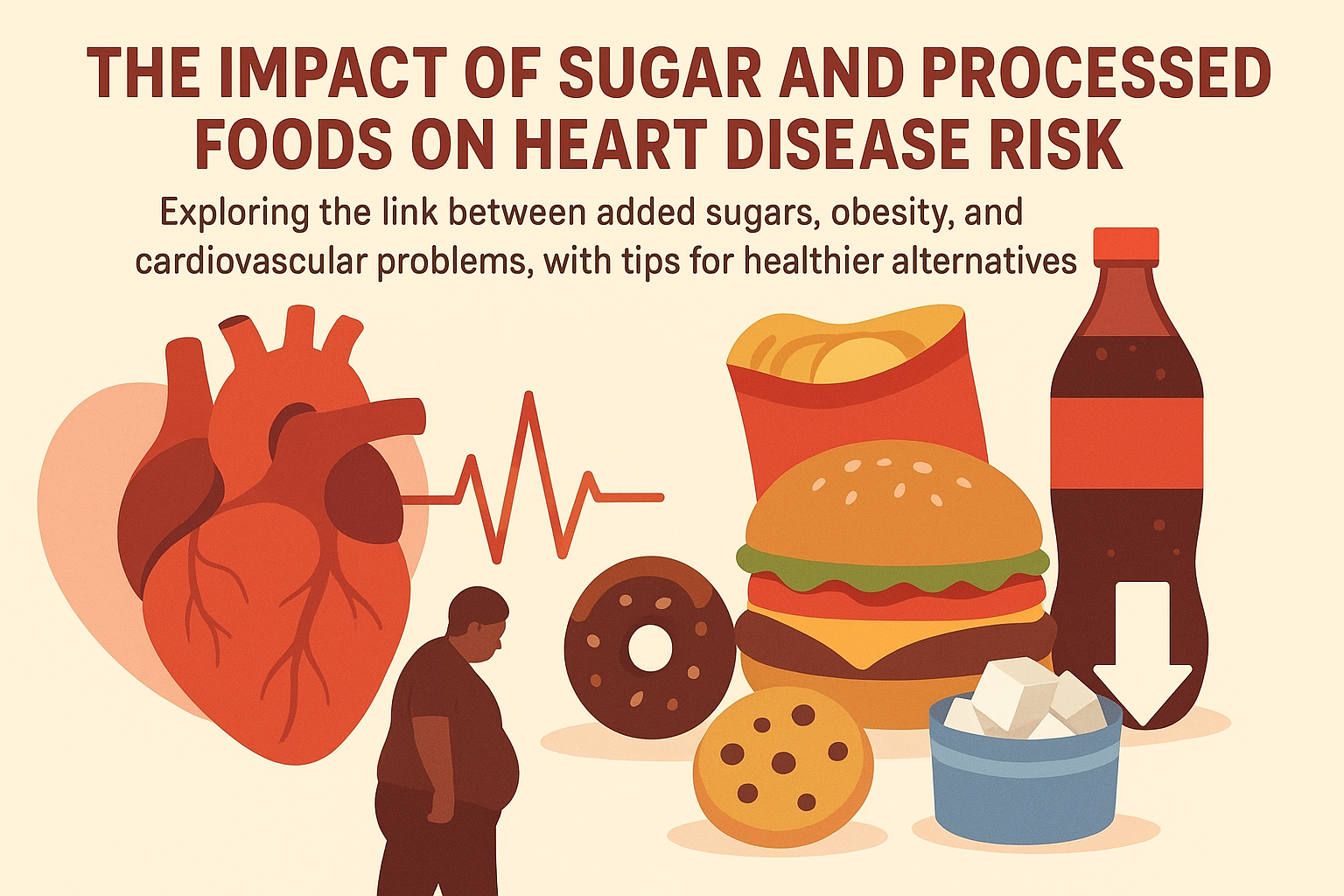
Heart disease remains the world’s leading cause of death. While traditional risk factors such as high blood pressure, smoking, high LDL cholesterol and physical inactivity are well known, dietary drivers — especially added sugars and ultra-processed foods — have become focal points in modern prevention strategies. This article explains the mechanisms linking sugar and processed foods to cardiovascular disease (CVD), reviews the strongest evidence, and gives practical, evidence-based tips and alternatives you can use today.
How added sugar and processed foods differ from naturally occurring sugars
Not all sugars are created equal. Naturally occurring sugars appear in whole foods such as fruits and dairy, where they come packaged with fiber, water, vitamins and minerals. Added sugars — the sugars and syrups added during processing or preparation — and free sugars (including honey and fruit juices) are the ones most strongly implicated in poor cardiometabolic outcomes. Ultra-processed foods (UPFs) are industrial formulations often high in added sugars, refined starches, salt, unhealthy fats and additives; they are engineered for taste, convenience and shelf life, and frequently displace whole, nutrient-dense foods in the diet.
Mechanisms: How sugar and processed foods raise heart disease risk
- Weight gain and obesity: Excess calories from sugar-sweetened beverages (SSBs) and energy-dense processed snacks promote fat gain. Obesity itself is a powerful risk factor for hypertension, dyslipidemia (high triglycerides/low HDL), and insulin resistance — all of which accelerate atherosclerosis.
- Unfavorable blood lipids: Diets high in added sugars elevate triglycerides and small dense LDL particles and lower HDL cholesterol — a lipid profile associated with higher CVD risk.
- Insulin resistance & type 2 diabetes: Repeated high sugar exposures contribute to insulin resistance and eventually type 2 diabetes, which multiplies cardiovascular risk.
- Inflammation and endothelial dysfunction: Components of ultra-processed foods and high-glycemic loads can provoke systemic inflammation and damage the inner lining of blood vessels, facilitating plaque formation.
- Excess sodium and unhealthy fats: Many processed foods combine high sugar with high sodium and trans/industrial fats — a triple hit that raises blood pressure and harms cholesterol profiles. Several long-term cohort studies and guideline reviews tie these mechanistic pathways to higher rates of heart attacks, stroke and cardiovascular death.
What the evidence shows (key findings)
- Higher added-sugar intake linked with greater CVD mortality. A landmark U.S. cohort analysis found people consuming a larger share of calories from added sugar had a significantly higher risk of death from cardiovascular disease compared to those with low added sugar intake.
- Sugar-sweetened beverages (SSBs) increase cardiometabolic risk. Multiple observational studies and reviews link frequent consumption of SSBs to weight gain, type 2 diabetes, and hypertension — conditions that raise CVD risk. Organizations including the American Heart Association highlight SSBs as an avoidable risk factor.
- Ultra-processed food consumption associated with higher CVD incidence. Large prospective studies in Europe found that greater intake of UPFs was associated with increased risks of coronary heart disease, cerebrovascular disease and overall cardiovascular events. While observational and unable to prove causality, findings are consistent and biologically plausible.
- Global recommendations exist to reduce free sugars. The World Health Organization recommends limiting free sugars to <10% of total daily energy, with an additional conditional recommendation to aim for <5% for extra benefit (about 25 g or 6 tsp/day). Many national agencies echo limits in the range of 5–10% of calories from added/free sugars.
Practical tips: How to reduce added sugars and processed foods
- Start by cutting sugar-sweetened beverages. Sodas, fruit drinks, sweetened teas and many coffee drinks are the single largest source of added sugars in many diets. Replace with water, unsweetened tea, sparkling water with lemon, or plain coffee. Even swapping one sugary drink a day can improve weight and metabolic markers over time.
- Read labels — watch for sneaky names for sugar. Ingredients like sucrose, glucose, high-fructose corn syrup, dextrose, maltose, barley malt, evaporated cane juice and syrups are all added sugars. Nutrition labels often list “added sugars” separately; aim to keep added sugar grams low per serving.
- Choose whole fruit over fruit juices. Fruit juice concentrates natural sugars without fiber; whole fruit provides fiber and satiety, blunting blood sugar spikes.
- Cook more, process less. Home-cooked meals let you control ingredients. Prepare batch meals using whole grains, legumes, lean proteins, vegetables and herbs rather than relying on ready meals.
- Swap breakfast cereals and bars for minimally processed choices. Many cereals and granola bars are high in sugar. Try plain oats, whole grain toast with nut butter, or Greek yogurt mixed with berries and a sprinkle of nuts.
- Mind the condiments and sauces. Ketchup, BBQ sauce, flavored yogurt, salad dressings and many “healthy” sauces often hide significant sugar. Choose low-sugar versions or make your own.
- Plan for sweet cravings with smarter choices. If you crave sweets, pick a small square of dark chocolate, a bowl of berries with a dollop of natural yogurt, or baked apples with cinnamon.
- Gradual reductions stick better. If you’re used to very sweet foods, reduce sweetness gradually so taste preferences adapt.
- Limit ultra-processed foods. As a practical rule, if an item has a long ingredient list of unfamiliar names, additives, emulsifiers or multiple types of sugar near the top, it’s likely ultra-processed. Favor single-ingredient or minimally processed foods.
Healthier alternatives and swaps (quick reference)
- Soda → Sparkling water + citrus or iced herbal tea
- Sweet cereal → Steel-cut oats with fruit and nuts
- Packaged snack cake → Fresh fruit or a small handful of unsalted nuts
- Flavored yogurt → Plain yogurt + fresh fruit + a dash of cinnamon
- Ready meal → Homemade grain bowl: brown rice + vegetables + chickpeas + olive oil + herbs
Sample 7-day mini plan to reduce added sugars & processed foods
Day 1: Replace soft drinks with water; breakfast: oats with banana.
Day 2: Make a vegetable-packed omelet for lunch; swap flavored yogurt for plain.
Day 3: Batch-cook a grain bowl with quinoa and roasted veggies for easy dinners.
Day 4: Snack on carrot sticks + hummus instead of packaged chips.
Day 5: Replace dessert with an orange or berries.
Day 6: Cook a stir-fry with lean protein and minimal sauce (use low-salt tamari + lemon).
Day 7: Review labels of two pantry items; choose less-processed alternatives for the week.
Small, sustained changes are what lower long-term heart risk — not temporary diets.
Special considerations & caveats
- Observational evidence predominates. Much of the large-scale evidence comes from cohort studies; these show associations and are supported by plausible mechanisms (weight, lipids, inflammation). Randomized long-term trials on hard cardiovascular outcomes are rare for practical and ethical reasons. Still, consistent signals across populations, mechanistic data, and clinical risk factor improvements lend strong weight to public health recommendations.
- Artificial sweeteners are not a perfect solution. Emerging research suggests some artificial sweeteners may carry their own risks or correlate with adverse outcomes; choosing water and unsweetened beverages is preferable to substituting many artificially sweetened products long-term. (More research is ongoing.)
- Context matters. A small treat occasionally is unlikely to cause harm if your overall diet is rich in whole foods, but habitual high intake of added sugar and UPFs compounds risk over years.
Takeaway: What to do next
- Aim to keep free/added sugars under ~10% of total calories and consider aiming for <5% for greater benefit (WHO guidance).
- Cut or eliminate sugar-sweetened beverages first — they’re the easiest high-impact target.
- Prioritize whole and minimally processed foods; limit ultra-processed products that are high in sugars, salt and unhealthy fats.
- Talk to a healthcare provider or registered dietitian if you have obesity, diabetes, established heart disease or other special medical needs — they can tailor plans safely.
Small, consistent changes in what you eat — fewer sugary drinks, fewer packaged snacks, more vegetables, whole grains and legumes — will lower many of the biological drivers of heart disease and improve long-term cardiovascular health.
Sources
- World Health Organization — WHO calls on countries to reduce sugars intake among adults and children (Guideline: Sugars intake for adults and children). World Health Organization+1
- Yang Q, et al. Added Sugar Intake and Cardiovascular Diseases Mortality Among U.S. Adults — JAMA Internal Medicine (2014). PMC+1
- Srour B, et al. Ultra-processed food intake and risk of cardiovascular disease: prospective cohort study. BMJ (2019). BMJ+1
- American Heart Association — Added Sugars (consumer guidance & limits for daily added sugar). www.heart.org+1
- Review articles on ultra-processed foods and cardiovascular outcomes (e.g., Juul et al., 2021). PMC

