Introduction: why omega-3s matter for heart health
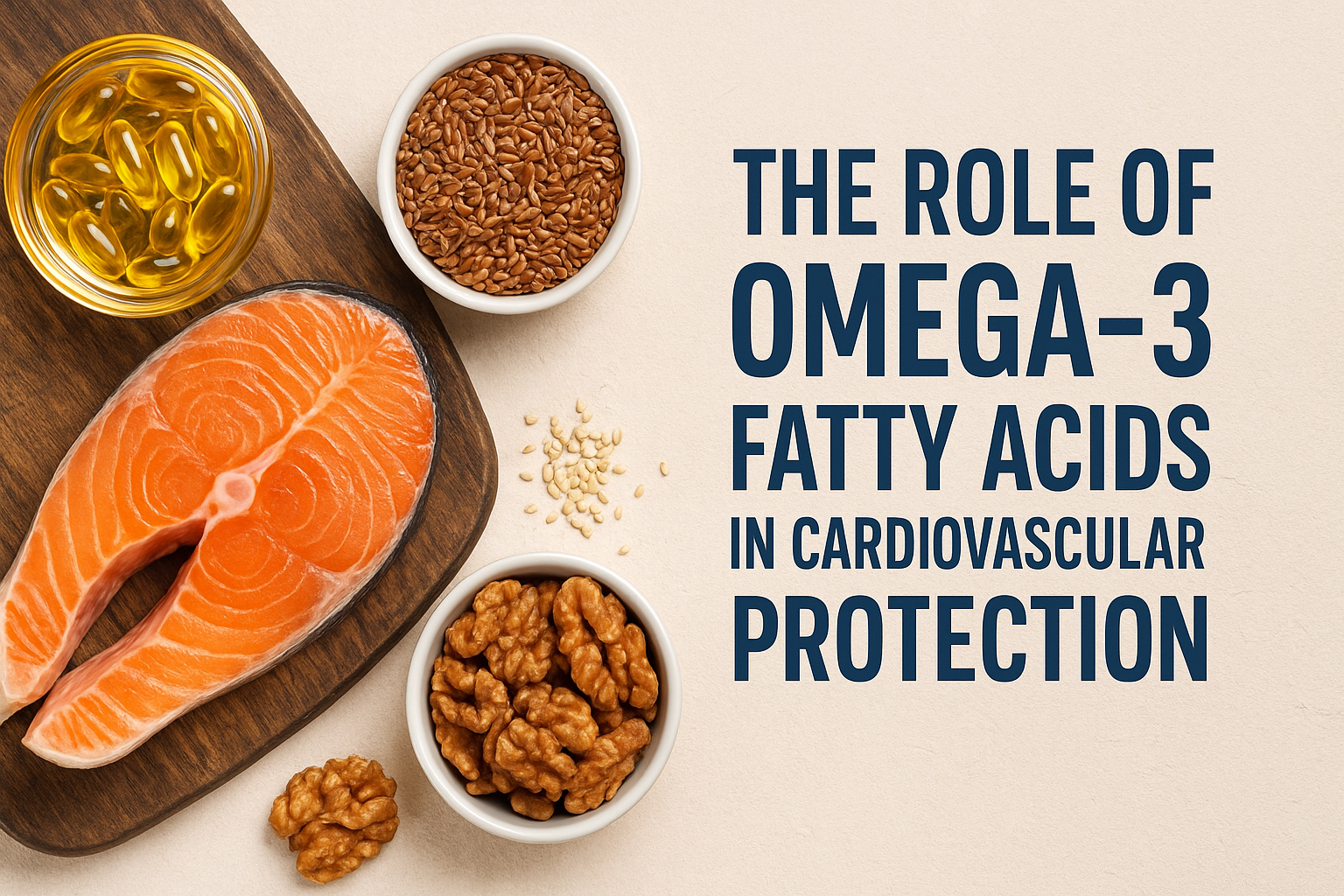
Omega-3 fatty acids are a family of polyunsaturated fats that play multiple roles in human health. The three most important for cardiovascular effects are eicosapentaenoic acid (EPA) and docosahexaenoic acid (DHA) — mainly from fatty fish and fish-oil products — and alpha-linolenic acid (ALA), a plant-based omega-3 found in flaxseed, chia, and walnuts. Over the past two decades scientists have studied how these fats affect blood lipids, inflammation, blood pressure, and the risk of heart attack, stroke and other cardiovascular events.
How omega-3s influence cardiovascular risk factors
Triglyceride lowering (most consistent metabolic effect)
One of the clearest and most reproducible effects of long-chain omega-3s (EPA + DHA) is a dose-dependent reduction in blood triglycerides. Higher daily doses (for example ~3–4 g/day of combined EPA+DHA) produce meaningful triglyceride decreases and are commonly used in clinical practice to treat hypertriglyceridemia. This effect is a major reason omega-3s have been investigated as a tool to reduce residual cardiovascular risk.
Effects on LDL, HDL and cholesterol subfractions
The effect of omega-3s on LDL-cholesterol and HDL-cholesterol is more complex. In some people, fish-oil supplements — especially certain formulations — may slightly raise LDL-C while still lowering triglycerides; the clinical meaning of a small LDL rise depends on context and overall risk management. Plant-based ALA from flaxseed appears to modestly improve total cholesterol and LDL in some trials, though its triglyceride-lowering power is weaker than that of marine EPA/DHA.
Anti-inflammatory and antithrombotic actions
Beyond lipids, omega-3s modulate inflammation — they compete with arachidonic acid to reduce production of pro-inflammatory eicosanoids and are precursors to specialized pro-resolving mediators (resolvins, protectins, maresins) that actively turn off inflammation. These biologic effects are plausibly cardioprotective because chronic vascular inflammation contributes to atherosclerosis progression and plaque instability. Omega-3s also have mild antithrombotic and endothelial effects that could affect plaque stability and clot formation.
Blood pressure and heart rhythm
At dietary doses, omega-3s can reduce blood pressure slightly in hypertensive individuals. There is, however, mixed evidence about effects on heart rhythm: some studies suggest protection against sudden cardiac death in certain high-risk groups, while other data point to a possible small increase in atrial fibrillation risk with high-dose supplements in some populations. Overall, benefits and risks appear to depend on dose, formulation, and who is taking them.
Clinical outcomes: do omega-3s reduce heart attacks, strokes, and deaths?
Mixed but evolving evidence
Randomized trials and meta-analyses have produced mixed findings. Large meta-analyses and Cochrane reviews found little or no effect of standard over-the-counter omega-3 supplementation on all-cause mortality or major cardiovascular events in broadly selected populations, generating important skepticism about routine use of low-dose supplements for primary prevention.
Strong signal for certain prescription formulations and patient groups
Not all omega-3 preparations are equal. High-purity, prescription-grade icosapent ethyl (a concentrated EPA formulation) showed a clear reduction in major adverse cardiovascular events in the REDUCE-IT trial — a large, randomized, double-blind study of patients with elevated triglycerides already on statin therapy. That trial reported roughly a 25% relative risk reduction in the primary composite endpoint (cardiovascular death, nonfatal myocardial infarction, nonfatal stroke, coronary revascularization, or unstable angina) compared with placebo. These results led to regulatory approval of prescription icosapent ethyl for selected patients with high triglycerides despite statin therapy. Importantly, results from REDUCE-IT should not be generalized to all fish-oil supplements or lower-dose products.
What meta-analyses say now
Meta-analyses that pool many trials report heterogeneous results: some find modest reductions in coronary events, particularly in higher-risk groups or when trials use higher doses or purified EPA, while others (including rigorous Cochrane assessments) conclude minimal benefit on all-cause death or stroke when low-dose, mixed formulations dominate the evidence base. This heterogeneity underlines the importance of dose, EPA vs. DHA balance, and patient selection.
Dietary sources vs. supplements: what to choose
Eat fatty fish first
For most people, the simplest and safest approach is to prioritize dietary sources of long-chain omega-3s: fatty fish such as salmon, mackerel, sardines, herring and anchovies supply EPA and DHA along with protein, vitamin D and other nutrients. Many guideline panels emphasize two servings of fatty fish per week as part of a heart-healthy diet.
Plant sources and ALA (flaxseed, chia, walnuts)
If you follow a vegetarian or vegan diet, ALA-rich foods (flaxseed, chia, walnuts, canola oil) are important. While ALA converts inefficiently to EPA/DHA in humans, higher ALA intake has been associated with modest cardiovascular benefit in observational studies and trial data show some favorable effects on blood lipids and blood pressure. Flaxseed interventions have lowered LDL and total cholesterol in several trials.
When supplements make sense
Supplements may be appropriate for:
- People with very high triglycerides (often using prescription-strength marine omega-3s under medical supervision).
- Selected high-risk patients similar to those enrolled in trials like REDUCE-IT (under clinician guidance, using the same prescription formulation and dose).
- People who cannot meet dietary recommendations for fish intake or have limited access to fish in their diet.
Use caution with over-the-counter products: formulations vary, doses are usually lower than trial doses, and benefits seen with prescription icosapent ethyl have not been replicated by all OTC fish-oil supplements. Always discuss supplements with your clinician, especially if you take blood thinners or have existing heart rhythm problems.
Practical doses and safety considerations
Typical dosing guidance
- Dietary: Aim for two servings of oily fish per week to obtain routine EPA+DHA intake from food.
- Triglyceride management: Clinical practice and trials use higher doses — typically 3–4 g/day of combined EPA+DHA (or prescription EPA formulations) to lower triglycerides meaningfully; this should be prescribed and monitored by a clinician.
- Cardiovascular event reduction: The REDUCE-IT benefit used 4 g/day of icosapent ethyl (2 g twice daily) in statin-treated patients with elevated triglycerides. That specific dosing and formulation is what the evidence supports for event reduction.
Safety and interactions
Omega-3 supplements are generally well tolerated. Possible side effects include gastrointestinal upset and a fishy aftertaste. High doses can modestly increase bleeding time — relevant for people on anticoagulants — and some trials have signaled a small increase in atrial fibrillation with high-dose marine omega-3s in certain patients. Purity and contamination (e.g., heavy metals) are additional concerns with non-regulated products; choosing quality-tested brands or prescription formulations reduces that risk. Always review supplements with your healthcare provider.
Putting the evidence into a simple plan
- Food first: Prioritize fatty fish (salmon, sardines, mackerel) and plant omega-3s (flaxseed, chia, walnuts).
- Assess risk: If you have established cardiovascular disease, diabetes with risk factors, or persistently high triglycerides on statin therapy, discuss prescription omega-3 therapy (such as icosapent ethyl) with your clinician.
- Be cautious with OTC supplements: Over-the-counter fish-oil products are variable; they are not interchangeable with prescription formulations that have proven outcome benefits.
- Lifestyle remains central: Omega-3s are an adjunct — combine them with statins, blood pressure control, smoking cessation, weight management and a Mediterranean-style diet for the biggest impact on heart risk.
Conclusion: targeted benefit, not a universal cure
Omega-3 fatty acids have multiple biologic effects that are plausibly cardioprotective — from triglyceride lowering to inflammation resolution. However, the clinical picture is nuanced: dietary omega-3s are clearly part of a heart-healthy diet, while the benefit of routine, low-dose supplements for primary prevention is weak. Strong outcome data exist for a specific, prescription EPA formulation in selected high-risk patients (REDUCE-IT), and higher doses are effective for lowering triglycerides. Decisions about supplements should be individualized and made in partnership with a healthcare provider.
Sources
- Bhatt DL, Steg PG, Miller M, et al. Cardiovascular Risk Reduction with Icosapent Ethyl for Hypertriglyceridemia. N Engl J Med. 2019;380:11–22. New England Journal of Medicine
- Cochrane Database / Cochrane summary: Omega-3 fatty acids for the primary and secondary prevention of cardiovascular disease. (2018 review & updates). Cochrane
- Skulas-Ray AC et al. Dose-response effects of omega-3 fatty acids on triglycerides (AJCN / clinical dose literature). American Journal of Clinical Nutrition
- StatPearls / NCBI Bookshelf. Omega-3 Fatty Acids — mechanisms and effects on inflammation and cardiovascular biology. NCBI
- NCCIH (NIH). Omega-3 Supplements: What You Need to Know. Summary of systematic reviews and clinical trial results. NCCIH
- Khan SU, et al. Effect of omega-3 fatty acids on cardiovascular outcomes (meta-analysis, 2021). PMC
- Nowak W, et al. The Role of Flaxseed in Improving Human Health (effects of ALA on lipids). 2023. PMC
- American Heart Association / Heart.org — public guidance and discussion of omega-3s and diet. www.heart.org
- MDPI / Reviews on variability in clinical effects and inflammation-resolution biology of EPA/DHA. MDPI